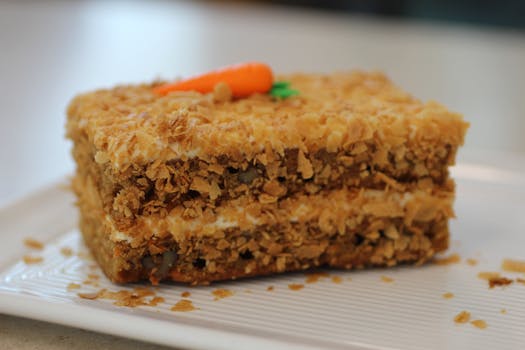
The diets react (see scores below)
Diet Ratings
Carrot cake contains refined flour, added sugar, and carrots—all incompatible with ketosis. A typical slice contains 40-60g net carbs, far exceeding daily limits. No redeeming keto qualities.
Traditional carrot cake contains eggs, dairy (butter, milk, cream cheese frosting), making it non-vegan. Some vegan versions exist but standard recipes are animal-based.
Contains wheat flour (grain), refined sugar, and typically vegetable oil (seed oil). Multiple paleo violations make this incompatible regardless of carrot content.
Highly processed dessert with refined flour, added sugars, and often excessive oil or butter. Contradicts Mediterranean emphasis on whole foods and minimal added sugars. Carrot content does not offset processing and sugar load.
Carrot cake contains flour, sugar, plant-based ingredients (carrots), and processed additives. Completely incompatible with carnivore diet rules excluding all plant foods and sugar.
Carrot cake violates Whole30 on multiple fronts: contains grains (flour), added sugar, and dairy (cream cheese frosting). Additionally, baked goods are explicitly prohibited even with compliant ingredients.
Carrot cake typically contains wheat flour (fructans), butter, sugar, and often cream cheese or frosting with high fructose content. Multiple FODMAP sources make this unsuitable for elimination phase.
High in added sugar, saturated fat from butter/cream cheese frosting, and refined flour. Contradicts DASH principles on sweets and saturated fat.
High-glycemic refined carbs, added sugar, and saturated fat from frosting/oil. Impossible to balance within Zone macros without excessive portions. Nutritionally empty calories.
Carrot cake is a dessert high in refined flour, added sugars, and typically made with vegetable oil (high omega-6). Cream cheese frosting adds saturated fat. The carrots' antioxidants are overwhelmed by inflammatory ingredients.
High sugar, high fat (cream cheese frosting, oil), refined carbohydrates, low protein relative to calories, empty calories. Triggers nausea and bloating in GLP-1 patients. No nutritional density per calorie.
Nutritional profile
Six traits that cut across every diet.
Fiber & Plants
How much whole-plant food and fiber it delivers.
Healthy Fats
The quality of its fats (unsaturated, omega-3).
Whole / Unprocessed
How close it is to its natural, unprocessed form.
Gut Gentle
How easy it is on digestion (low FODMAP, few irritants).
Low Glycemic
How little it spikes your blood sugar.
Protein Density
How much protein it packs per calorie.
Controversy Index
Score range: 1–2/10. Higher controversy = more disagreement between diets.