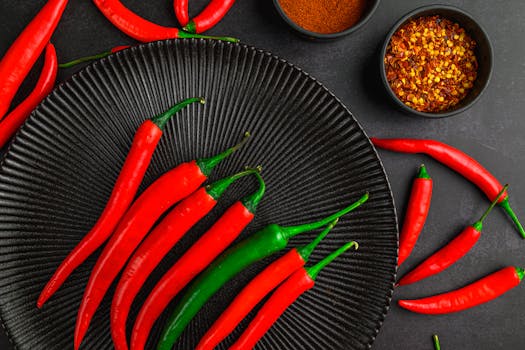
Cayenne pepper
Rated by 11 diets
The diets react (see scores below)
Diet Ratings
Cayenne pepper contains negligible net carbs (0.3g per teaspoon). Used in minimal quantities for seasoning. Supports metabolism and is fully keto-compatible.
Whole plant-based spice. No animal products or derivatives. Unprocessed natural ingredient.
Pure spice derived from peppers, available to Paleolithic humans. No processing concerns or anti-nutrients. Widely accepted in paleo diet.
Pure spice with no added ingredients. Supports Mediterranean cooking principles of using herbs and spices for flavor. Contains capsaicin with potential health benefits.
Plant-derived spice from chili peppers. Excluded from strict carnivore diet despite some practitioners using minimal amounts.
Cayenne pepper is a whole spice with no processing or additives. It is explicitly allowed as a seasoning under Whole30 guidelines.
Monash University confirms cayenne pepper is low-FODMAP at typical culinary serving sizes. Used in small amounts as a spice.
Zero sodium, zero calories in typical amounts. Contains capsaicin with potential cardiovascular benefits. Excellent salt substitute for flavor. Supports DASH sodium reduction strategy.
Negligible carbs and calories, anti-inflammatory capsaicin content. Ideal Zone condiment with no macronutrient interference. Supports anti-inflammatory protocol.
Contains capsaicin, a powerful anti-inflammatory compound that reduces inflammatory markers. Supports circulation and metabolism. Minimal calories with significant anti-inflammatory benefit.
Very spicy condiments can trigger or worsen reflux and nausea in GLP-1 patients, especially those with sensitive GI tracts. However, some patients tolerate spices well and cayenne has metabolic benefits. Use sparingly and monitor tolerance.
Some GLP-1 nutrition experts argue that moderate spice use is fine for most patients and that the metabolic benefits of capsaicin outweigh reflux risk if introduced gradually. Individual tolerance varies significantly; start with small amounts.
Nutritional profile
Six traits that cut across every diet.
Fiber & Plants
How much whole-plant food and fiber it delivers.
Healthy Fats
The quality of its fats (unsaturated, omega-3).
Whole / Unprocessed
How close it is to its natural, unprocessed form.
Gut Gentle
How easy it is on digestion (low FODMAP, few irritants).
Low Glycemic
How little it spikes your blood sugar.
Protein Density
How much protein it packs per calorie.
Controversy Index
Score range: 2–10/10. Higher controversy = more disagreement between diets.
Diet-Specific Tips for Cayenne pepper
 Keto — 9/10
- Negligible net carbs
- Minimal portion use
- Pure spice
 Vegan — 10/10
- Whole plant food
- No processing
- No animal products
- Natural spice
 Paleo — 9/10
- unprocessed spice
- no additives
- natural source
 Mediterranean — 8/10
- pure spice
- minimal processing
- flavor enhancement
- bioactive compounds
 Whole30 — 9/10
- Whole spice
- No additives
- Explicitly allowed
 Low-FODMAP — 9/10
- Low FODMAP at standard portions
- Spice/flavoring use
- Well-tolerated in elimination phase
 DASH — 8/10
- Zero sodium
- Capsaicin content
- Salt alternative
- Anti-inflammatory
 Zone — 8/10
- anti-inflammatory
- negligible carbs
- capsaicin
- zero macronutrient impact
 Anti-Inflammatory — 8/10
- capsaicin
- anti-inflammatory
- circulation support
- minimal calories
 GLP-1 Friendly — 4/10
- very spicy
- may trigger reflux
- may worsen nausea
- individual tolerance varies
- metabolic benefits if tolerated