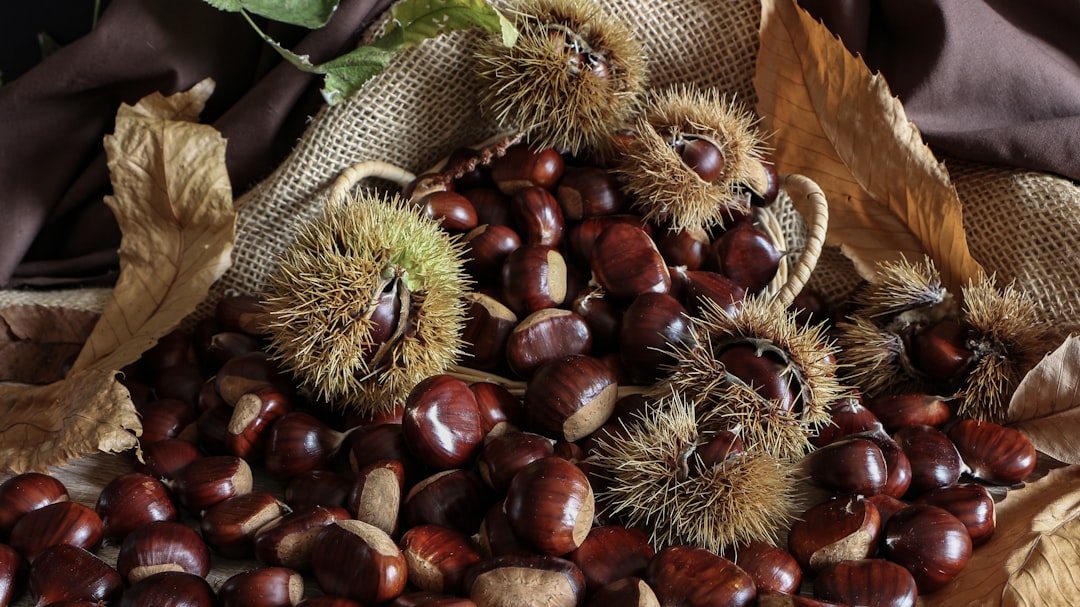
The diets react (see scores below)
Diet Ratings
Chestnuts are significantly higher in carbs (~15g net carbs per oz) compared to other nuts. They are incompatible with strict keto macros and will easily exceed daily carb limits.
Whole plant-based tree nuts. No animal products or derivatives.
Chestnuts are whole, unprocessed nuts with a long history of human consumption. Lower in fat and higher in carbohydrates than other nuts, making them nutrient-dense. No anti-nutrients or processing concerns. Universally approved in paleo.
Chestnuts are traditional Mediterranean nuts, particularly in Southern Europe. Lower in fat than other nuts but rich in carbohydrates, fiber, and minerals. Historically important in Mediterranean diets.
Chestnuts are tree nuts with higher carbohydrate content than other nuts. Carnivore diet excludes all nuts and plant foods. No animal products.
Chestnuts are tree nuts with no excluded ingredients. They are explicitly allowed on Whole30 as a natural fat and protein source.
Chestnuts are high in fructans compared to other nuts. Monash University identifies them as high-FODMAP even at small serving sizes, making them unsuitable for elimination phase.
Unique among nuts with lower fat and higher carbohydrate content. Rich in potassium, magnesium, fiber. Very low sodium. Excellent DASH alignment with minimal saturated fat.
Chestnuts are unique among nuts: only ~2% fat and ~45% carbs (mostly starch). While low in fat, they are higher-glycemic than other nuts and vegetables. Cannot serve as a Zone fat block. Better classified as a carb source, but starchy nature makes them less ideal than low-glycemic vegetables or whole grains.
Chestnuts are unique among nuts: lower fat, higher carbohydrate, rich in polyphenols and vitamin C. Minimal omega-6 content. Whole food form with strong antioxidant profile supports anti-inflammatory goals.
Chestnuts are unique among nuts: much lower fat (1.4g per ounce) and higher carbohydrate (11g per ounce) than other nuts. Provide 2g protein per ounce. Lower fat profile makes them more GLP-1-friendly than other nuts, but carb-heavy and lower protein density than preferred options.
Nutritional profile
Six traits that cut across every diet.
Fiber & Plants
How much whole-plant food and fiber it delivers.
Healthy Fats
The quality of its fats (unsaturated, omega-3).
Whole / Unprocessed
How close it is to its natural, unprocessed form.
Gut Gentle
How easy it is on digestion (low FODMAP, few irritants).
Low Glycemic
How little it spikes your blood sugar.
Protein Density
How much protein it packs per calorie.
Controversy Index
Score range: 2–9/10. Higher controversy = more disagreement between diets.
Diet-Specific Tips for Chestnuts
 Vegan — 9/10
- 100% plant-based
- Whole food
- Nutrient-dense
- No processing required
 Paleo — 8/10
- Whole, unprocessed nut
- Lower fat, higher carbohydrate profile
- Nutrient-dense
- Available to Paleolithic humans
 Mediterranean — 7/10
- Traditional Mediterranean nut
- Lower fat, higher carbohydrate profile
- Good source of fiber
- Historically significant in Mediterranean regions
 Whole30 — 9/10
- Whole food
- Tree nut
- No excluded ingredients
 DASH — 9/10
- Lower fat than other nuts
- High in potassium
- Good magnesium source
- Excellent fiber content
- Very low sodium
 Zone — 5/10
- Minimal fat content
- High carbohydrate (starchy)
- Higher glycemic index than other nuts
- Not suitable as fat block
 Anti-Inflammatory — 7/10
- Low fat, high polyphenol content
- Vitamin C antioxidant
- Minimal omega-6
- Unique nutrient profile among nuts
 GLP-1 Friendly — 6/10
- low fat compared to other nuts
- moderate carbohydrate
- low protein density
- lower calorie density than other nuts
- acceptable in moderation