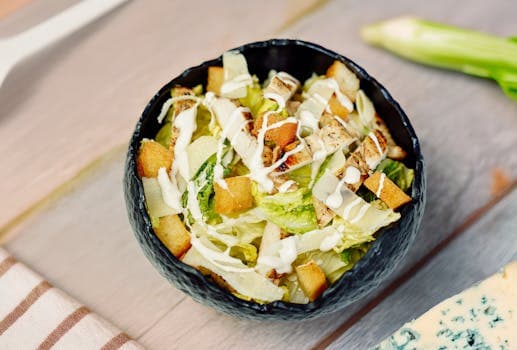
Chicken Caesar salad
Rated by 11 diets
Diet Ratings
Chicken Caesar salad with romaine lettuce, chicken, parmesan, and Caesar dressing is naturally keto-friendly. Net carbs are typically 3-6g per serving. High in fat from dressing and cheese, moderate protein from chicken.
Contains chicken (poultry) and Caesar dressing made with eggs, anchovies, and dairy. Multiple animal products.
Chicken and vegetables are paleo-compliant, but traditional Caesar dressing contains anchovies (good), but also dairy (Parmesan cheese) and often soybean oil. Croutons are grain-based. Depends heavily on preparation.
iSome paleo practitioners accept small amounts of Parmesan as a condiment; others strictly avoid all dairy. Mark Sisson's Primal Blueprint is more lenient on dairy than Loren Cordain's strict paleo.
Salad base is positive, but Caesar dressing is high in saturated fat and processed ingredients. Chicken is acceptable protein. Quality depends heavily on dressing preparation.
iMediterranean diet practitioners in some regions accept Caesar salad if made with olive oil-based dressing and fresh ingredients, though traditional Mediterranean dressings use vinegar and olive oil.
Lettuce and vegetables are plant-based. Croutons are grain-based. While chicken and cheese are compatible, salad base and components violate carnivore principles.
Chicken and vegetables are compliant, but traditional Caesar dressing contains anchovies (compliant), eggs (compliant), but often includes Worcestershire sauce (contains sugar/additives) and parmesan cheese (dairy, excluded). Croutons are grain-based.
iSome Whole30 followers argue that a properly made Caesar dressing with quality anchovies, eggs, and oil is compliant if cheese and croutons are removed. However, most restaurant versions contain problematic additives in the dressing.
Chicken and lettuce are low-FODMAP, but traditional Caesar dressing contains garlic and anchovies. Parmesan cheese is low-FODMAP. The salad is safe only if the dressing is made without garlic or uses garlic-infused oil instead. Croutons may contain garlic/onion.
iMonash University does not specifically test Caesar dressing, but garlic is a primary ingredient. Some practitioners suggest that a small amount of traditional dressing may be tolerable, while others recommend complete avoidance or substitution with garlic-free dressing.
Salad base is DASH-friendly, but Caesar dressing is high in sodium and saturated fat (anchovies, cheese, oil). Croutons add refined carbs. Acceptable with low-sodium dressing and grilled chicken.
Grilled chicken provides lean protein; lettuce is low-glycemic. However, Caesar dressing is typically high in omega-6 oils and saturated fat. Croutons add refined carbs. Can be Zone-balanced by using olive oil-based dressing and omitting croutons, but standard preparation requires modification.
Salad base and chicken provide protein and some nutrients, but traditional Caesar dressing is high in saturated fat (anchovies, cheese, egg yolk) and sodium. Croutons add refined carbs. Depends on dressing quantity and type.
iWith light dressing or olive oil-based vinaigrette substitution, score could reach 7. Some nutritionists emphasize the leafy greens and lean protein benefits.
Chicken Caesar salad provides excellent protein from chicken and some fiber from lettuce, but traditional Caesar dressing is high in fat and calories. The salad can work well if dressing is used sparingly or replaced with lighter alternatives. Portion control of dressing is critical; the chicken and greens themselves are ideal GLP-1 foods.
iSome GLP-1 specialists recommend Caesar salad as 'approve' if dressing is limited to 1-2 tablespoons; others caution that creamy dressings trigger reflux in sensitive patients regardless of portion.
Controversy Index
Score range: 1–8/10. Higher controversy = more disagreement between diets.