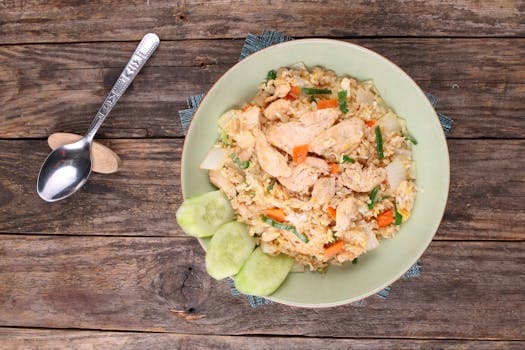
Chicken fried rice
Rated by 11 diets
Diet Ratings
Rice contains 35-45g net carbs per serving. Soy sauce adds 2-3g carbs. Chicken and oil are keto-friendly but completely overwhelmed by rice carbs. This is fundamentally incompatible with ketosis.
Contains chicken (poultry), a direct animal product explicitly excluded from vegan diet. May also contain egg.
White or brown rice is a grain, excluded from paleo. Chicken and vegetables are approved, but rice is the primary component and violates core rules.
White rice is refined grain, contradicting whole grain emphasis. Chicken is acceptable protein. High sodium from soy sauce and preparation. Vegetables present but often minimal. Excessive oil in cooking process.
iIf prepared with brown rice, minimal soy sauce, abundant vegetables, and olive oil instead of vegetable oil, fried rice can approximate Mediterranean principles, though not traditional.
Fried rice is grain-based (rice), with chicken as a minor component. Typically includes peas, carrots, corn, and onions (all vegetables). The dish is predominantly plant-based carbohydrates and vegetables with minimal meat content.
Rice is a grain (excluded). Soy sauce typically contains soy (legume, excluded) and added sodium/additives. Chicken and vegetables are compliant, but the base ingredient is excluded.
Rice and chicken are low-FODMAP. Fried rice typically contains garlic, onion, and soy sauce (low-FODMAP). Vegetables vary: carrots and peas are low-FODMAP, but mushrooms and broccoli may be included. Preparation method and ingredient list determine safety.
Contains lean chicken (positive) and vegetables, but soy sauce is extremely high in sodium. Oil used for frying adds fat and calories. White rice is refined. Exceeds DASH sodium limits unless soy sauce significantly reduced.
iNIH DASH guidelines support chicken and vegetables; however, traditional fried rice preparation with soy sauce violates sodium limits. Some clinicians argue low-sodium soy sauce and brown rice modifications could make this acceptable.
White rice is high-glycemic; chicken is lean protein. Oil used (often omega-6 seed oil) is inflammatory. Vegetables add fiber but don't offset glycemic load. Can be improved with brown rice, more vegetables, and olive oil, but standard preparation is carb-dominant.
White rice is refined carbohydrate (pro-inflammatory). Chicken provides lean protein (positive). High omega-6 from cooking oils and soy sauce sodium are concerns. Vegetable content varies. Overall inflammatory profile depends on oil type and vegetable ratio.
iBrown rice version would score higher; some cuisines use minimal oil. Soy sauce sodium and MSG (if present) are inflammatory concerns debated by different authorities.
Contains protein (chicken) and vegetables, but fried preparation adds significant fat and oil. High calorie density relative to volume. Refined white rice lacks fiber. Can trigger nausea. Brown rice version slightly better; portion control critical.
iSome GLP-1 patients tolerate fried rice well if portions are small; others experience significant nausea from fat content. Individual tolerance to fried foods varies widely.
Controversy Index
Score range: 1–5/10. Higher controversy = more disagreement between diets.