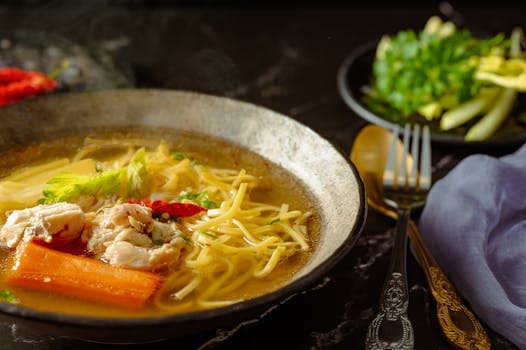
Chicken noodle soup
Rated by 11 diets
Diet Ratings
Chicken noodle soup contains wheat noodles (primary carb source) with 25-35g net carbs per serving. While the chicken and broth are keto-friendly, the noodle base makes this incompatible with ketosis.
Contains chicken (poultry) and chicken broth (animal-derived). Often includes egg noodles (eggs). Multiple animal products make this clearly non-vegan.
Wheat noodles are a grain product. While chicken broth is excellent, the noodle component violates core paleo principles. This is a grain-based dish despite quality protein and broth.
Chicken noodle soup contains lean protein and broth, but typically uses refined noodles and high sodium. Can be Mediterranean-aligned if prepared with whole grain pasta, olive oil, and abundant vegetables.
iSome Mediterranean diet authorities view chicken noodle soup as acceptable when made with whole grain noodles, olive oil-based broth, and vegetable-forward preparation, particularly in Mediterranean coastal traditions.
Wheat noodles (plant/grain) are primary component. While chicken and broth are animal-based, noodle content disqualifies this. Vegetables (plant) often included. Fundamentally incompatible with carnivore diet.
Wheat noodles are a grain (excluded). While chicken and broth are compliant, the noodles are a fundamental component. Most versions also contain added sugar and processed additives.
Chicken noodle soup contains chicken (low-FODMAP), noodles (low-FODMAP), and broth. However, most broths are made with garlic, onion, and celery. Garlic and onion are high-FODMAP; celery is high-FODMAP. Carrots are low-FODMAP. Broth quality and ingredient sourcing are critical.
iMonash University rates chicken and noodles as low-FODMAP, but commercial and homemade broths typically contain garlic, onion, and celery. Clinical practitioners recommend using low-FODMAP broth or making broth with garlic-infused oil (strained) and omitting onion/celery.
Lean chicken and vegetables are positive. However, broth-based soups typically contain 800-1200 mg sodium per serving. Refined noodles lack whole grain benefit. Acceptable if made with low-sodium broth and whole grain noodles.
iSome clinicians view canned/restaurant versions as problematic due to sodium; homemade low-sodium versions score higher (7-8).
Broth provides anti-inflammatory base; chicken is lean protein. However, wheat noodles are high-glycemic and typically dominate by volume; protein-to-carb ratio unfavorable. Requires noodle reduction, vegetable increase, and lean chicken focus.
Lean chicken and broth provide some anti-inflammatory benefits (collagen, minerals). However, refined egg noodles lack fiber and have high glycemic load. Commercial versions contain high sodium and often lack sufficient vegetables. Homemade versions with whole grain noodles, low sodium, and vegetable-rich broth can score 7.
iSome nutritionists view chicken soup as a traditional anti-inflammatory food; homemade versions with bone broth and minimal noodles align with anti-inflammatory principles and could score higher.
Chicken noodle soup provides lean protein (10-12g per cup), is easy to digest, and has high water content for hydration. However, refined noodles are low in fiber, and the broth is often made with added fat or cream. The warm, soft texture is well-tolerated. Broth-based versions without cream are preferable. Portion size is manageable.
Controversy Index
Score range: 1–6/10. Higher controversy = more disagreement between diets.