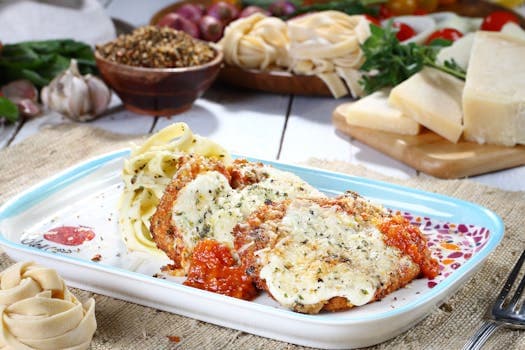
Chicken parmesan
Rated by 11 diets
Diet Ratings
Chicken parmesan typically includes breading (carbs) and tomato sauce (moderate carbs). A serving has 8-15g net carbs depending on breading thickness and sauce amount. Unbreaded versions with light sauce could work, but traditional preparation is problematic.
iSome keto practitioners avoid chicken parmesan entirely due to breading being a non-negotiable carb source, while others use almond flour breading as a keto-friendly substitute.
Contains chicken (poultry) and parmesan cheese (dairy). Fundamentally non-vegan.
Breading uses grain flour. Parmesan cheese is dairy. Served over pasta (grain). Multiple paleo violations.
Breaded and fried chicken with heavy cheese coating. Refined grains, excessive saturated fat, and processing contradict Mediterranean emphasis on whole foods and olive oil preparation.
Chicken and cheese are carnivore-compatible, but breading uses breadcrumbs (grain) and tomato sauce contains plants. Preparation method introduces plant-based components that strict practitioners avoid.
iSome carnivore practitioners may consume if breading is replaced with pork rinds and sauce is omitted, focusing on the meat and cheese components. However, traditional preparation violates diet principles.
Chicken parmesan contains breading (grain) and cheese (dairy), both explicitly excluded. Tomato sauce often contains added sugar.
Chicken parmesan consists of breaded chicken, tomato sauce, and cheese. Chicken is low-FODMAP, cheese is low-FODMAP, and plain tomato sauce (without garlic/onion) is low-FODMAP. The dish is safe if prepared without garlic and onion in the sauce.
Breaded and fried chicken with heavy cheese coating creates high saturated fat and sodium. Often served with high-sodium marinara sauce. Excessive calories and fat content conflicts with DASH guidelines.
Lean chicken protein is excellent, but breading adds refined carbs and the dish is typically fried in omega-6 oils. Cheese adds saturated fat. Marinara sauce may contain added sugar. Can be modified (baked, light breading) but standard preparation is problematic for Zone.
Breaded and fried chicken increases inflammatory load via refined carbs and oxidized oils. Full-fat cheese adds saturated fat. Tomato sauce provides some lycopene benefit. Preparation method is critical.
iIf baked instead of fried and using part-skim mozzarella, score could reach 6. Some sources prioritize the lean protein and tomato benefits more heavily.
Chicken parmesan is breaded and fried (high fat), topped with cheese and often served with pasta. The combination of fried coating, saturated fat, and heavy carbs makes it difficult to digest and triggers GLP-1 side effects. While chicken itself is excellent protein, the preparation method negates its benefits.
Controversy Index
Score range: 1–8/10. Higher controversy = more disagreement between diets.