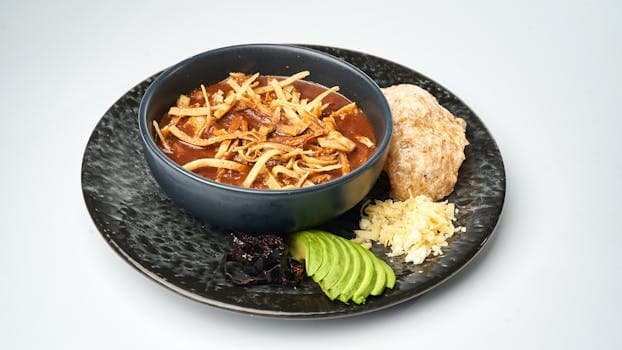
Chicken tortilla soup
Rated by 11 diets
Diet Ratings
Tortilla chips (10-15g net carbs per ounce) and flour tortillas (12-15g per tortilla) are the primary carb sources. Even without these toppings, the soup base often contains tomatoes and beans, adding 8-12g net carbs per serving.
Chicken tortilla soup contains chicken as the primary protein. The defining ingredient is poultry, making it non-vegan.
Chicken and broth are paleo-compliant, but tortillas are grain-based (corn or wheat). Tortillas are a primary component and non-compliant with paleo diet.
Contains poultry (encouraged in moderation), vegetables, and broth. However, fried tortilla strips add refined carbs and excess fat. Versions with whole grain tortillas, minimal fried components, and vegetable-forward preparation are more Mediterranean-aligned.
iSome Mediterranean diet experts accept chicken tortilla soup as a valid adaptation when made with whole grains, abundant vegetables, and minimal fried garnishes, viewing it as compatible with Mediterranean principles.
Chicken tortilla soup contains tortillas (grain), tomatoes (plant), peppers, onions, and other vegetables. Multiple plant-derived components make this fundamentally incompatible with carnivore diet.
Tortillas are grains, explicitly excluded. Even without tortillas, this soup often contains beans (legumes) and cheese (dairy).
Chicken tortilla soup is made with onion, garlic, and tomato as base. Tortillas are wheat-based (fructans). Chicken is low-FODMAP, but the soup base is high-FODMAP at any reasonable serving.
Chicken is a DASH-approved lean protein. Tomato-based broth with vegetables (peppers, onions, corn) provides nutrients. However, tortilla strips are fried (added fat), and broth sodium varies. Typical versions contain 700-1000mg sodium per serving. Can be made DASH-compliant by using low-sodium broth and baked tortilla strips.
Lean chicken protein is excellent; broth-based is favorable. However, tortilla strips and potential beans add carbs; fried tortillas increase omega-6 fat. Can be Zone-compliant if tortillas minimized, vegetables emphasized, and fat from avocado/olive oil rather than fried components.
Lean chicken provides protein without excessive saturated fat. Broth-based with vegetables (tomatoes, peppers, onions) adds antioxidants. If made with whole grain tortillas and minimal fried toppings, it's anti-inflammatory.
Good protein (15-20g per serving), high fiber from beans and vegetables, high water content supports hydration. Low fat if broth-based without cream. Nutrient-dense with vitamins and minerals. Easy to digest and satisfying in small portions. Supports digestive health.
Controversy Index
Score range: 1–8/10. Higher controversy = more disagreement between diets.