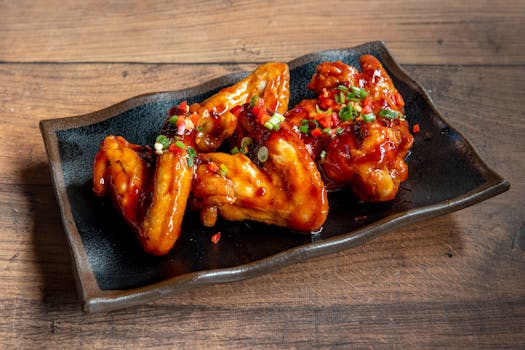
The diets react (see scores below)
Diet Ratings
Chicken wings (skin-on) provide excellent fat-to-protein ratio with 0g net carbs. Whole, unprocessed food. Skin contains most of the fat, making them ideal for keto.
Chicken wings are poultry meat, an animal product explicitly excluded from vegan diet.
Unprocessed poultry with skin and fat intact. Whole food available to hunter-gatherers with beneficial nutrients and collagen from bones.
Chicken is an approved poultry in Mediterranean diet, but wings are higher in fat and skin than breast meat. Preparation method is critical—fried wings are problematic; grilled or baked wings with skin removed are more acceptable. Portion control important.
Some Mediterranean diet practitioners accept chicken wings more readily when prepared traditionally (grilled with herbs, skin on) as part of Mediterranean coastal cuisine, particularly in Greek and Spanish traditions.
Chicken wings are fatty poultry with good fat content and complete protein. Widely consumed in carnivore diet, though some strict practitioners prioritize ruminant meat for superior fatty acid profile.
Strict carnivore adherents following ruminant-focused protocols (like some interpretations of the Lion Diet) prefer ruminant meats over poultry due to omega-3 to omega-6 ratio and argue poultry should be secondary.
Whole30 explicitly allows unprocessed poultry. Chicken wings are a whole cut with no added ingredients when prepared without breading or non-compliant sauces.
Unprocessed poultry. Plain chicken wings are low-FODMAP. Monash University confirms all unprocessed poultry is low-FODMAP. If wings are plain or seasoned without garlic/onion, they are safe.
Chicken wings with skin contain significant saturated fat (3.3g per 3oz with skin). DASH guidelines recommend poultry but emphasize skinless preparation. Wings are acceptable if skin removed and prepared without added sodium/saturated fat. Portion control important.
Chicken wings contain significant fat (10-12g per 3oz with skin), higher than breast meat. Protein is adequate (~20g per 3oz). Skin removal is critical; with skin removed, fat drops to ~6g, making them usable. Requires careful portioning and fat-block accounting.
Chicken is lean poultry (approved), but wings are higher in fat than breast meat. Skin contains saturated fat. Preparation method critical—fried wings are inflammatory; baked/grilled with herbs acceptable in moderation.
Some low-carb advocates view chicken wings favorably for nutrient density. Mainstream anti-inflammatory guidance prefers skinless breast meat.
High fat content (9-11g per 3oz cooked), especially with skin. Often fried or coated in high-fat sauces. Spicy seasonings common, triggering reflux and nausea. While protein is decent (26g per 3oz), fat-to-protein ratio is poor for GLP-1 patients. Skinless preparation helps but still suboptimal.
Nutritional profile
Six traits that cut across every diet.
Fiber & Plants
How much whole-plant food and fiber it delivers.
Healthy Fats
The quality of its fats (unsaturated, omega-3).
Whole / Unprocessed
How close it is to its natural, unprocessed form.
Gut Gentle
How easy it is on digestion (low FODMAP, few irritants).
Low Glycemic
How little it spikes your blood sugar.
Protein Density
How much protein it packs per calorie.
Controversy Index
Score range: 1–9/10. Higher controversy = more disagreement between diets.
Diet-Specific Tips for Chicken wings
 Keto — 9/10
- 0g net carbs
- High fat with skin
- Quality protein
- Unprocessed
 Paleo — 8/10
- Unprocessed poultry
- Includes skin and fat
- Collagen-rich
- No additives
 Mediterranean — 5/10
- Poultry category (approved)
- Higher fat than breast meat
- Preparation method critical
- Skin removal recommended
- Portion control needed
 Carnivore — 8/10
- Fatty poultry cut
- Complete protein
- Minimal processing
- Widely accepted
 Whole30 — 9/10
- Unprocessed meat
- No added sugar or excluded ingredients
- Whole food
 Low-FODMAP — 9/10
- Unprocessed poultry
- No fermentable carbohydrates
- Safe if plain or without garlic/onion seasoning
 DASH — 5/10
- High fat with skin
- Skin removal essential
- Good protein source
- Preparation method critical
- Often high-sodium when seasoned
 Zone — 5/10
- High fat if skin included
- Acceptable if skin removed
- Good protein content
- Portion-dependent for Zone compliance
 Anti-Inflammatory — 5/10
- Lean poultry base
- Higher fat than breast meat
- Skin contains saturated fat
- Preparation method critical
- Cooking method determines inflammatory potential
Editor's Picks
As an Amazon Associate, FoodRef.ai earns from qualifying purchases. This does not affect our ratings.