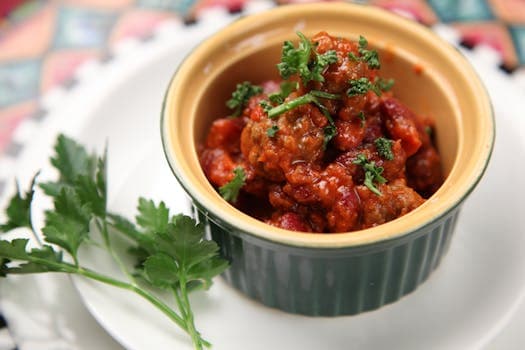
Chili con carne
Rated by 11 diets
Diet Ratings
Chili contains beans (legumes) which are high in carbs. A typical serving has 12-18g net carbs from beans alone. Bean-free versions or very small portions with heavy meat focus could work, but traditional chili is problematic for strict keto.
iSome keto practitioners include small portions of chili or use it as a condiment, arguing the fat and protein content justifies occasional consumption despite carb load.
Contains ground beef as primary ingredient. Inherently non-vegan due to meat content.
Contains beans (legumes), which are explicitly excluded. Meat is paleo but beans disqualify the dish.
Contains legumes (positive) but relies heavily on red meat and often processed ingredients. Red meat should be limited to few times monthly in Mediterranean diet.
iSome Mediterranean regions, particularly Spain and parts of Southern France, incorporate more red meat than strict guidelines suggest, making occasional chili acceptable.
Contains beans (legumes), tomatoes, peppers, onions, and spices derived from plants. While meat is the primary ingredient, plant components are substantial and incompatible.
Traditional chili con carne contains beans (legumes), which are explicitly excluded. Most recipes also contain added sugar and spice blends with problematic additives.
Chili con carne is built on onion and garlic as foundational aromatics, plus beans (legumes high in GOS). The cumulative FODMAP load from multiple sources makes this unsuitable for elimination phase.
Contains lean protein (beans) and vegetables, but typically high in sodium and saturated fat from ground beef and canned ingredients. Can be DASH-compliant if made with lean meat, low-sodium beans, and minimal added salt.
Beef provides lean protein and monounsaturated fat; beans add fiber and carbs. However, beans are moderate-glycemic and often prepared with added sugar or high-sodium seasonings. Requires careful portioning of beans and verification of preparation method to achieve 40/30/30 balance.
Mixed profile: beans and spices (cumin, chili powder) are anti-inflammatory, but ground beef is pro-inflammatory. High saturated fat and often high sodium. Depends heavily on meat ratio and preparation method.
iSome anti-inflammatory advocates (AIP protocol) avoid all red meat entirely, rating this lower (3-4). Others emphasize the legume and spice benefits if grass-fed beef is used and portion is modest.
High protein from beef and beans (15-20g per serving). High fiber from beans. However, ground beef is often fatty (10-15g fat per serving depending on lean ratio), and chili is heavy/slow to digest. Spices may trigger reflux. Works better with very lean beef.
iSome GLP-1 experts recommend chili made with 93% lean ground beef or turkey as an excellent protein-fiber combination; others advise caution due to fat density and slow gastric emptying of heavy meat-based dishes.
Controversy Index
Score range: 1–6/10. Higher controversy = more disagreement between diets.