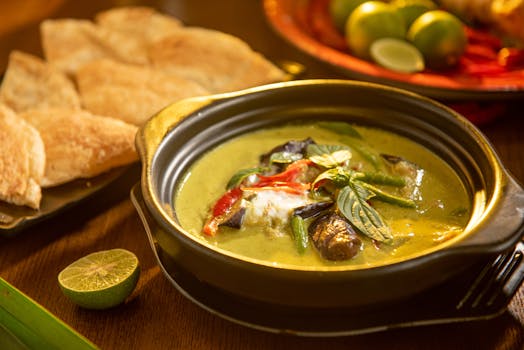
The diets react (see scores below)
Diet Ratings
Coconut curry can be keto-compatible if made with full-fat coconut milk and low-carb vegetables, but many restaurant versions contain added sugar, thickeners, or serve with rice. Requires verification of ingredients and portion control.
Strict keto practitioners avoid curry pastes due to hidden sugars and starches used as thickeners; some lazy keto followers consume standard restaurant versions without concern.
Coconut milk and curry spices are plant-based. Typically contains vegetables and legumes. Whole-food preparation scores highest.
Coconut milk, curry spices, vegetables, and protein (if meat/fish-based) are all paleo-compliant. No grains, legumes, or dairy if made traditionally. Verify no added sugar or seed oils.
Contains beneficial spices and vegetables, but coconut milk is high in saturated fat. Mediterranean diet emphasizes olive oil over coconut oil. Acceptable if made with olive oil base and abundant vegetables.
Some modern Mediterranean diet interpretations incorporate coconut milk in moderation, particularly in regions with historical trade connections. The anti-inflammatory spices are valued.
Curry contains multiple plant-based spices, coconut (plant fruit), and typically vegetables. Plant-derived ingredients throughout violate core carnivore rules.
Coconut milk, curry spices, and protein (typically chicken, beef, or seafood) with vegetables are all Whole30 compliant. No excluded ingredients if prepared without added sugar or thickeners like cornstarch.
Coconut milk is low-FODMAP. Curry paste and spices are typically low-FODMAP, but many commercial curries contain garlic, onion, or high-FODMAP vegetables. Homemade with controlled ingredients is safer.
Monash University rates coconut milk as low-FODMAP, but curry paste brands vary widely in FODMAP content depending on garlic/onion inclusion. Restaurant versions often problematic.
Coconut milk is high in saturated fat (tropical oil). High sodium from curry paste and salt. Contradicts DASH guidelines limiting saturated fat and tropical oils.
Coconut milk provides monounsaturated fat and polyphenols (anti-inflammatory), but is calorie-dense. Curry spices are beneficial. Carb content depends on base (rice vs. vegetables). If served over white rice, high-glycemic. With vegetable base and lean protein, can balance. Context-dependent.
Dr. Sears emphasizes coconut oil's saturated fat content in later writings; some practitioners view full-fat coconut milk as less ideal than olive oil-based curries, though the polyphenol content provides offsetting anti-inflammatory benefits.
Curry spices (turmeric, ginger, garlic) are strongly anti-inflammatory. Coconut milk provides medium-chain triglycerides. Typically includes vegetables and aromatic herbs. Excellent anti-inflammatory profile when made with whole ingredients and minimal added sugar.
Coconut milk is high in saturated fat, which worsens GLP-1 nausea and bloating. Protein content depends on meat/legume base — if chicken or lentil-heavy, protein is adequate. Spices may trigger reflux in sensitive patients. High fat per serving is primary concern.
Some RDs recommend coconut curry if made with light coconut milk (5-7% fat) and lean protein, viewing it as acceptable; others recommend avoiding due to saturated fat content and GI sensitivity.
Nutritional profile
Six traits that cut across every diet.
Fiber & Plants
How much whole-plant food and fiber it delivers.
Healthy Fats
The quality of its fats (unsaturated, omega-3).
Whole / Unprocessed
How close it is to its natural, unprocessed form.
Gut Gentle
How easy it is on digestion (low FODMAP, few irritants).
Low Glycemic
How little it spikes your blood sugar.
Protein Density
How much protein it packs per calorie.
Controversy Index
Score range: 1–8/10. Higher controversy = more disagreement between diets.
Diet-Specific Tips for Coconut curry
 Keto — 5/10
- full-fat coconut milk: 2-3g carbs per cup
- added sugar in paste: 2-5g per serving
- vegetable content determines final carb count
- rice or noodles would add 30-40g carbs
 Vegan — 8/10
- coconut milk
- plant-based vegetables
- legumes often included
 Paleo — 8/10
- coconut milk approved
- spices approved
- vegetables approved
- protein source matters
- no grains or legumes
 Mediterranean — 5/10
- high saturated fat from coconut
- beneficial spices
- vegetable content variable
- fat source not traditional
 Whole30 — 8/10
- coconut milk compliant
- spices allowed
- protein and vegetables compliant
- verify no added sugar or cornstarch
 Low-FODMAP — 6/10
- Coconut milk is low-FODMAP
- Curry paste may contain garlic/onion
- Vegetables in curry affect rating
- Commercial vs. homemade preparation differs
 Zone — 5/10
- Saturated fat from coconut milk
- Polyphenol-rich spices
- Carb source determines glycemic load
- Protein source critical
 Anti-Inflammatory — 8/10
- turmeric and ginger (potent anti-inflammatory)
- coconut milk (beneficial fats)
- aromatic herbs and spices
- typically vegetable-rich
- minimal processed ingredients
 GLP-1 Friendly — 4/10
- high saturated fat
- protein-dependent on base
- spice-related reflux risk
- easy digestibility concerns