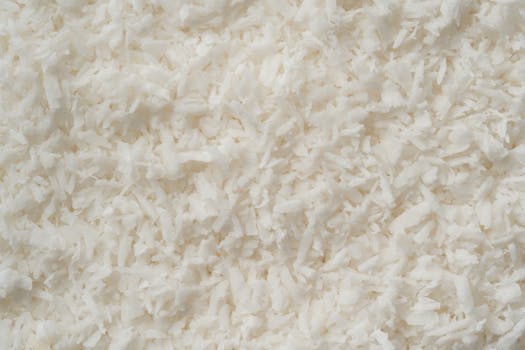
Coconut flakes (sweetened)
Rated by 11 diets
The diets react (see scores below)
Diet Ratings
Sweetened coconut flakes contain 10-12g net carbs per 28g serving due to added sugars. Incompatible with keto carb limits. Unsweetened coconut would be approved.
Coconut flakes are plant-based, but sweetened varieties often contain added sugars and may use bone char in processing. Check ingredient labels for non-vegan additives or processing methods.
Some vegans accept sweetened coconut flakes without concern, viewing the sugar content as the primary issue rather than a vegan compliance issue, unless bone char filtration is confirmed.
Coconut flakes are paleo-approved, but sweetened versions contain added sugar (typically cane sugar or other refined sweeteners). Unsweetened coconut flakes would be approved; sweetened versions require moderation.
Some paleo practitioners accept sweetened coconut flakes in moderation if sweetened with approved sweeteners like honey or coconut sugar, viewing the overall nutrient profile as acceptable. However, strict paleo avoids added sugars entirely.
Sweetened coconut flakes contain added sugars and are highly processed. While coconut has some presence in Mediterranean regions, sweetened versions contradict the principle of minimal added sugars. Unsweetened coconut would be marginally better but still not a staple.
Coconut is plant-derived, and sweetened versions contain added sugar. Even unsweetened coconut violates carnivore principles. No carnivore authority accepts coconut products.
Sweetened coconut flakes contain added sugar, which is explicitly excluded during Whole30. The added sweetener violates the program rules.
Unsweetened coconut is low-FODMAP, but sweetened versions may contain added sugars or sugar alcohols. If sweetened with polyols, it becomes high-FODMAP. If sweetened with glucose/sucrose only, it remains low-FODMAP at small portions. Ingredient verification is essential.
Monash University rates unsweetened coconut as low-FODMAP at 45g. Sweetened versions depend entirely on the sweetening agent. Clinical practitioners recommend checking labels for polyol content; if present, avoid; if only glucose/sucrose, limit to 30g.
High in saturated fat (29g per 100g, mostly from coconut oil—a tropical oil explicitly limited in DASH). Added sugars (24g per 100g). Tropical oils are contraindicated in DASH guidelines.
Sweetened coconut flakes contain added sugar (typically 5-8g per 2 tbsp serving). While coconut provides fat (~9g per 2 tbsp), it is saturated fat-dominant (~8g saturated), not monounsaturated. Added sugar disqualifies it. Unsweetened coconut would score 4-5 (caution) due to saturated fat profile.
Added sugar significantly increases inflammatory potential. While unsweetened coconut has some merit, the sweetened version is primarily sugar with saturated fat. The added sweetener outweighs any potential benefits from coconut's lauric acid.
Sweetened coconut flakes are high in added sugar (24g per 100g) and saturated fat (33g per 100g), with minimal protein (3g per 100g) and low fiber (9g per 100g). Poor nutrient density, high caloric density (387 cal per 100g), and the sugar content is problematic for GLP-1 patients. Unsweetened coconut is marginally better but still high in saturated fat.
Nutritional profile
Six traits that cut across every diet.
Fiber & Plants
How much whole-plant food and fiber it delivers.
Healthy Fats
The quality of its fats (unsaturated, omega-3).
Whole / Unprocessed
How close it is to its natural, unprocessed form.
Gut Gentle
How easy it is on digestion (low FODMAP, few irritants).
Low Glycemic
How little it spikes your blood sugar.
Protein Density
How much protein it packs per calorie.
Controversy Index
Score range: 1–6/10. Higher controversy = more disagreement between diets.
Diet-Specific Tips for Coconut flakes (sweetened)
 Vegan — 6/10
- Plant-based source
- Added sugars
- Potential bone char processing
- Check label for additives
 Paleo — 5/10
- Coconut product (approved)
- Added sugar (problematic)
- Processing level
- Sweetener type matters
 Low-FODMAP — 5/10
- Sweetening agent determines FODMAP status
- Polyol sweeteners make it high-FODMAP
- Glucose/sucrose sweetening keeps it low-FODMAP at small portions