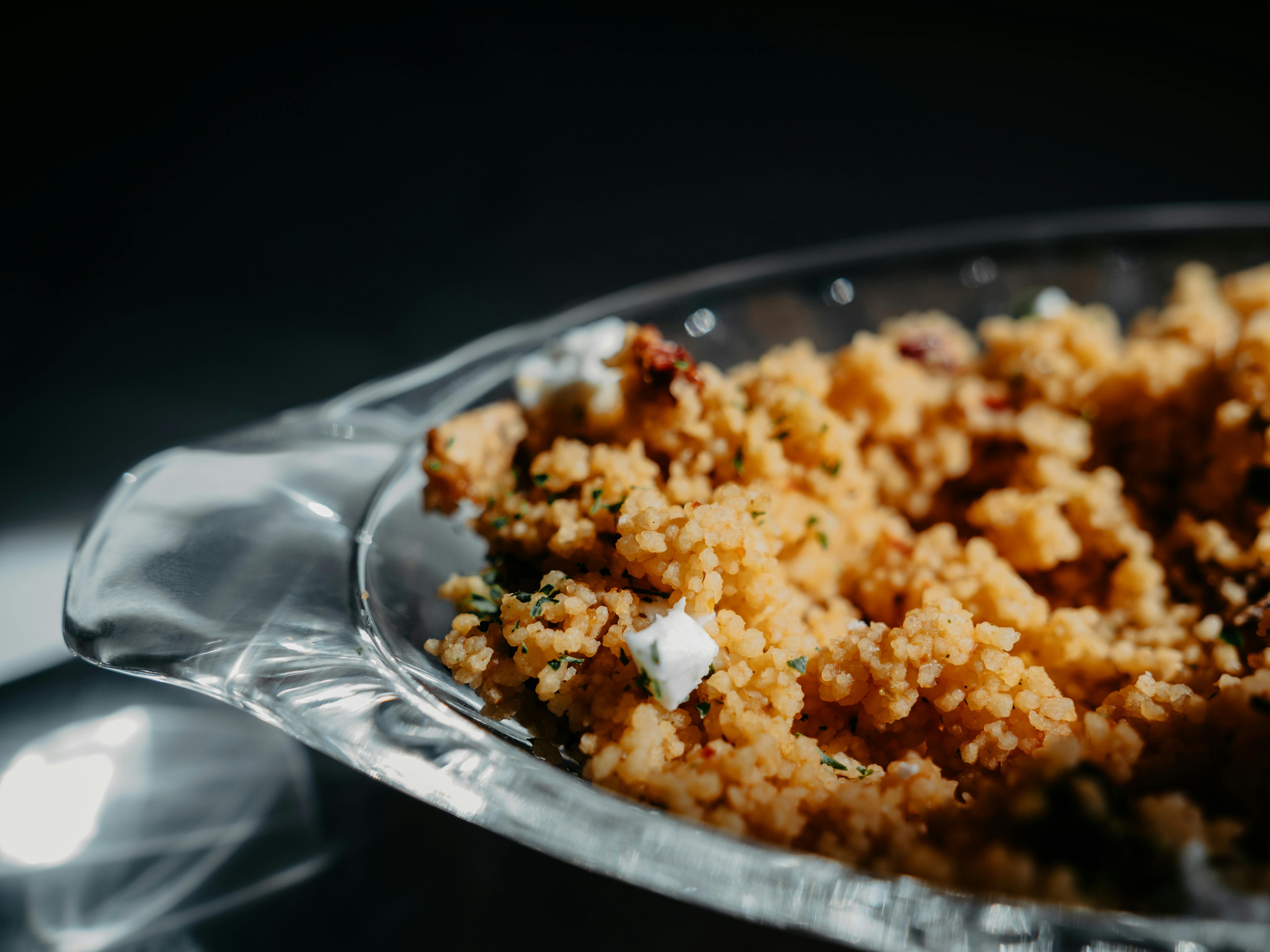
The diets react (see scores below)
Diet Ratings
Couscous is a refined grain product with approximately 35g net carbs per cooked cup. Completely incompatible with ketogenic macros and will disrupt ketosis.
Couscous is a plant-based grain product made from durum wheat semolina. It contains no animal products or animal-derived ingredients and is a whole grain staple.
Couscous is a refined grain product made from durum wheat semolina. It is a processed grain explicitly excluded from the paleo diet.
Whole grain couscous is a staple in North African Mediterranean cuisines, particularly Moroccan, Tunisian, and Algerian traditions. It's a whole grain that provides fiber and is typically prepared with vegetables and legumes, aligning with plant-based emphasis.
Couscous is a grain-based pasta product made from semolina wheat. It is a plant-derived carbohydrate and directly violates carnivore diet principles which exclude all grains and plant foods.
Couscous is a grain product made from durum wheat semolina. Grains are explicitly excluded during the 30-day Whole30 program.
Couscous is made from durum wheat semolina and contains significant fructans, a key FODMAP. Monash University rates couscous as high-FODMAP at standard serving sizes (1 cup cooked).
Refined grain product lacking the fiber and nutrient density of whole grains. While low in sodium, it does not meet DASH emphasis on whole grains for cardiovascular benefit.
Couscous is a refined grain product with high glycemic index (GI ~65). It lacks fiber and causes rapid blood sugar spikes, violating Zone's low-glycemic carb requirement. Dr. Sears explicitly recommends avoiding refined grains.
Refined grain product made from durum wheat semolina. Lacks the fiber and micronutrient density of whole grains. Rapid glycemic response can trigger inflammatory markers. Acceptable occasionally but inferior to whole grain alternatives.
Couscous is a refined grain with moderate fiber (2g per cooked cup) and minimal protein (6g per cooked cup). It lacks the nutrient density needed for GLP-1 patients eating smaller portions. While not forbidden, it should be paired with high-protein foods and is less efficient than whole grains or legumes for the same caloric investment.
Nutritional profile
Six traits that cut across every diet.
Fiber & Plants
How much whole-plant food and fiber it delivers.
Healthy Fats
The quality of its fats (unsaturated, omega-3).
Whole / Unprocessed
How close it is to its natural, unprocessed form.
Gut Gentle
How easy it is on digestion (low FODMAP, few irritants).
Low Glycemic
How little it spikes your blood sugar.
Protein Density
How much protein it packs per calorie.
Controversy Index
Score range: 1–8/10. Higher controversy = more disagreement between diets.
Diet-Specific Tips for Couscous
 Vegan — 8/10
- 100% plant-based
- Whole grain
- No animal-derived additives
 Mediterranean — 8/10
- Whole grain source
- Traditional Mediterranean staple
- Often paired with vegetables and legumes
- Low in fat
 DASH — 5/10
- Refined grain
- Low fiber compared to whole grains
- Low sodium
- Moderate glycemic impact
 Anti-Inflammatory — 5/10
- refined grain
- low fiber
- high glycemic index
- lacks polyphenols
 GLP-1 Friendly — 5/10
- Low protein density
- Refined grain (lower fiber than whole grains)
- Requires pairing with protein source
- Moderate glycemic impact