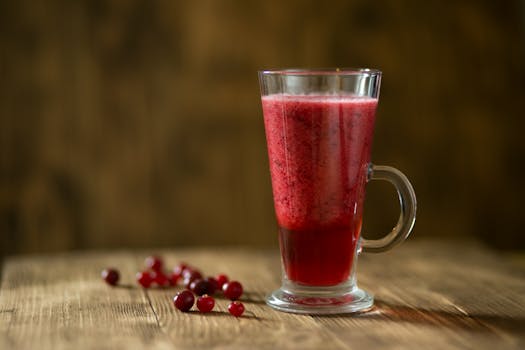
The diets react (see scores below)
Diet Ratings
Pure cranberry juice contains ~12g net carbs per 100ml serving, mostly from natural sugars. Incompatible with keto carb limits.
Pure fruit juice with no animal products. Check labels for added honey or other sweeteners, but base product is plant-based.
Cranberry juice is a processed beverage with concentrated sugars. Even unsweetened versions contain high natural sugar concentrations from processing. Contradicts paleo principle of whole foods and excessive sugar intake.
Commercial cranberry juice is typically high in added sugars and lacks the fiber of whole cranberries. It contradicts Mediterranean principles which emphasize whole fruits over processed juices. Even unsweetened versions are concentrated sugars without the nutritional benefit of whole fruit.
Cranberry juice is 100% plant-derived from cranberry fruit. Typically contains added sugars. Violates carnivore exclusion of all plant foods and added sugars.
100% cranberry juice is Whole30 compatible per official 2024 guidance. Fruit juice is not considered added sugar and is allowed both as a standalone drink and as a recipe sweetener.
Pure cranberry juice is high in natural fructose and often contains added sugars. Monash data suggests small portions (under 100 mL) may be tolerated, but typical serving sizes exceed low-FODMAP thresholds.
Monash University has limited specific testing on cranberry juice. Clinical FODMAP practitioners generally recommend avoidance due to high fructose concentration and common added sugars in commercial products.
100% cranberry juice is tart and rarely consumed undiluted; commercial versions contain added sugars (typically 25-30g per 8oz). While cranberries offer antioxidants and urinary benefits, added sugars conflict with DASH goals. Whole cranberries preferred.
NIH DASH guidelines emphasize whole fruits over juices due to fiber loss and concentration of sugars. Updated clinical interpretation increasingly discourages fruit juices even without added sugars due to glycemic impact.
Pure fruit juice with extremely high glycemic load. Typically 30g+ carbs per 8oz serving, mostly simple sugars. No fiber to moderate glycemic response. Violates Zone's low-glycemic carb principle.
Cranberries contain beneficial polyphenols and antioxidants, but commercial cranberry juice is typically high in added sugars to offset natural tartness. Whole cranberries or unsweetened versions would be preferable. The sugar content often outweighs anti-inflammatory benefits.
Some researchers highlight cranberry's proanthocyanidins and anti-inflammatory potential, suggesting unsweetened versions deserve higher ratings. However, mainstream anti-inflammatory guidance emphasizes whole fruits over juices due to sugar concentration and lack of fiber.
High sugar content (typically 25-30g per 8oz serving) spikes blood glucose and provides empty calories. Acidic nature may worsen reflux. Lacks protein and fiber. Concentrated fruit juice is poorly suited to GLP-1 dietary needs despite water content.
Nutritional profile
Six traits that cut across every diet.
Fiber & Plants
How much whole-plant food and fiber it delivers.
Healthy Fats
The quality of its fats (unsaturated, omega-3).
Whole / Unprocessed
How close it is to its natural, unprocessed form.
Gut Gentle
How easy it is on digestion (low FODMAP, few irritants).
Low Glycemic
How little it spikes your blood sugar.
Protein Density
How much protein it packs per calorie.
Controversy Index
Score range: 1–9/10. Higher controversy = more disagreement between diets.
Diet-Specific Tips for Cranberry juice
 Vegan — 8/10
- 100% plant-based
- Check for added honey
- Verify sweetener type
 Whole30 — 9/10
- 100% fruit juice
- No added sugar
- Official exception
 Low-FODMAP — 4/10
- High natural fructose content
- Often contains added sugars
- Excess fructose (fructose > glucose)
- Small portions only potentially tolerable
 DASH — 5/10
- High added sugar in commercial versions
- Fiber loss vs. whole fruit
- Antioxidant content
- Glycemic impact
 Anti-Inflammatory — 4/10
- Polyphenol content in cranberries
- High added sugar in commercial versions
- Lack of fiber compared to whole fruit
- Juice format concentrates sugars