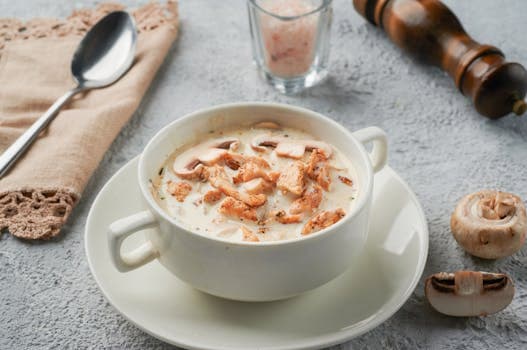
Cream of mushroom soup
Rated by 11 diets
Diet Ratings
Depends heavily on preparation. Homemade with cream and butter is keto-friendly, but commercial versions often contain flour thickeners and added sugars. Net carbs range from 3-12g per cup.
iSome keto practitioners avoid all cream soups due to hidden carbs and thickening agents, preferring broth-based alternatives.
Typically made with dairy cream and/or butter as base. Contains animal-derived ingredients that violate vegan standards.
Contains mushrooms (paleo-approved) but typically made with wheat flour as thickener and dairy cream. Homemade version with bone broth and ghee would be acceptable; commercial versions problematic.
iSome paleo practitioners (Sisson) accept cream-based soups made with quality ingredients as occasional indulgences; others (Cordain) restrict dairy strictly.
Mushrooms are Mediterranean-friendly vegetables, but cream-based soups rely on heavy dairy and often contain butter or cream rather than olive oil. Preparation method determines compatibility.
iSome Mediterranean diet practitioners accept cream soups made with modest amounts of cream and olive oil as occasional dishes, particularly in Northern Italian traditions.
Contains mushrooms (plant-based fungi) and typically includes flour, broth with plant additives, and cream. Violates core carnivore principle of excluding all plant foods.
Typically contains dairy (cream/milk) and often thickened with flour or cornstarch, both excluded on Whole30.
Mushrooms are low-FODMAP, but cream soups often contain onion/garlic as base aromatics and may use wheat flour as thickener. Portion and preparation method are critical.
iMonash University rates mushrooms as low-FODMAP; however, commercial cream soups frequently contain high-FODMAP thickeners and hidden garlic/onion. Clinical practitioners recommend homemade versions with verified ingredients.
Canned/prepared cream soups typically contain 800-1000mg sodium per serving and high saturated fat from cream/butter. Exceeds DASH sodium limits significantly.
Cream-based soups are saturated-fat dominant; mushrooms are low-glycemic but insufficient protein. Requires added lean protein (chicken, fish) to achieve 40/30/30. Fat profile unfavorable without monounsaturated oil substitution.
Mushrooms contain beta-glucans and antioxidants, but cream-based preparation adds saturated fat. Inflammatory potential depends on cream ratio. Broth-based versions would score higher.
iSome nutritionists argue mushroom's anti-inflammatory compounds (ergothioneine, polysaccharides) justify approval if cream is minimized. Dr. Weil includes mushrooms as beneficial.
Cream-based soups are high in saturated fat, low in protein and fiber, and known to trigger nausea and bloating in GLP-1 patients. The heavy, rich texture conflicts with slowed gastric emptying. Not recommended.
Controversy Index
Score range: 2–5/10. Higher controversy = more disagreement between diets.