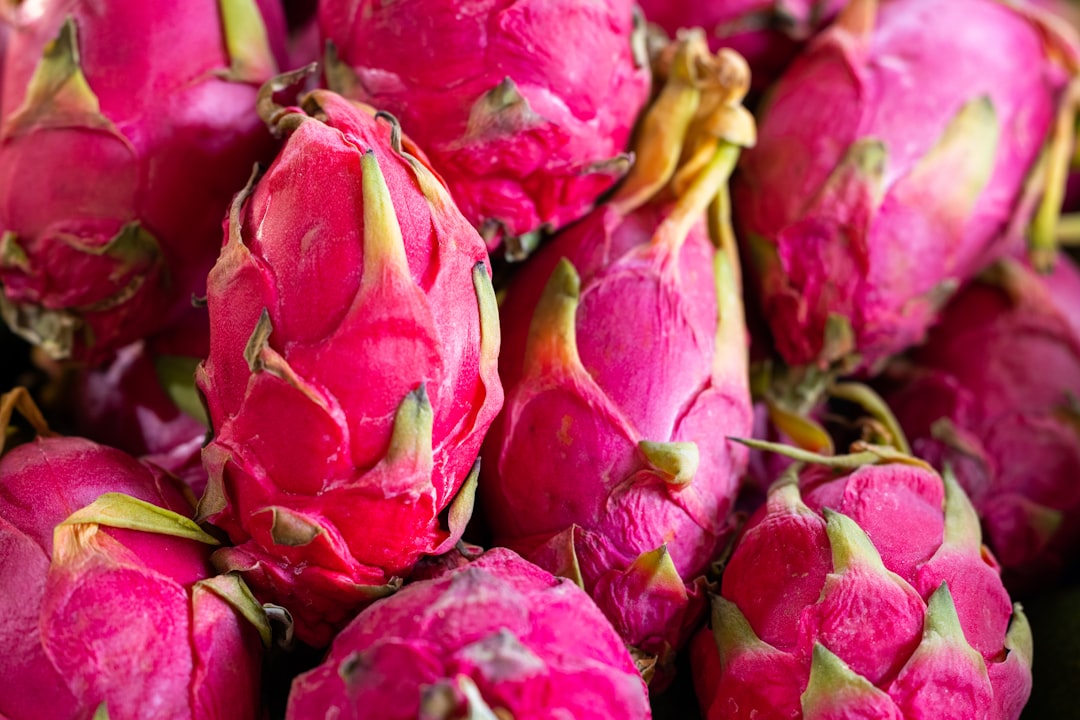
The diets react (see scores below)
Diet Ratings
High in carbohydrates with approximately 13g net carbs per 100g serving. Contains natural sugars that exceed keto carb limits. Incompatible with ketogenic diet despite being a whole food.
Dragon fruit is a tropical fruit. Whole plant food with no animal products. Excellent vegan choice.
Dragon fruit is an unprocessed tropical fruit rich in vitamin C, fiber, and antioxidants. It was available to hunter-gatherers in tropical regions and is fully paleo-compliant.
Tropical fruit with moderate fiber and vitamin C, but not native to Mediterranean region. While acceptable as occasional fruit, it lacks the emphasis on local, seasonal Mediterranean fruits like citrus, berries, and stone fruits.
Modern Mediterranean diet interpretations increasingly include diverse fruits from global trade, viewing nutritional content over geographic origin. Some nutritionists accept dragon fruit as valid fruit choice.
Dragon fruit is a tropical fruit, plant-derived and explicitly excluded from carnivore diet. Contains plant compounds, fiber, and sugars incompatible with carnivore principles.
Dragon fruit is a whole, unprocessed fruit that is explicitly compliant with Whole30. It is nutrient-dense and can be consumed freely as part of a balanced diet.
Dragon fruit (pitaya) is low in fructose and has minimal fructans. Monash testing is limited, but available data suggests it is low-FODMAP at standard fruit portions (approximately 1 cup or 200g).
Monash University has limited specific testing on dragon fruit. Clinical FODMAP practitioners generally consider it safe based on carbohydrate composition, but individual tolerance may vary. Standard fruit serving size (1 cup) is recommended.
Low-sodium fruit (<5mg per cup) with good fiber (3-4g per cup), vitamin C, and prebiotic compounds. Fits DASH fruit emphasis. Moderate natural sugars. Nutrient-dense, supports digestive health.
Moderate glycemic index (~50) with ~13g carbs per 100g. While lower-glycemic than many fruits, higher than Zone-preferred berries. Requires careful portioning (small serving ~1/4 fruit). Dr. Sears emphasizes berries over tropical fruits; dragon fruit sits in gray zone.
Some Zone practitioners accept dragon fruit as occasional fruit serving due to fiber content and lower glycemic response than bananas/mangoes. Dr. Sears' primary guidance favors berries and citrus.
Tropical fruit rich in antioxidants, vitamin C, and polyphenols. Low glycemic index. Contains prebiotic fiber supporting gut health. Colorful fruit aligns with anti-inflammatory pyramid recommendations.
Dragon fruit is low in calories (60 per cup), high in water content (85%), and provides fiber (3g per cup) and vitamin C. However, it is relatively low in protein and moderate in natural sugars (13g per cup). Works best as part of a balanced meal with protein source. Individual tolerance depends on blood sugar sensitivity and GI tolerance to fruit sugars. Portion control important.
Some GLP-1 RDs recommend limiting all fruits due to sugar content and reduced appetite making fruit less satiating; others view low-calorie, high-water fruits like dragon fruit as acceptable in moderation given their fiber and micronutrient content. Tolerance varies based on individual blood sugar response and GI sensitivity.
Nutritional profile
Six traits that cut across every diet.
Fiber & Plants
How much whole-plant food and fiber it delivers.
Healthy Fats
The quality of its fats (unsaturated, omega-3).
Whole / Unprocessed
How close it is to its natural, unprocessed form.
Gut Gentle
How easy it is on digestion (low FODMAP, few irritants).
Low Glycemic
How little it spikes your blood sugar.
Protein Density
How much protein it packs per calorie.
Controversy Index
Score range: 1–10/10. Higher controversy = more disagreement between diets.
Diet-Specific Tips for Dragon fruit
 Vegan — 9/10
- Whole fruit
- Plant-based
- No processing
 Paleo — 8/10
- Unprocessed fruit
- Nutrient-dense
- Vitamin C rich
- Moderate natural sugars
- No additives
 Mediterranean — 5/10
- Non-native tropical fruit
- Moderate fiber
- Low calorie
- Not traditional Mediterranean
 Whole30 — 10/10
- whole food
- fruit
- unprocessed
- nutrient-dense
 Low-FODMAP — 7/10
- Low fructose content relative to other fruits
- Minimal fructan content
- Limited Monash testing data
 DASH — 8/10
- Sodium: <5mg per cup
- Fiber: 3-4g per cup
- Vitamin C, antioxidants
- Moderate natural sugars: 9-12g per cup
 Zone — 5/10
- Moderate glycemic index
- Fiber content
- Tropical fruit
- Portion-dependent
- Lower than high-GI fruits
 Anti-Inflammatory — 7/10
- antioxidants
- vitamin C
- polyphenols
- low glycemic index
- prebiotic fiber
 GLP-1 Friendly — 6/10
- low calorie
- high water content
- moderate fiber
- moderate natural sugars
- low protein
- portion-dependent