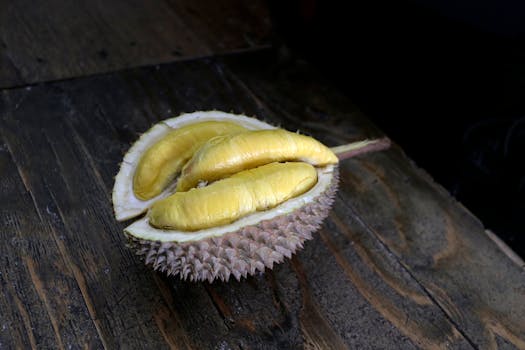
The diets react (see scores below)
Diet Ratings
Durian contains approximately 27g net carbs per 100g. Extremely high in carbohydrates and natural sugars. A single serving (100g) consumes over half the daily keto carb allowance.
Whole plant fruit with no animal products or derivatives. Unprocessed and naturally vegan despite strong odor.
Whole fruit available to hunter-gatherers. Unprocessed, nutrient-dense with natural sugars, fiber, and micronutrients. No processing or excluded ingredients.
While a whole fruit with nutrients, durian is calorie-dense and high in saturated fat compared to Mediterranean fruit norms. Acceptable occasionally but not a staple.
Some Mediterranean diet practitioners accept durian as a legitimate whole fruit choice when consumed in small portions, particularly in regions with tropical fruit access.
Plant-derived tropical fruit. Carnivore diet excludes all fruits regardless of nutrient profile or caloric density. Durian is plant-based and contains plant sugars.
Whole fruit with no excluded ingredients. Compliant despite strong odor and high natural sugar content.
Durian is high in fructose and polyols. Limited Monash University testing available, but available data and practitioner experience indicate high-FODMAP status. Not recommended during elimination phase.
Monash University has limited specific testing on durian. Clinical FODMAP practitioners generally recommend avoidance due to high fructose and polyol content, but exact FODMAP profile requires more research.
High in saturated fat (tropical fruit) and calories. While it contains potassium and fiber, the saturated fat content conflicts with DASH fat restrictions. Acceptable in very small portions.
NIH DASH guidelines emphasize limiting saturated fat; updated clinical interpretation recognizes durian's potassium and fiber benefits but recommends strict portion control due to fat profile.
Extremely high in sugar (~27g carbs per 100g) and saturated fat. Glycemic load incompatible with Zone protocol. Violates both carb and fat quality guidelines.
High in fiber and some antioxidants, but very high in sugar and saturated fat. Caloric density and inflammatory fat profile offset anti-inflammatory benefits. Better as occasional indulgence.
Some traditional medicine systems value durian for immune support, though modern anti-inflammatory frameworks emphasize its high sugar and saturated fat content as limiting factors.
Very high fat content (5.3g per 100g, mostly saturated), high calorie density (147 cal per 100g), low protein (1.5g per 100g). Fat content will significantly worsen GLP-1 side effects (nausea, bloating, reflux). Not nutrient-dense per calorie relative to fat burden.
Nutritional profile
Six traits that cut across every diet.
Fiber & Plants
How much whole-plant food and fiber it delivers.
Healthy Fats
The quality of its fats (unsaturated, omega-3).
Whole / Unprocessed
How close it is to its natural, unprocessed form.
Gut Gentle
How easy it is on digestion (low FODMAP, few irritants).
Low Glycemic
How little it spikes your blood sugar.
Protein Density
How much protein it packs per calorie.
Controversy Index
Score range: 1–10/10. Higher controversy = more disagreement between diets.
Diet-Specific Tips for Durian
 Vegan — 10/10
- 100% plant-based
- Whole food
- No processing
- No animal derivatives
 Paleo — 8/10
- Whole unprocessed fruit
- Natural sugars and fiber
- High micronutrient content
- No anti-nutrients
 Mediterranean — 5/10
- High saturated fat content
- Very calorie-dense
- Whole food source
- Portion control critical
 Whole30 — 8/10
- whole fruit
- no additives
- high natural sugar
 DASH — 5/10
- High saturated fat content
- High calorie density
- Contains potassium
- Tropical fruit with unique lipid profile
 Anti-Inflammatory — 5/10
- high sugar
- high saturated fat
- high caloric density
- some antioxidants
- fiber