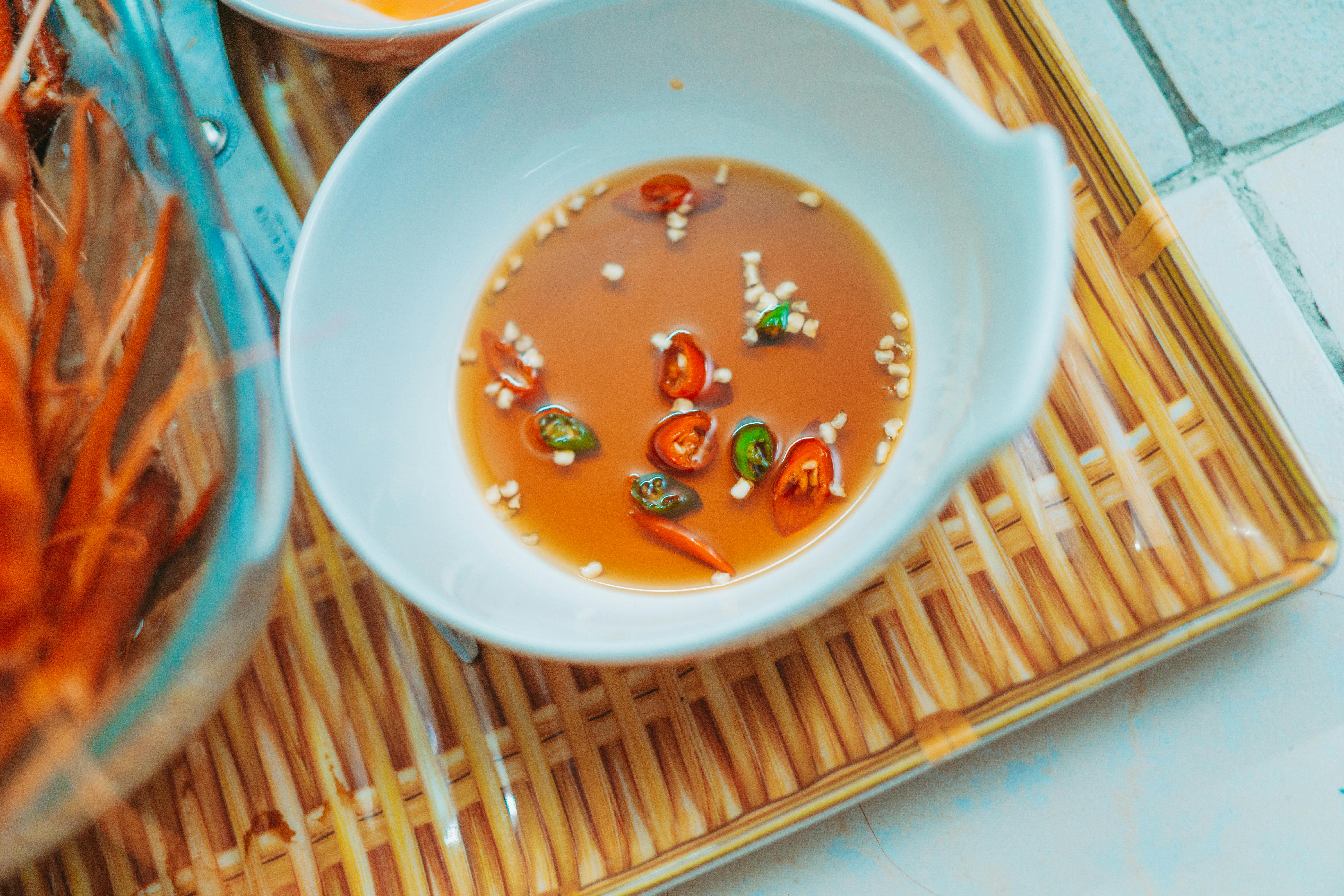
The diets react (see scores below)
Diet Ratings
Fish sauce is essentially fermented fish with minimal carbs (0-1g per tsp). High umami, no sugar, fits keto perfectly as a flavoring agent.
Fish sauce is made from fermented fish and is fundamentally incompatible with veganism. It is an animal product and explicitly excluded from all vegan diets.
Fish sauce is fermented fish and salt—a whole food product with no additives. Provides umami and nutrients. Minimal processing aligns with paleo philosophy.
Fermented fish product with high sodium content. While fish is encouraged in Mediterranean diet, fish sauce is heavily processed and concentrated. Used sparingly in Mediterranean cooking, more common in Asian cuisines. Acceptable in very small quantities.
Some Mediterranean diet practitioners accept fish sauce as a traditional ingredient in certain coastal regions, particularly in Southern European fish-based dishes, though it remains uncommon in mainstream Mediterranean cooking.
Fish sauce is a fermented animal product made from fish and salt only, providing umami and micronutrients. Fully aligned with carnivore principles.
Fish sauce is a fermented whole food product made from fish and salt. No excluded ingredients. Compliant as a flavoring agent.
Fish sauce (fermented anchovies/salt) is low-FODMAP. Fermentation breaks down FODMAPs. Used in small quantities typical for seasoning.
Extremely high sodium: 1,400-1,700mg per 1 tbsp. Single serving exceeds low-sodium DASH daily limit. Incompatible with DASH guidelines despite umami flavor.
Essentially pure protein (fermented fish) with negligible carbs and fat. Provides umami flavor without glycemic impact. Excellent Zone condiment for seasoning without disrupting macronutrient ratios. Use in small quantities (1 tsp-1 tbsp per meal).
Fermented fish provides umami and some beneficial compounds from fermentation. However, extremely high in sodium and contains histamines that may trigger inflammation in sensitive individuals. Use sparingly.
Some traditional medicine practitioners and fermentation advocates view fish sauce as beneficial due to probiotic potential and amino acid profile. However, mainstream anti-inflammatory guidance emphasizes sodium concerns and histamine content for inflammatory conditions.
Fish sauce is extremely high in sodium and has a very pungent flavor that may trigger nausea or reflux in GLP-1 patients with sensitive stomachs. However, it contains no fat or sugar and adds flavor in very small amounts (1 tsp or less). Acceptable for those with robust GI tolerance; problematic for those with nausea or reflux.
Some GLP-1 patients tolerate fish sauce well in minimal amounts (1 tsp) as a flavor enhancer without GI distress; others report that the strong aroma and high sodium worsen nausea or trigger reflux, especially on an empty stomach.
Nutritional profile
Six traits that cut across every diet.
Fiber & Plants
How much whole-plant food and fiber it delivers.
Healthy Fats
The quality of its fats (unsaturated, omega-3).
Whole / Unprocessed
How close it is to its natural, unprocessed form.
Gut Gentle
How easy it is on digestion (low FODMAP, few irritants).
Low Glycemic
How little it spikes your blood sugar.
Protein Density
How much protein it packs per calorie.
Controversy Index
Score range: 1–9/10. Higher controversy = more disagreement between diets.
Diet-Specific Tips for Fish sauce
 Keto — 9/10
- Negligible carbs (0-1g per tsp)
- No added sugars
- Whole food fermented product
 Paleo — 9/10
- whole food fermented product
- minimal processing
- nutrient-dense
- no additives in pure versions
 Mediterranean — 5/10
- high sodium
- fermented/processed
- non-traditional Mediterranean
- used in minimal quantities
- fish-derived
 Carnivore — 9/10
- animal-derived (fish)
- minimal processing
- salt only
- nutrient-dense
 Whole30 — 9/10
- Whole food fermented product
- No added sugar or excluded ingredients
- Approved flavoring
 Low-FODMAP — 8/10
- Fermentation reduces FODMAP content
- Used in small seasoning amounts
- No significant FODMAP ingredients
 Zone — 8/10
- Pure protein source
- Zero glycemic impact
- Minimal calories per serving
- Omega-3 content from fish
- No added sugars
 Anti-Inflammatory — 5/10
- extremely high sodium
- fermented benefits present
- histamine content
- umami flavor reduces need for salt
- individual sensitivity varies
 GLP-1 Friendly — 6/10
- very high sodium
- no fat or sugar
- strong flavor may trigger nausea
- individual tolerance varies widely
- used in tiny amounts