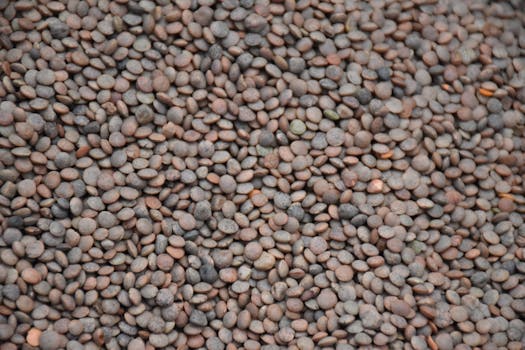
The diets react (see scores below)
Diet Ratings
French lentils contain approximately 20g net carbs per 100g cooked serving. A typical 1-cup serving (198g) delivers ~40g net carbs, consuming the entire daily keto carb allowance in one meal. Legumes are fundamentally incompatible with ketogenic macros.
Whole plant legume with no animal products or processing concerns. Nutritionally dense and minimally processed.
Lentils are legumes, explicitly excluded from paleo diet. They contain lectins, phytic acid, and other anti-nutrients that paleo philosophy seeks to eliminate.
Legumes are a cornerstone of the Mediterranean diet, emphasized for daily consumption. Puy lentils are nutrient-dense, high in fiber and protein, and minimally processed.
Legumes are plant-derived and explicitly excluded from carnivore diet. High carbohydrate and plant compound content contradicts core carnivore principles.
Lentils are legumes and explicitly excluded from Whole30 for all 30 days. No exceptions apply to French lentils.
Legumes are high in GOS (galacto-oligosaccharides), a fermentable oligosaccharide. Monash University rates all lentils, including Puy varieties, as high-FODMAP at standard serving sizes (≥1/2 cup cooked).
Excellent DASH food. High in fiber, plant-based protein, potassium, magnesium, and iron. Minimal sodium when prepared without added salt. Supports cardiovascular health and blood pressure management.
Low-glycemic legume with good protein and fiber content. However, carb-dense (approximately 20g net carbs per 100g cooked). Requires careful portioning to fit Zone macros—typically 1/3 to 1/2 cup per meal. Acceptable as carb block when paired with lean protein and monounsaturated fat.
Excellent source of plant-based protein, fiber, and polyphenols. Low glycemic index. Rich in antioxidants and minerals. Whole legume form aligns perfectly with anti-inflammatory pyramid emphasis.
Excellent protein (18g per cooked cup), high fiber (16g per cooked cup), low fat, nutrient-dense, easy to digest in small portions, and support satiety. Ideal GLP-1 companion food.
Nutritional profile
Six traits that cut across every diet.
Fiber & Plants
How much whole-plant food and fiber it delivers.
Healthy Fats
The quality of its fats (unsaturated, omega-3).
Whole / Unprocessed
How close it is to its natural, unprocessed form.
Gut Gentle
How easy it is on digestion (low FODMAP, few irritants).
Low Glycemic
How little it spikes your blood sugar.
Protein Density
How much protein it packs per calorie.
Controversy Index
Score range: 1–9/10. Higher controversy = more disagreement between diets.
Diet-Specific Tips for French lentils (Puy)
 Vegan — 9/10
- Whole food legume
- No animal products
- Minimal processing
- High protein and fiber
 Mediterranean — 9/10
- legume staple
- high fiber
- plant-based protein
- minimal processing
 DASH — 9/10
- High fiber content
- Plant-based protein
- Rich in potassium and magnesium
- Low sodium (unsalted)
- Supports healthy cholesterol
 Zone — 6/10
- Low glycemic index relative to other legumes
- High fiber reduces net carb impact
- Carb-dense; portion control essential
- Good plant-based protein source
 Anti-Inflammatory — 9/10
- high fiber content
- plant-based protein
- polyphenols and antioxidants
- low glycemic index
- mineral-rich
 GLP-1 Friendly — 9/10
- high protein density
- high fiber
- low fat
- nutrient-dense per calorie
- small portion friendly