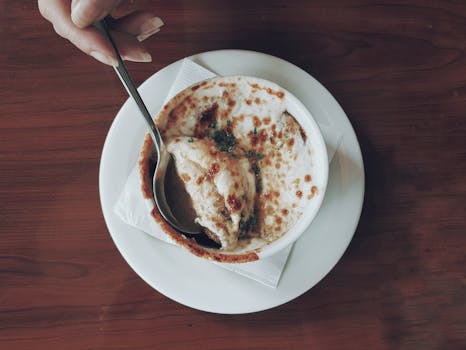
French onion soup
Rated by 11 diets
How the diets react
Diet Ratings
French onion soup contains caramelized onions (5-8g net carbs per serving) and often a bread crouton topping. Without the crouton and in small portions, it's borderline acceptable. Broth-based with minimal onions is safer.
Strict keto practitioners avoid onions entirely due to sugar content and prefer zero-carb broths; others allow small onion portions as part of total daily carb budget.
Traditionally made with beef broth (animal product) and topped with melted cheese (dairy). Both primary components are non-vegan.
Onions and broth are paleo-acceptable, but traditional French onion soup contains bread (grain) and cheese (dairy). Without these additions, it would be approved. Most commercial versions include both.
A homemade version using only caramelized onions, bone broth, and herbs (omitting bread and cheese) would be fully paleo-compliant and approvable.
Contains vegetables (onions) which are encouraged, but typically made with beef broth and topped with cheese and bread. High saturated fat and refined carbohydrates limit approval.
Mediterranean vegetable soup traditions in some regions use similar caramelized onion bases with vegetable broth and minimal cheese, making the concept compatible if preparation is modified.
French onion soup is primarily onions (plant vegetable) in a broth base. While beef broth is animal-derived and acceptable, the primary ingredient (onions) and typical bread topping make this fundamentally non-carnivore.
Onions and broth are compliant. However, traditional recipe includes bread (grain, excluded) and cheese (dairy, excluded). Compliant version possible but requires modification from standard recipe.
Official Whole30 allows compliant versions of soups, but traditional French onion soup inherently contains excluded ingredients. A modified version without bread and cheese would be compliant.
French onion soup is primarily caramelized onions (high fructans) in broth. Onions are a major FODMAP source. Even small servings contain excessive fructans. Cheese topping is low-FODMAP but negligible against onion load.
Extremely high sodium (often 1200-1800mg per bowl), high saturated fat from cheese and butter, refined carbohydrates. Minimal nutritional benefit for DASH.
Onions are caramelized (high-glycemic), broth provides minimal protein, and cheese topping adds saturated fat without balancing protein. Carb-to-protein ratio is unfavorable. Requires substantial lean protein addition and vegetable supplementation to achieve Zone balance.
Onions contain quercetin (anti-inflammatory polyphenol). However, traditional preparation uses butter and beef broth (saturated fat), topped with cheese and bread. High sodium. Depends on preparation: homemade with olive oil and vegetable broth would be better; restaurant versions typically inflammatory.
Some preparations emphasize caramelized onions' polyphenol content. Others focus on saturated fat from butter and cheese as disqualifying.
Low protein (3-5g per serving), moderate fat from cheese topping and butter. High sodium. While broth-based and warm (good for digestion), the cheese and fat content combined with low protein makes it suboptimal. Better as a side than main.
Some RDs view French onion soup as acceptable for its warm, easy-to-digest broth and modest calorie density; others prioritize the low protein and fat concerns more heavily for GLP-1 patients with reduced appetite.
Controversy Index
Score range: 1–5/10. Higher controversy = more disagreement between diets.