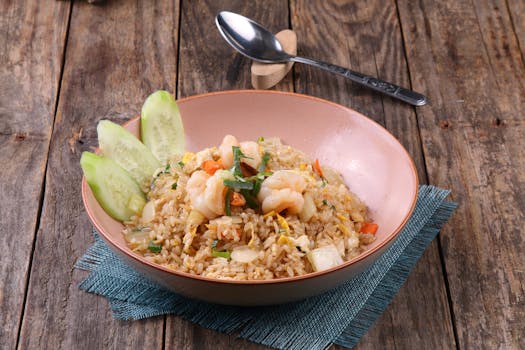
The diets react (see scores below)
Diet Ratings
Fried rice is made with cooked white or brown rice (45-55g net carbs per serving) and often contains added soy sauce with sugar (2-5g) and sometimes oyster sauce or sweet chili sauce (3-8g additional carbs). Total net carbs per serving: 50-70g, far exceeding keto limits. Fundamentally incompatible with ketosis.
Fried rice is plant-based if made with vegetable oil and no animal products, but traditionally contains egg and often shrimp or chicken. Vegan versions exist but require explicit verification.
Some vegans consider vegetable fried rice (without egg or meat) fully approvable, while others remain cautious due to common non-vegan preparation methods.
White or brown rice is a grain, cooked in seed oils, and typically contains soy sauce (soy is a legume), eggs, and often sugar. Multiple paleo violations.
Fried in vegetable oil (not olive oil), made with refined white rice, typically high in sodium and added sugars. Contradicts Mediterranean emphasis on whole grains, olive oil as primary fat, and minimal processing.
Rice (plant carbohydrate) is the primary component. Even if prepared with eggs and meat, the rice base violates carnivore principles. Plant content dominates.
Fried rice is made with white or brown rice (excluded grain), eggs (compliant), vegetables (compliant), and soy sauce (soy is excluded legume). It often contains added sugar and oil. The rice base and soy sauce are clear exclusions.
Fried rice is made with rice (low-FODMAP) and typically includes eggs (low-FODMAP), but standard recipes contain garlic, onion, and sometimes soy sauce. Vegetables vary but may include high-FODMAP items. Success depends on whether garlic and onion are used in preparation.
Monash University rates garlic and onion as high-FODMAP. Most commercial and restaurant fried rice contains garlic and onion as core flavoring. A garlic-free and onion-free version would be low-FODMAP.
High sodium from soy sauce, salt, and processed ingredients (ham, sausage). High saturated fat from egg yolk and cooking oil. Refined white rice lacks fiber. Minimal vegetable content in typical preparation. Exceeds DASH limits.
White rice is high-glycemic refined carb (~45g per cup). Fried in omega-6 seed oils (inflammatory). Protein source often limited or fatty (egg yolk, pork). Vegetables present but insufficient to balance carb load. Added soy sauce contributes sodium. Poor Zone macro fit.
Prepared by frying in seed oils (typically soybean, corn, or safflower oil), creating high omega-6 to omega-3 ratio. Refined white rice lacks fiber and whole grains. Often includes processed meats (ham, sausage) and eggs cooked in inflammatory oils. Minimal vegetables in typical preparations. Multiple inflammatory components.
High in fat (oil-cooked), refined carbohydrates (white rice), and calories. Low protein unless heavily customized with eggs or meat. Difficult to digest due to fat. Triggers nausea and bloating. Poor nutrient density per calorie. Minimal fiber.
Nutritional profile
Six traits that cut across every diet.
Fiber & Plants
How much whole-plant food and fiber it delivers.
Healthy Fats
The quality of its fats (unsaturated, omega-3).
Whole / Unprocessed
How close it is to its natural, unprocessed form.
Gut Gentle
How easy it is on digestion (low FODMAP, few irritants).
Low Glycemic
How little it spikes your blood sugar.
Protein Density
How much protein it packs per calorie.
Controversy Index
Score range: 1–5/10. Higher controversy = more disagreement between diets.
Diet-Specific Tips for Fried rice
 Low-FODMAP — 5/10
- Rice is low-FODMAP
- Eggs are low-FODMAP
- Garlic and onion typically present
- Soy sauce is low-FODMAP in small amounts
- Vegetable content varies