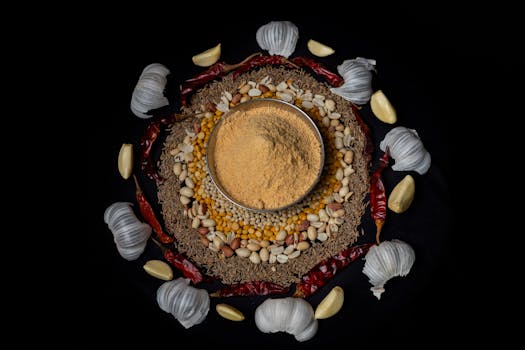
The diets react (see scores below)
Diet Ratings
Garlic powder contains approximately 1g net carbs per teaspoon. Used in small quantities for flavoring, making it keto-compatible. Provides beneficial compounds.
Plant-based spice derived from garlic. Minimal processing. No animal products or derivatives. Widely accepted vegan ingredient.
Derived from garlic (paleo-approved), but processing and potential additives create gray area. Pure garlic powder without additives is acceptable, but many commercial versions contain anti-caking agents.
Strict paleo practitioners prefer fresh garlic over any processed form, while mainstream paleo accepts pure garlic powder as a convenient seasoning alternative.
While garlic is a Mediterranean staple, powder form is processed and loses some nutritional benefits of fresh garlic. Fresh garlic is strongly preferred, but powder is acceptable when fresh is unavailable.
Some Mediterranean diet practitioners accept garlic powder as a convenient alternative to fresh, particularly for those with limited access to fresh ingredients or time constraints.
Plant-derived spice from garlic bulb. Violates plant exclusion rule despite some practitioners using trace amounts for flavor.
Garlic powder is a dried spice with no additives (assuming pure garlic powder without anti-caking agents or added ingredients). It is allowed as a seasoning under Whole30 guidelines.
Monash University rates garlic powder as high-FODMAP due to concentrated fructans from garlic. Even small amounts exceed low-FODMAP thresholds.
Zero sodium, zero calories in typical amounts. Contains allicin with cardiovascular benefits. Excellent salt substitute. Supports DASH sodium reduction strategy.
Negligible carbs and calories, anti-inflammatory compounds. Ideal Zone condiment with no macronutrient impact. Supports anti-inflammatory protocol.
Concentrated source of allicin and sulfur compounds with documented anti-inflammatory and immune-supporting properties. Convenient way to access garlic's benefits. Minimal calories with significant phytonutrients.
Negligible calories, no GLP-1 side effect triggers, supports flavor without fat or sugar. Mild and well-tolerated. Helps make lean proteins and vegetables more palatable on reduced calorie intake.
Nutritional profile
Six traits that cut across every diet.
Fiber & Plants
How much whole-plant food and fiber it delivers.
Healthy Fats
The quality of its fats (unsaturated, omega-3).
Whole / Unprocessed
How close it is to its natural, unprocessed form.
Gut Gentle
How easy it is on digestion (low FODMAP, few irritants).
Low Glycemic
How little it spikes your blood sugar.
Protein Density
How much protein it packs per calorie.
Controversy Index
Score range: 1–9/10. Higher controversy = more disagreement between diets.
Diet-Specific Tips for Garlic powder
 Keto — 8/10
- Low net carbs per serving
- Minimal portion use
- Whole food derivative
 Vegan — 9/10
- Plant-based spice
- Minimal processing
- No animal products
- Commonly used in vegan cooking
 Paleo — 6/10
- processed form of paleo food
- potential anti-caking additives
- depends on purity
 Mediterranean — 5/10
- processed form
- fresh preferred
- convenience trade-off
- nutrient loss in processing
 Whole30 — 8/10
- Whole spice derivative
- No excluded additives
- Explicitly allowed
 DASH — 8/10
- Zero sodium
- Allicin content
- Cardiovascular benefits
- Salt alternative
 Zone — 8/10
- anti-inflammatory
- negligible carbs
- allicin compounds
- zero macronutrient impact
 Anti-Inflammatory — 8/10
- allicin
- sulfur compounds
- anti-inflammatory
- immune support
 GLP-1 Friendly — 8/10
- negligible calories
- no GI side effect risk
- enhances flavor without fat
- mild and well-tolerated
- supports nutrient-dense meals