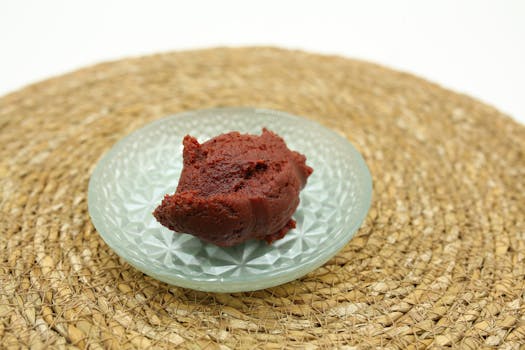
The diets react (see scores below)
Diet Ratings
Gochujang (Korean chili paste) contains 3-4g net carbs per tablespoon due to added sugar, rice, and fermented grains. Even modest portions (1-2 tbsp) contribute 6-8g carbs. The added sugars and grain content make it fundamentally incompatible with strict keto macros.
Korean chili paste traditionally made from chili peppers, soybeans, and salt. Most commercial versions are vegan, but some contain fish sauce or shrimp paste. Brand verification required.
Some vegans avoid gochujang entirely due to traditional fermentation practices that may involve animal products in certain regional or artisanal versions.
Gochujang is a fermented Korean chili paste that typically contains barley malt, soy, and other grains/legumes as binders and flavor bases. These are explicitly excluded from paleo.
Gochujang contains added sugars and salt, and is fermented with ingredients not traditional to Mediterranean cuisine. While fermented foods are valued, this specific product has higher sugar content than ideal.
Some modern Mediterranean diet advocates value fermented foods and may accept gochujang in small amounts for its probiotic content, though added sugars remain a concern.
Fermented plant-based condiment made from chili peppers, soybeans, and grains. Multiple plant-derived ingredients explicitly excluded from carnivore diet.
Gochujang is a fermented Korean paste traditionally made with soybeans (legume), rice (grain), and added sugar. Contains multiple excluded ingredients.
Gochujang is a Korean fermented chili paste typically made with soybeans, salt, and chili peppers. Soybeans contain GOS (galacto-oligosaccharides), making this high-FODMAP. Fermentation does not eliminate GOS.
Fermented chili paste with moderate sodium (typically 400-600mg per tablespoon). Contains added sugars. Beneficial probiotics and antioxidants, but sodium content requires portion control and accounting in daily intake.
Fermented Korean chili paste with added sugar and salt. Contains ~3-4g carbs and ~1g protein per tbsp. Small amounts acceptable but must be counted toward daily carb blocks. Not ideal as free condiment due to sugar content. Use sparingly.
Fermented chili paste with anti-inflammatory capsaicin and fermentation benefits, but typically contains added sugar and salt. Check labels for added sugars and high-fructose corn syrup. Acceptable if low-sugar version used in moderation.
Some practitioners view traditional gochujang's fermentation benefits as outweighing moderate sugar content. However, Dr. Weil's pyramid emphasizes limiting added sugars, making this a caution rather than approve.
Fermented chili paste with some protein (2g per tbsp) and fiber, but very spicy and contains added sugars (3g per tbsp). Spice can trigger reflux/nausea; sugar content is problematic. Use sparingly as a condiment only.
Nutritional profile
Six traits that cut across every diet.
Fiber & Plants
How much whole-plant food and fiber it delivers.
Healthy Fats
The quality of its fats (unsaturated, omega-3).
Whole / Unprocessed
How close it is to its natural, unprocessed form.
Gut Gentle
How easy it is on digestion (low FODMAP, few irritants).
Low Glycemic
How little it spikes your blood sugar.
Protein Density
How much protein it packs per calorie.
Controversy Index
Score range: 1–6/10. Higher controversy = more disagreement between diets.
Diet-Specific Tips for Gochujang
 Vegan — 5/10
- Plant-based base ingredients
- Risk of fish sauce or shrimp paste
- Brand-dependent
- Fermentation process varies
 Mediterranean — 4/10
- added sugars
- high sodium
- not traditional Mediterranean
- fermented element positive
 DASH — 5/10
- Moderate sodium content
- Added sugars present
- Fermented (probiotic benefit)
- Antioxidant-rich
- Portion control needed
 Zone — 4/10
- Added sugar increases glycemic load
- Fermented; some probiotic benefit
- Carbs must be tracked
- High sodium content
 Anti-Inflammatory — 6/10
- capsaicin present
- fermented benefits
- often contains added sugar
- high sodium typical
- label-dependent quality
 GLP-1 Friendly — 4/10
- very spicy
- added sugar present
- may trigger reflux
- minimal protein per serving
- portion-dependent tolerance