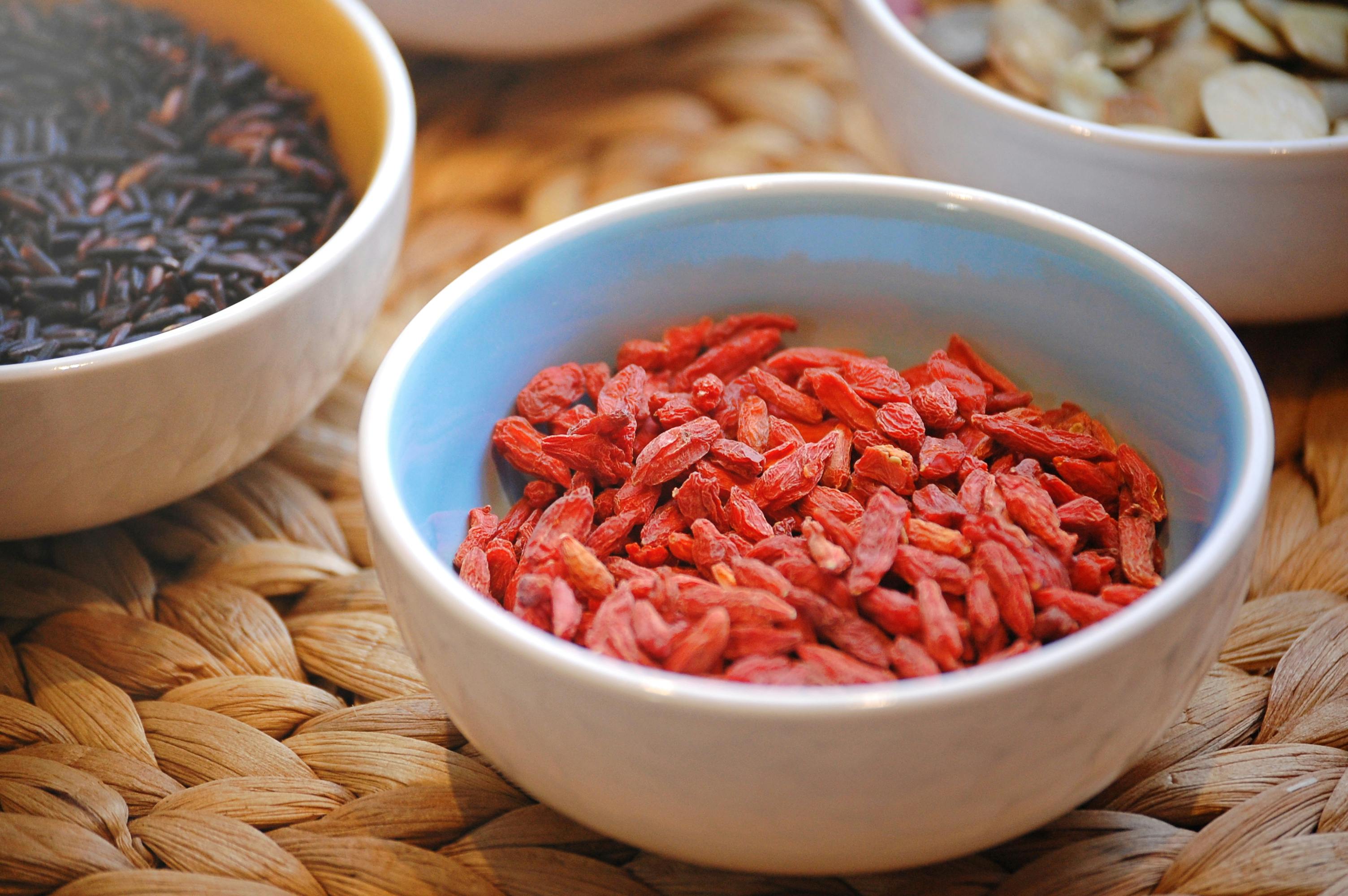
The diets react (see scores below)
Diet Ratings
Dried goji berries contain approximately 16g net carbs per ounce. Despite marketing as a superfood, the carb density is too high for ketogenic compliance.
Dried berries, plant-based, minimal processing. No animal products or derivatives.
Dried berry with concentrated sugars and modern cultivation history. While nutrient-dense, goji berries are not ancestral foods and processing concentrates sugars. Acceptable in moderation.
Some paleo practitioners include goji berries as a superfood due to exceptional micronutrient density and minimal processing, though traditional paleo excludes them as non-ancestral.
Goji berries are nutrient-dense but not traditionally Mediterranean. They are often dried and concentrated in sugars. While not prohibited, they are not core to the diet and local Mediterranean berries are preferred.
Some modern Mediterranean diet interpretations include goji berries as a superfood addition, particularly in regions with Asian culinary influences. However, traditional Mediterranean practice emphasizes local berries like blueberries and blackberries.
Plant-derived berry with high carbohydrate and sugar content. Marketed as superfood but incompatible with carnivore exclusion of all plant foods.
Dried fruit with concentrated natural sugars. Same considerations as raisins—technically compliant but tests the spirit of whole, unprocessed eating.
Official Whole30 guidance treats dried goji berries similarly to raisins: technically allowed but discouraged due to sugar concentration. Community interpretation varies on whether to include them.
Goji berries have limited Monash testing data. They contain moderate fructose and some polyols. Clinical practitioners suggest limiting to small portions (1-2 tablespoons) during elimination phase.
Monash University has limited specific testing for goji berries; clinical FODMAP practitioners recommend caution due to fructose and polyol content, suggesting portions under 2 tablespoons as potentially tolerable.
Nutrient-rich with antioxidants and some potassium, but often sold dried with added sugars and sodium. Fresh goji berries are rare in Western markets. NIH DASH guidelines emphasize whole fruits; goji berries are typically processed.
Updated clinical interpretation recognizes goji berries as functional foods with cardiovascular benefits, though NIH DASH guidelines prioritize conventional whole fruits due to standardization and accessibility.
Goji berries are nutrient-dense superfoods with polyphenols and antioxidants, but they are higher in natural sugars than conventional berries (blueberries, strawberries). Dr. Sears emphasizes low-glycemic berries; goji berries require careful portioning. Dried goji berries are particularly concentrated in sugars.
Some Zone practitioners view goji berries more favorably due to their polyphenol content and anti-inflammatory properties, treating them similarly to blueberries. However, Sears' published materials prioritize glycemic load over superfood status.
Exceptional antioxidant profile with polyphenols, carotenoids, and vitamin C. Low glycemic impact relative to sugar content. Widely recognized in anti-inflammatory protocols for immune support.
Goji berries are nutrient-dense (protein, fiber, antioxidants) and lower in sugar than raisins. However, they're calorie-dense (98 cal per 1 oz), and portion control is critical — a small handful is easy to exceed. Some GLP-1 patients tolerate them well as a supplement to meals; others find them too concentrated in sugar. Individual tolerance varies.
Some GLP-1 RDs recommend goji berries as a nutrient-dense snack in measured portions (1 oz), while others suggest fresh berries are superior due to higher water content and lower calorie density per serving.
Nutritional profile
Six traits that cut across every diet.
Fiber & Plants
How much whole-plant food and fiber it delivers.
Healthy Fats
The quality of its fats (unsaturated, omega-3).
Whole / Unprocessed
How close it is to its natural, unprocessed form.
Gut Gentle
How easy it is on digestion (low FODMAP, few irritants).
Low Glycemic
How little it spikes your blood sugar.
Protein Density
How much protein it packs per calorie.
Controversy Index
Score range: 1–9/10. Higher controversy = more disagreement between diets.
Diet-Specific Tips for Goji berries
 Vegan — 9/10
- dried fruit
- minimal processing
- no animal products
 Paleo — 6/10
- dried fruit
- concentrated sugars
- non-ancestral
- nutrient-dense
- minimal processing
 Mediterranean — 5/10
- not traditional Mediterranean
- concentrated nutrients but also sugars
- dried form increases sugar concentration
- local berries preferred
 Whole30 — 5/10
- Dried fruit
- Concentrated natural sugars
- No added ingredients
- Portion control concern
 Low-FODMAP — 5/10
- Limited Monash testing
- Moderate fructose
- Polyol content
- Dried fruit concentration
 DASH — 6/10
- Often processed/dried
- Potential added sodium
- Potential added sugars
- Antioxidant content variable
 Zone — 5/10
- Higher sugar than conventional berries
- Excellent polyphenol and antioxidant profile
- Dried form is more concentrated in carbs
- Requires portion control
 Anti-Inflammatory — 8/10
- High polyphenol content
- Carotenoids
- Antioxidants
- Relatively low glycemic impact
 GLP-1 Friendly — 5/10
- nutrient-dense
- moderate fiber
- calorie-dense
- portion-sensitive
- concentrated sweetness