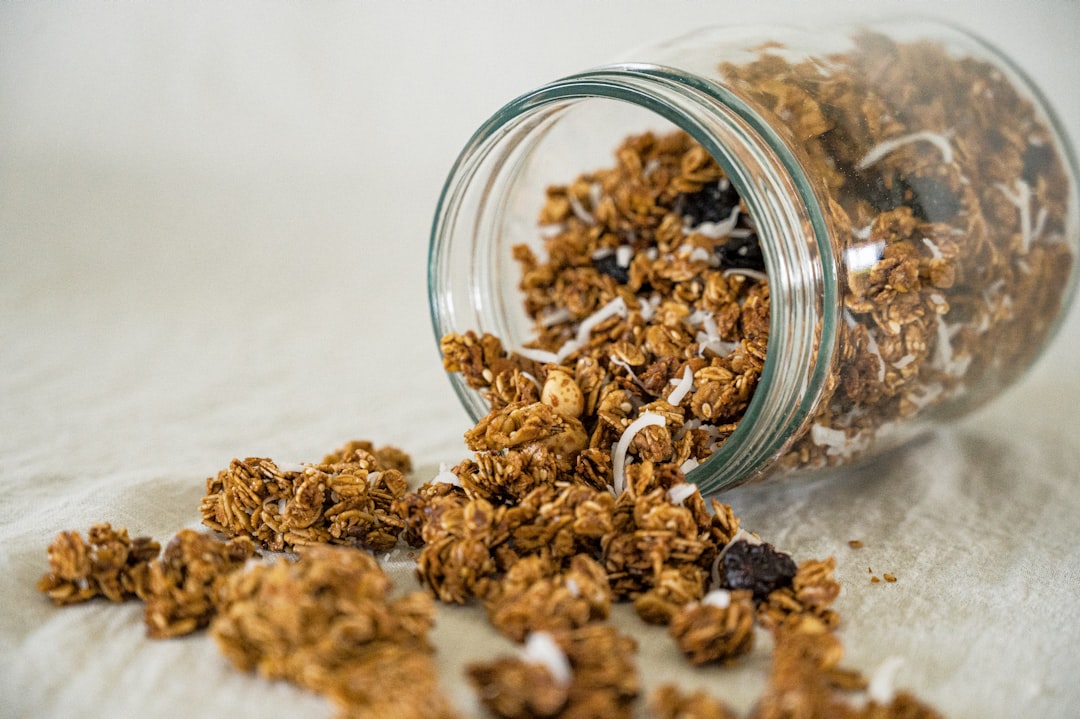
The diets react (see scores below)
Diet Ratings
Granola contains ~50-60g net carbs per 100g with added sugars, honey, and grains. Even small portions (1/4 cup) provide 12-15g net carbs. Fundamentally incompatible with ketosis.
Most commercial granolas are plant-based but heavily processed with added sugars and oils. Some brands contain honey or dairy. Check labels carefully. Whole grain oat-based varieties are preferable.
Granola is a processed food typically made from grains (oats), nuts, seeds, and sweeteners. Even 'paleo granola' uses paleo-compliant ingredients but contradicts the paleo philosophy of whole, unprocessed foods. The processing and often-added sugars are problematic.
Typically high in added sugars, honey, and oils. Highly processed despite whole grain base. Contradicts Mediterranean principle of minimal added sugars and processed foods.
Granola is a processed food made from grains, nuts, seeds, and often sweeteners. Multiple plant-derived ingredients make it completely incompatible with carnivore diet.
Granola contains grains (oats, wheat, etc.) and added sugar. It is also a processed junk food that violates the spirit of Whole30.
Most commercial granolas contain high-FODMAP ingredients including wheat, honey (excess fructose), dried fruit (polyols and excess fructose), and nuts in large quantities. Monash testing confirms high-FODMAP status.
Typically high in added sugars, saturated fat (from coconut or palm oil), and calories. Often contains honey, brown sugar, or other sweeteners. Conflicts with DASH limits on added sugars and saturated fat despite whole grain base.
Typically high in added sugars, honey, and oils. Even 'healthy' granola contains excessive carbs relative to protein/fat. Difficult to portion for Zone ratio. Violates anti-inflammatory principle.
Despite oat base, commercial granola is typically high in added sugars, honey, and often made with inflammatory seed oils (sunflower, safflower). High caloric density with poor nutrient-to-calorie ratio. Pro-inflammatory due to sugar content and processing.
High fat (8-12g per quarter cup), high sugar (12-15g per quarter cup), low protein (3-4g per quarter cup). Calorie-dense with poor nutritional return. Portion sizes are deceptively small, and high fat content worsens GLP-1 side effects (nausea, bloating). Empty calories that do not support satiety.
Nutritional profile
Six traits that cut across every diet.
Fiber & Plants
How much whole-plant food and fiber it delivers.
Healthy Fats
The quality of its fats (unsaturated, omega-3).
Whole / Unprocessed
How close it is to its natural, unprocessed form.
Gut Gentle
How easy it is on digestion (low FODMAP, few irritants).
Low Glycemic
How little it spikes your blood sugar.
Protein Density
How much protein it packs per calorie.
Controversy Index
Score range: 1–5/10. Higher controversy = more disagreement between diets.
 Vegan
Vegan Paleo
Paleo