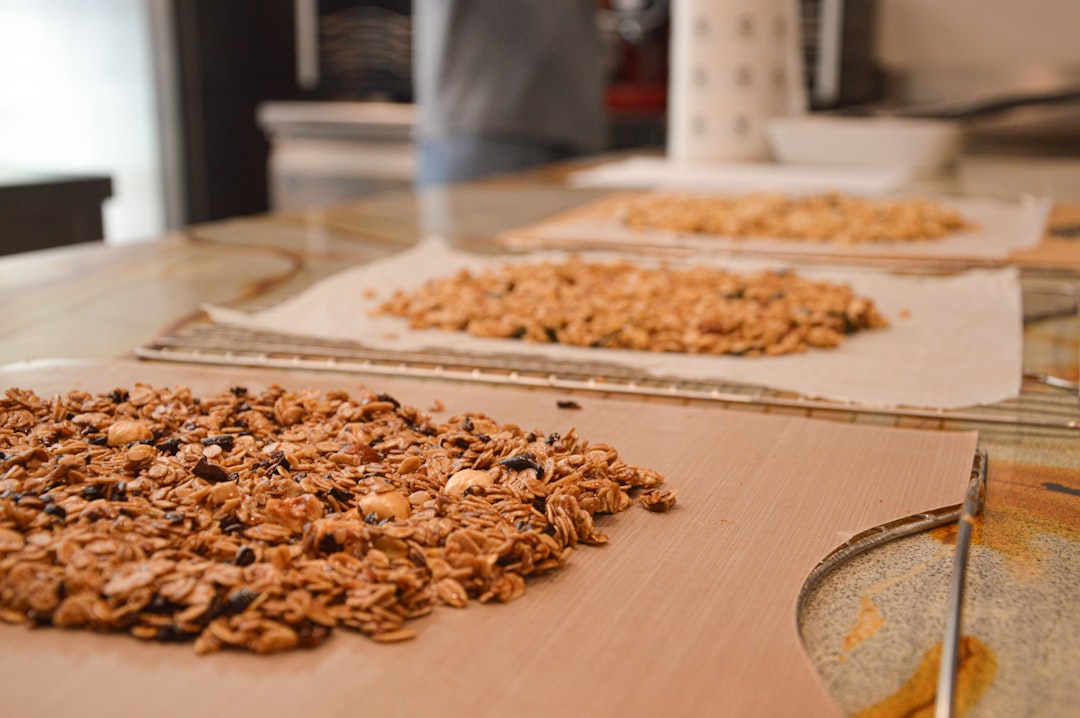
The diets react (see scores below)
Diet Ratings
Store-bought granola typically contains 15-20g net carbs per quarter cup serving plus significant added sugars and honey. It is designed as a high-carb breakfast food and is completely incompatible with ketosis.
Store-bought granola frequently contains honey, which most vegan organizations exclude. Even honey-free versions often use animal-derived vitamin D, whey, or other hidden animal ingredients. Heavily processed.
Some vegans accept granola if it contains no honey and uses plant-based binders, viewing it as acceptable processed food despite high sugar content.
Store-bought granola contains grains (oats, wheat), added sugars, seed oils, and preservatives. It violates multiple core paleo rules despite being marketed as 'healthy.'
Store-bought granola is typically high in added sugars, oils, and heavily processed despite whole grain base. Often contains 10-15g sugar per serving, contradicting Mediterranean minimization of added sugars.
Grain and seed-based product with added sugars and plant oils. Multiple plant-derived ingredients and processed additives make it incompatible with carnivore diet.
Store-bought granola contains grains (oats), added sugar, and often dairy or other excluded ingredients. Granola is a processed food that violates Whole30 principles.
Store-bought granola typically contains wheat, oats, honey, dried fruit (high fructose), and nuts. Multiple FODMAP sources: fructans from wheat, excess fructose from honey and dried fruit, and polyols from some sweeteners.
High in added sugars, saturated fat (often coconut oil), and calories. Contradicts DASH limits on sweets and tropical oils. Excessive sodium in many brands.
Store-bought granola is high in added sugars, saturated fat, and calories. One cup (~120g) contains ~60g carbs (6.7 carb blocks) and 15-20g fat (mostly saturated). Nutritionally incompatible with Zone's low-glycemic, anti-inflammatory focus. Dr. Sears explicitly categorizes processed granola as a food to eliminate.
Store-bought granola is typically high in added sugars, saturated fat (coconut oil, butter), and seed oils. Despite whole grain base, the sugar content and processing create a pro-inflammatory product. Often contains honey or syrups that spike blood glucose.
Store-bought granola is high in sugar (12-15g per 1/4 cup serving), saturated fat (from oils and nuts), and calories (150-200 per 1/4 cup) with only modest fiber (2-3g) and protein (3-4g). It is calorie-dense, easy to overeat in small portions, and provides empty calories. High sugar and fat worsen GLP-1 side effects (nausea, bloating). It is a poor use of limited food intake.
Nutritional profile
Six traits that cut across every diet.
Fiber & Plants
How much whole-plant food and fiber it delivers.
Healthy Fats
The quality of its fats (unsaturated, omega-3).
Whole / Unprocessed
How close it is to its natural, unprocessed form.
Gut Gentle
How easy it is on digestion (low FODMAP, few irritants).
Low Glycemic
How little it spikes your blood sugar.
Protein Density
How much protein it packs per calorie.
Controversy Index
Score range: 1–5/10. Higher controversy = more disagreement between diets.
Diet-Specific Tips for Granola (store-bought)
 Vegan — 5/10
- Often contains honey
- May contain whey or casein
- May contain animal-derived vitamin D
- High sugar content
- Requires careful label reading