Diet Ratings
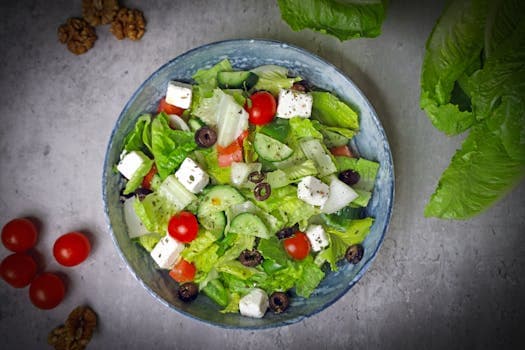
Greek salad with cucumbers, tomatoes, olives, feta cheese, and olive oil dressing is keto-compatible. Net carbs are 4-7g per serving. High fat from olives, cheese, and oil; moderate protein.
Traditional Greek salad contains feta cheese (dairy). While vegetables are plant-based, the cheese makes it non-vegan.
Vegetables, olives, and olive oil are paleo-compliant. However, feta cheese is dairy. Traditional recipe includes grains (pita bread) on the side. Can be paleo if cheese is minimized and bread excluded.
iStrict paleo (Cordain) excludes all dairy including feta. Primal Blueprint (Sisson) allows fermented dairy in moderation. Some paleo practitioners accept feta as a small garnish.
Quintessential Mediterranean salad with tomatoes, cucumbers, olives, feta cheese, and olive oil dressing. Minimal processing, vegetables, healthy fats, and traditional Mediterranean ingredients.
Primarily vegetables (tomatoes, cucumbers, peppers, onions) with olives and feta. While feta is animal-derived, plant components are dominant and fundamentally incompatible.
Greek salad contains feta cheese (dairy), which is explicitly excluded from Whole30. While vegetables and olive oil are compliant, the cheese is a disqualifying ingredient.
Greek salad contains lettuce, tomato, cucumber, and feta cheese (all low-FODMAP), but traditional recipes include onion and olives. Onion is high in fructans. The salad is safe only if onion is omitted or minimized. Olives are low-FODMAP at standard servings.
iMonash University rates onion as high-FODMAP at any reasonable serving. Some practitioners suggest that a very small amount of red onion may be tolerable, but this is not supported by Monash testing and is not recommended during elimination phase.
Excellent DASH alignment: vegetables, olive oil (unsaturated fat), legumes (chickpeas often included). Feta cheese adds sodium but in reasonable amounts. Rich in potassium, magnesium, and fiber.
Mixed vegetables (low-glycemic), feta cheese (protein and fat), olives (monounsaturated fat), and olive oil dressing. Naturally anti-inflammatory with polyphenol-rich ingredients. Requires added lean protein (grilled chicken or fish) to be a complete Zone meal, but as a component is excellent.
Excellent anti-inflammatory profile: tomatoes (lycopene), cucumbers, olives (polyphenols), feta (moderate dairy), and olive oil (MUFA, polyphenols). Low glycemic load, high fiber and antioxidants.
High fiber from vegetables, moderate protein from feta cheese. However, traditional Greek salad is high in fat from olive oil and feta (15-20g fat per serving). Easy to digest. Acceptable if oil is minimized and portion is controlled.
iSome GLP-1 nutrition experts recommend Greek salad with dressing on the side and reduced feta as a nutrient-dense option; others note that even moderate olive oil amounts may worsen nausea in sensitive patients.
Controversy Index
Score range: 1–9/10. Higher controversy = more disagreement between diets.