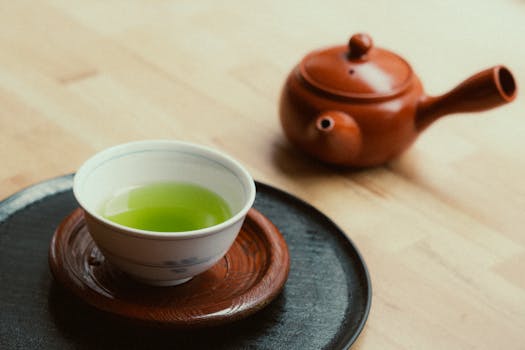
The diets react (see scores below)
Diet Ratings
Unsweetened green tea contains 0g net carbs and provides beneficial catechins. Excellent keto beverage with no impact on ketosis.
Pure plant-based beverage with no animal products or derivatives. Minimal processing.
Green tea is a processed plant product (dried leaves), not available to hunter-gatherers in this form. However, many paleo practitioners accept it for its minimal processing and health benefits. Contains no grains, legumes, or seed oils.
Strict paleo excludes all processed beverages including tea, arguing Paleolithic humans drank water. Mark Sisson and modern paleo communities widely accept green tea as a low-risk exception.
Green tea is a minimally processed beverage with antioxidants and polyphenols. Consumed traditionally in Mediterranean regions and aligns with preference for whole foods and beverages without added sugars. Supports hydration without calories.
Green tea is plant-derived (Camellia sinensis leaves). While some carnivore practitioners consume it, strict carnivore excludes all plant beverages. Contains plant compounds and caffeine from a non-animal source.
Plain green tea (brewed from leaves) contains no excluded ingredients. Fully compliant as a beverage.
Plain green tea (brewed from leaves or bags) is low-FODMAP. Monash confirms tea beverages are suitable. No added ingredients or sweeteners present.
Unsweetened green tea is sodium-free, calorie-free, and rich in polyphenols and catechins. Supports cardiovascular health. Core DASH beverage.
Calorie-free, polyphenol-rich beverage. EGCG supports anti-inflammatory response. No impact on macronutrient balance. Explicitly endorsed in Zone literature.
Green tea is a cornerstone of anti-inflammatory diets, rich in EGCG and catechins with extensive research supporting anti-inflammatory and antioxidant benefits. Explicitly emphasized in Weil's pyramid.
Green tea provides hydration, antioxidants, and minimal caffeine (25-50mg per cup). Supports satiety without calories or GI irritation. Herbal tea is ideal for GLP-1 patients.
Nutritional profile
Six traits that cut across every diet.
Fiber & Plants
How much whole-plant food and fiber it delivers.
Healthy Fats
The quality of its fats (unsaturated, omega-3).
Whole / Unprocessed
How close it is to its natural, unprocessed form.
Gut Gentle
How easy it is on digestion (low FODMAP, few irritants).
Low Glycemic
How little it spikes your blood sugar.
Protein Density
How much protein it packs per calorie.
Controversy Index
Score range: 2–10/10. Higher controversy = more disagreement between diets.
Diet-Specific Tips for Green tea
 Keto — 9/10
- Zero net carbs
- No added sugars
- Antioxidant benefits
 Vegan — 9/10
- 100% plant-based
- Whole food
- No additives in pure form
 Paleo — 6/10
- Processed (dried leaves)
- No additives in pure form
- Caffeine content
- Antioxidants
 Mediterranean — 8/10
- Minimal processing
- No added sugars
- Antioxidant content
- Traditional in some Mediterranean regions
 Whole30 — 10/10
- No added sugar or sweeteners
- No dairy
- Whole food beverage
 Low-FODMAP — 9/10
- Plain tea has no fermentable carbohydrates
- No lactose or polyols
- Assume unsweetened preparation
 DASH — 9/10
- Zero sodium
- Antioxidants (EGCG, catechins)
- No added sugar
- Cardiovascular benefits
 Zone — 9/10
- Polyphenol-rich
- EGCG content
- Zero macros
- Anti-inflammatory
 Anti-Inflammatory — 9/10
- EGCG and catechin polyphenols
- Strong antioxidant activity
- Extensive clinical research
- Low caffeine relative to benefits
 GLP-1 Friendly — 8/10
- hydration support
- low caffeine
- zero calories
- antioxidants
- no GI irritation