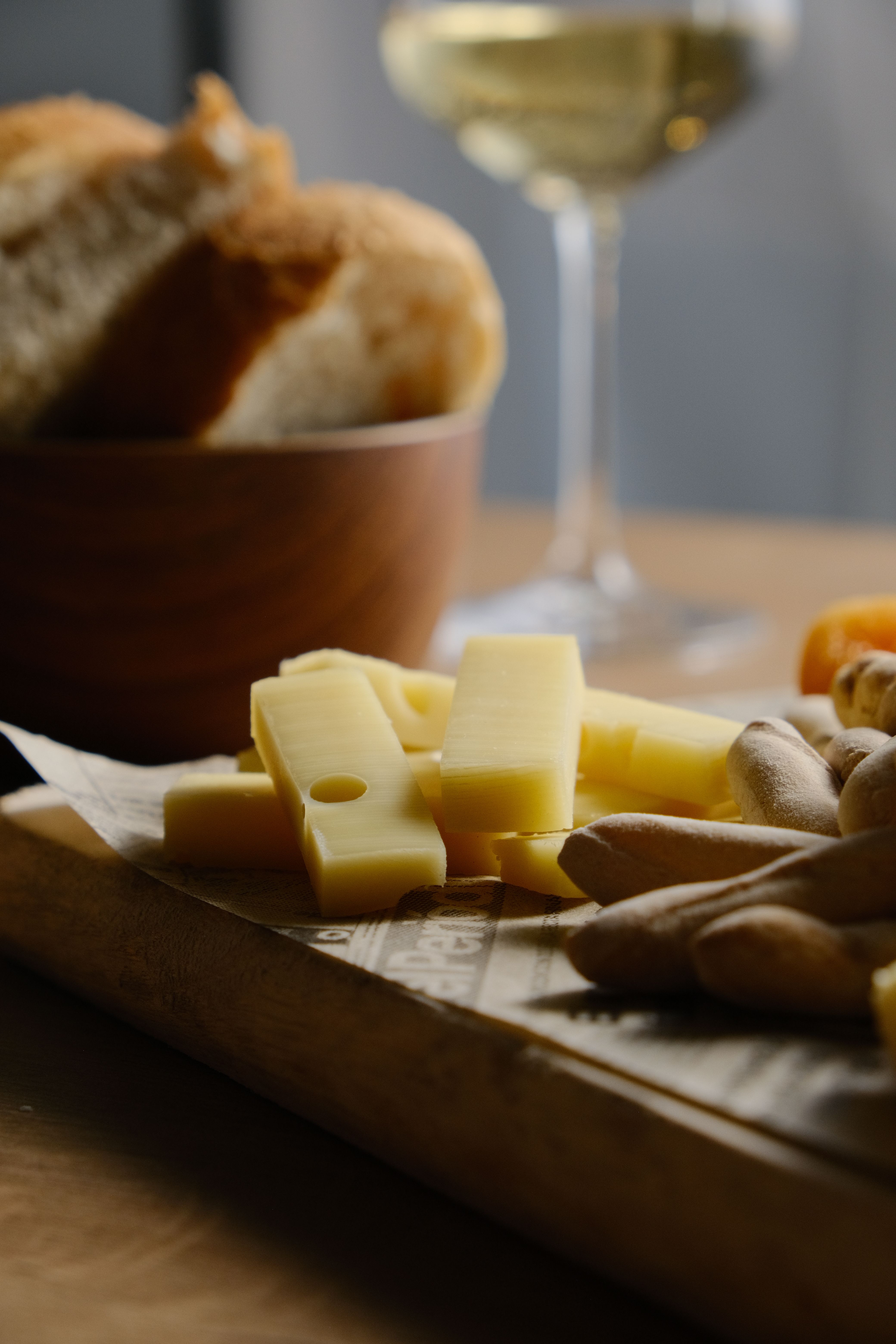
The diets react (see scores below)
Diet Ratings
Full-fat aged cheese with negligible carbs (0.1g per oz). High fat, moderate protein. Excellent keto staple with rich flavor.
Cheese is a dairy product made from animal milk. Gruyère is a traditional Swiss cheese derived entirely from cow's milk.
Dairy is excluded from paleo diet. Gruyère is a hard cheese containing lactose and casein, inflammatory for most paleo practitioners despite lower lactose than soft cheeses.
Cheese is acceptable in moderation in Mediterranean diet, but Gruyère is high in saturated fat and sodium. Traditional Mediterranean cheeses like feta, goat cheese, and ricotta are preferred. Gruyère should be used sparingly as a flavoring rather than a primary food.
Gruyère is a high-quality, full-fat cheese that is animal-derived and widely consumed by carnivore practitioners. However, dairy remains debated within the community—some strict practitioners exclude all dairy, while others embrace it as a core animal product.
Strict 'meat only' carnivore and Lion Diet adherents exclude all dairy products due to lactose, casein sensitivity, or inflammatory concerns. Paul Saladino's animal-based approach includes raw dairy, while pure carnivore excludes it entirely.
Cheese is explicitly excluded from Whole30. All dairy products including aged cheeses like Gruyère are not permitted during the 30-day elimination period.
Hard aged cheese with minimal lactose due to fermentation and aging. Monash confirms hard cheeses are low-FODMAP. No FODMAP-containing additives.
Full-fat cheese with high saturated fat (5g per oz) and sodium (95mg per oz). DASH recommends low-fat dairy. Acceptable only in small amounts as occasional flavoring.
Gruyère is a hard cheese with high saturated fat and minimal carbs. Provides protein and fat but saturated fat profile conflicts with Zone's monounsaturated preference. Usable in small portions as a fat block but not ideal for anti-inflammatory focus.
Gruyère is a full-fat, aged cheese high in saturated fat and omega-6 fatty acids. While fermentation provides some beneficial compounds, the inflammatory fat profile dominates. Should be used minimally as a flavoring agent, not a primary food source.
Moderate protein (8g per oz) but very high saturated fat (8g per oz) and calorie-dense (117 cal per oz). Harder to digest in large amounts. Works as a small flavor accent but not as a primary protein source. Lower-fat cheeses or protein sources preferred.
Nutritional profile
Six traits that cut across every diet.
Fiber & Plants
How much whole-plant food and fiber it delivers.
Healthy Fats
The quality of its fats (unsaturated, omega-3).
Whole / Unprocessed
How close it is to its natural, unprocessed form.
Gut Gentle
How easy it is on digestion (low FODMAP, few irritants).
Low Glycemic
How little it spikes your blood sugar.
Protein Density
How much protein it packs per calorie.
Controversy Index
Score range: 1–9/10. Higher controversy = more disagreement between diets.
Diet-Specific Tips for Gruyère cheese
 Keto — 9/10
- 0.1g net carbs per ounce
- High fat content
- Aged cheese (minimal lactose)
- Whole food
 Mediterranean — 5/10
- high saturated fat
- high sodium
- not traditional Mediterranean cheese
- strong flavor allows small portions
 Carnivore — 6/10
- animal-derived
- full-fat dairy
- minimally processed
- dairy debate within community
 Low-FODMAP — 9/10
- Aged hard cheese
- Lactose removed during fermentation
- No onion, garlic, or other FODMAP additives
 DASH — 4/10
- High saturated fat
- Moderate sodium
- Full-fat dairy
- Strong flavor allows minimal use
 Zone — 5/10
- High saturated fat (not monounsaturated)
- Minimal carbs
- Protein present but fat-dominant
- Portion control required
 Anti-Inflammatory — 4/10
- High saturated fat content
- High omega-6 ratio
- Fermented (minor anti-inflammatory benefit)
- Calorie and fat-dense
- Aged cheese may contain histamines
 GLP-1 Friendly — 4/10
- high saturated fat
- moderate protein
- calorie-dense
- harder to digest
- portion-dependent