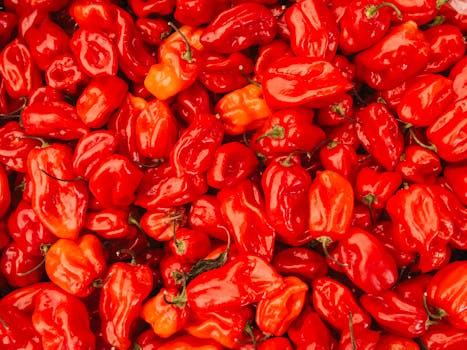
The diets react (see scores below)
Diet Ratings
Habanero peppers contain approximately 3.3g net carbs per 100g, but standard consumption is 1-2 peppers (15-30g total), yielding negligible carbs. They are keto-compatible with minimal impact on daily limits.
Whole plant food, unprocessed, no animal products or derivatives. Excellent whole-food vegan staple.
Fresh pepper, unprocessed, nutrient-dense, minimal anti-nutrients. Available to pre-Columbian hunter-gatherers. High in vitamin C and capsaicin.
Fresh chili pepper with high capsaicin and antioxidants. Whole, unprocessed food. Aligns with Mediterranean dietary principles of plant-based, minimally-processed foods.
Habanero peppers are plant-derived vegetables and excluded on carnivore diet. No animal-derived content. Incompatible with carnivore framework.
Whole, unprocessed pepper with no excluded ingredients. Fully compliant.
Habanero peppers follow the same FODMAP profile as other chili peppers tested by Monash. Low-FODMAP at typical serving sizes (small portions due to heat, not FODMAP content).
Very low sodium, nutrient-dense pepper with high vitamin C and capsaicin. Minimal processing. Excellent DASH-compliant seasoning vegetable with no sodium concerns.
Minimal net carbs (~3.3g per 100g). High capsaicin content (higher than jalapeño) provides superior anti-inflammatory and thermogenic effects. Very low calorie density. Excellent Zone vegetable. Supports insulin control and metabolic health.
Even higher capsaicin content than jalapeño, with strong anti-inflammatory properties. Excellent source of vitamin C and antioxidants. Polyphenol-rich. Supports metabolic health and circulation. Minimal inflammatory compounds.
While nutritionally similar to jalapeños (very low calorie, good fiber), habaneros have significantly higher capsaicin content (12,000-350,000 Scoville units vs. 2,500-8,000 for jalapeños). This level of spice is known to worsen reflux, nausea, and GI discomfort in GLP-1 patients, particularly during the adjustment phase. Should be avoided or used only as a trace ingredient.
Nutritional profile
Six traits that cut across every diet.
Fiber & Plants
How much whole-plant food and fiber it delivers.
Healthy Fats
The quality of its fats (unsaturated, omega-3).
Whole / Unprocessed
How close it is to its natural, unprocessed form.
Gut Gentle
How easy it is on digestion (low FODMAP, few irritants).
Low Glycemic
How little it spikes your blood sugar.
Protein Density
How much protein it packs per calorie.
Controversy Index
Score range: 1–9/10. Higher controversy = more disagreement between diets.
Diet-Specific Tips for Habanero pepper
 Keto — 9/10
- 3.3g net carbs per 100g
- Typical portions are very small
- Minimal ketosis impact
- High heat adds flavor variety
 Vegan — 9/10
- Whole plant food
- Unprocessed
- No animal products
- Nutrient-dense
 Paleo — 9/10
- Fresh pepper
- Unprocessed
- High vitamin C
- Anti-inflammatory compounds
 Mediterranean — 8/10
- whole plant food
- high antioxidants
- minimal calories
- flavor enhancement without salt
 Whole30 — 9/10
- Whole vegetable
- No excluded ingredients
- Common Whole30 ingredient
 Low-FODMAP — 8/10
- Low fructan content
- Low polyol content
- Similar to jalapeño profile
 DASH — 9/10
- very low sodium
- high vitamin C content
- low calorie
- minimal processing
- supports cardiovascular health
 Zone — 9/10
- Minimal net carbs
- High capsaicin content
- Superior anti-inflammatory
- Thermogenic benefits
 Anti-Inflammatory — 8/10
- Very high in capsaicin
- Excellent vitamin C content
- Strong anti-inflammatory polyphenols
- Supports metabolic function
- Well-documented anti-inflammatory effects