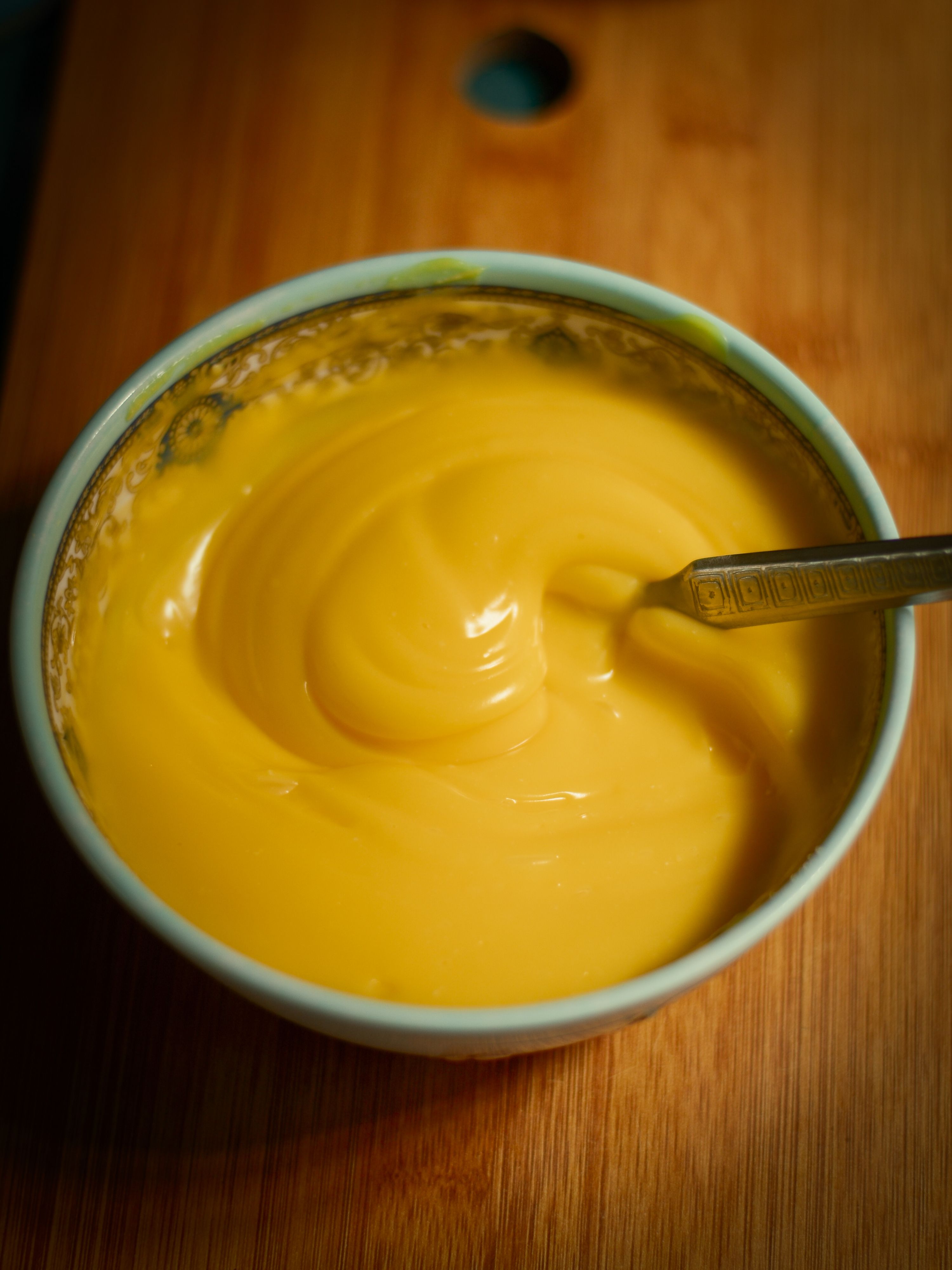
The diets react (see scores below)
Diet Ratings
Hollandaise is made from egg yolks and butter, containing approximately 0-1g net carbs per tablespoon with 11-12g fat. It is a classic keto-compatible sauce that aligns perfectly with ketogenic macros. Ideal for eggs and vegetables.
Made with egg yolks and butter. Contains two animal products (eggs and dairy). Not vegan.
Traditional hollandaise contains egg yolks, butter, and lemon juice—all paleo-approved. However, butter is a dairy derivative. Most modern paleo practitioners accept ghee-based or clarified butter hollandaise. Homemade versions with clarified butter are acceptable; commercial versions may contain additives.
Strict Cordain-school paleo excludes all dairy derivatives including butter and ghee. However, mainstream modern paleo (Mark Sisson, Whole30) accepts clarified butter and ghee as casein and lactose are removed. Some practitioners use avocado oil or olive oil-based versions instead.
Butter-based sauce high in saturated fat and calories. Not a traditional Mediterranean ingredient. Contradicts emphasis on olive oil as primary fat and minimal heavy sauces.
Traditional hollandaise is emulsion of egg yolks, butter, and lemon juice. Eggs and butter are animal-derived and approved. Lemon juice is plant-derived but used in small quantities as flavoring. Most carnivore practitioners accept hollandaise; some strict practitioners may exclude due to lemon.
Hollandaise made from eggs, butter (or ghee), and lemon juice contains only Whole30 compliant ingredients. Traditional preparation is fully compliant.
Hollandaise is made from butter, egg yolks, and lemon juice—all low-FODMAP ingredients. Monash University confirms these components are safe. Standard servings (2-3 tablespoons) are low-FODMAP.
High in saturated fat (butter and egg yolks), cholesterol, and sodium. Heavily processed. Incompatible with DASH guidelines for limiting saturated fat and sodium. No significant nutritional benefit.
Hollandaise is egg yolks and butter (~90% fat, mostly saturated). 2 tbsp contains ~18g fat (mostly saturated), 1g carbs, 1g protein. Zone diet limits saturated fat in favor of monounsaturated. While usable, hollandaise is less optimal than olive oil-based sauces. Portion control critical.
High in saturated fat (butter and egg yolks), minimal anti-inflammatory compounds. Rich sauce promotes inflammatory load. Contradicts anti-inflammatory guidelines limiting full-fat dairy and saturated fats.
Emulsion of egg yolk, butter, and lemon (approximately 100 calories per tablespoon, 11g fat per tablespoon). Very high saturated fat. Directly triggers nausea, bloating, and reflux in GLP-1 patients. Not recommended.
Nutritional profile
Six traits that cut across every diet.
Fiber & Plants
How much whole-plant food and fiber it delivers.
Healthy Fats
The quality of its fats (unsaturated, omega-3).
Whole / Unprocessed
How close it is to its natural, unprocessed form.
Gut Gentle
How easy it is on digestion (low FODMAP, few irritants).
Low Glycemic
How little it spikes your blood sugar.
Protein Density
How much protein it packs per calorie.
Controversy Index
Score range: 1–9/10. Higher controversy = more disagreement between diets.
Diet-Specific Tips for Hollandaise sauce
 Keto — 9/10
- 0-1g net carbs per tablespoon
- High fat content (11-12g per tablespoon)
- Butter and egg yolk base
- Zero added sugars
 Carnivore — 8/10
- contains eggs (animal-derived)
- contains butter (animal-derived)
- contains lemon juice (plant-derived, minimal)
- widely accepted in carnivore community
 Whole30 — 8/10
- Eggs (allowed)
- Butter/ghee (allowed)
- Lemon juice (allowed)
- No excluded ingredients
 Low-FODMAP — 8/10
- Butter is low-FODMAP
- Egg yolks are low-FODMAP
- Lemon juice is low-FODMAP
- No high-FODMAP ingredients in traditional recipe
 Zone — 5/10
- High saturated fat content
- Minimal carbs and protein
- Less anti-inflammatory than olive oil sauces
- Portion control essential