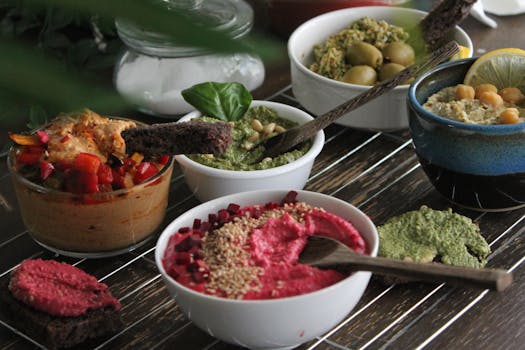
The diets react (see scores below)
Diet Ratings
Hummus is chickpea-based with approximately 6-8g net carbs per 3 tbsp serving. Chickpeas are legumes with significant carb load, incompatible with strict keto.
Plant-based blend of chickpeas, tahini, lemon, garlic. Whole-food ingredients. No animal products.
Hummus is made from chickpeas (legumes) and tahini (sesame seed oil). Both primary ingredients violate paleo principles.
Hummus is a traditional Mediterranean staple made from chickpeas, tahini, lemon, and garlic. It combines legumes with healthy fats and is minimally processed when homemade.
Chickpea-based legume product with plant oils. Multiple plant-derived ingredients make it incompatible with carnivore diet.
Hummus is made from chickpeas, which are legumes and explicitly excluded from Whole30.
Hummus is made from chickpeas (high GOS) and typically contains garlic and onion (high fructans). Monash University rates hummus as high-FODMAP at all reasonable serving sizes.
Excellent DASH food combining chickpeas, tahini, and olive oil. Rich in fiber, potassium, magnesium, and plant-based protein. Low-sodium varieties available. Supports cardiovascular health.
Chickpea-based with tahini (sesame). 1/4 cup provides ~4g protein, ~5g fat, ~8g carbs. Moderate glycemic impact. Usable but requires careful portioning; often contains added oils increasing fat content unpredictably.
Hummus combines chickpeas (legume with polyphenols and fiber), tahini (sesame seeds with lignans), garlic (anti-inflammatory), and extra virgin olive oil (omega-3 and polyphenols). Excellent anti-inflammatory profile when made with quality ingredients.
Moderate protein (3g per 2 tbsp), good fiber from chickpeas, but fat content from tahini and olive oil (5g per 2 tbsp) can trigger GI discomfort. Works best as a small condiment or dip rather than a primary protein source.
Some GLP-1 nutrition guidance treats hummus as acceptable in small portions due to its fiber and plant-based protein, while others recommend limiting it because the fat-to-protein ratio is suboptimal for GLP-1 patients and the caloric density doesn't align with reduced appetite.
Nutritional profile
Six traits that cut across every diet.
Fiber & Plants
How much whole-plant food and fiber it delivers.
Healthy Fats
The quality of its fats (unsaturated, omega-3).
Whole / Unprocessed
How close it is to its natural, unprocessed form.
Gut Gentle
How easy it is on digestion (low FODMAP, few irritants).
Low Glycemic
How little it spikes your blood sugar.
Protein Density
How much protein it packs per calorie.
Controversy Index
Score range: 1–8/10. Higher controversy = more disagreement between diets.
Diet-Specific Tips for Hummus
 Vegan — 8/10
- Whole food ingredients
- Legume-based
- Healthy fats from tahini
- Minimal processing
 Mediterranean — 8/10
- Traditional Mediterranean food
- Chickpea-based legume
- Contains tahini (sesame seed paste)
- Minimal processing in traditional preparation
 DASH — 8/10
- High fiber
- Rich in potassium
- Healthy monounsaturated fats
- Sodium varies by brand
 Zone — 5/10
- moderate carb load from legumes
- variable fat content (tahini/oil dependent)
- modest protein contribution
- processed food
- portion variability
 Anti-Inflammatory — 8/10
- Chickpea base with polyphenols
- Tahini provides lignans
- Garlic content
- Extra virgin olive oil
- High fiber
- Plant-based protein
 GLP-1 Friendly — 6/10
- moderate protein
- good fiber
- moderate fat
- calorie-dense
- portion-dependent