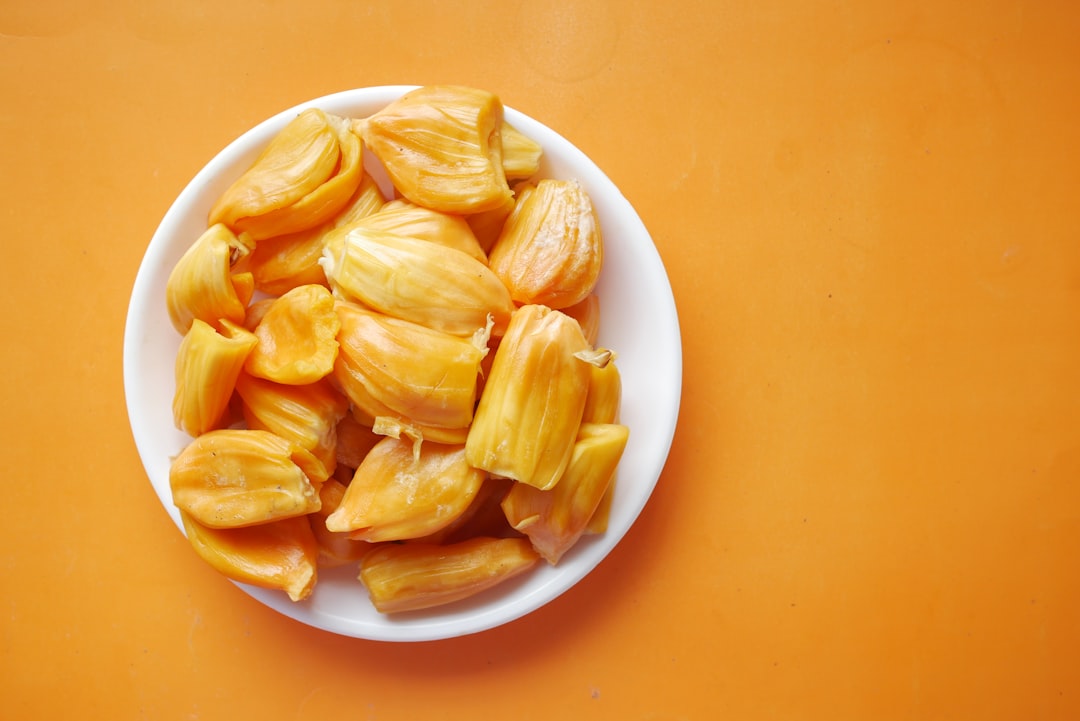
The diets react (see scores below)
Diet Ratings
Fresh jackfruit contains 9-10g net carbs per 100g with minimal fiber. Too high in carbs to fit within ketogenic macros; incompatible with ketosis maintenance.
Fresh jackfruit is a whole plant fruit, entirely plant-based and unprocessed. No animal-derived ingredients.
Fresh jackfruit is a whole fruit with natural sugars, fiber, and nutrients. It is unprocessed and available to tropical foragers. No problematic compounds when consumed fresh.
Whole fruit with fiber and some nutrients, but high natural sugar content and not Mediterranean-origin. Acceptable as occasional fruit but less ideal than Mediterranean staple fruits.
Some modern Mediterranean diet interpretations embrace diverse whole fruits globally. However, traditional Mediterranean diet emphasizes regional fruits with lower glycemic impact.
Fresh jackfruit is a plant-derived fruit containing plant compounds, fiber, and sugars. Explicitly excluded from carnivore diet which permits only animal products. No animal origin.
Fresh jackfruit is a whole, unprocessed fruit with no excluded ingredients. Fully compliant with Whole30.
Fresh jackfruit contains moderate fructose and some polyols. Monash University testing is limited. A small serving of approximately 1 cup (165g) may be tolerated, but larger portions increase FODMAP load. Ripeness affects sugar content.
Monash University has not extensively tested fresh jackfruit. Clinical FODMAP practitioners note the high natural sugar content and recommend portion restriction. Some sources suggest unripe jackfruit may be lower in FODMAPs than ripe fruit, but evidence is limited.
Fresh jackfruit provides fiber and some nutrients but is relatively high in natural sugars and carbohydrates. Acceptable in moderation as part of fruit servings but not a priority DASH choice.
NIH DASH guidelines approve all fresh fruits; however, updated clinical interpretation suggests jackfruit's high glycemic load warrants portion awareness for those with metabolic concerns.
High glycemic fruit (~23g net carbs per 100g), high sugar content. Exceeds Zone carbohydrate targets even in small portions. Sears explicitly avoids high-glycemic fruits; difficult to balance within 40/30/30 ratio.
Moderate antioxidant content but relatively high natural sugar and carbohydrates. While whole fruit provides fiber, glycemic impact is notable. Acceptable occasionally but not emphasized in anti-inflammatory protocols.
Some plant-based nutritionists favor jackfruit as meat substitute with prebiotic fiber benefits; however, sugar content remains higher than recommended frequent fruits in strict anti-inflammatory diets.
Low calorie (95 cal per cup) and high water content (73%), but very low protein (1.3g per cup) and moderate fiber (2.6g per cup). Better as a side or dessert than primary food. High volume relative to nutrition may not align well with reduced appetite.
Some RDs view jackfruit favorably as a low-calorie, high-volume fruit that supports satiety without protein demands, while others note that GLP-1 patients should prioritize protein-rich foods and jackfruit's low protein density makes it less efficient use of limited appetite.
Nutritional profile
Six traits that cut across every diet.
Fiber & Plants
How much whole-plant food and fiber it delivers.
Healthy Fats
The quality of its fats (unsaturated, omega-3).
Whole / Unprocessed
How close it is to its natural, unprocessed form.
Gut Gentle
How easy it is on digestion (low FODMAP, few irritants).
Low Glycemic
How little it spikes your blood sugar.
Protein Density
How much protein it packs per calorie.
Controversy Index
Score range: 1–9/10. Higher controversy = more disagreement between diets.
Diet-Specific Tips for Jackfruit (fresh)
 Vegan — 9/10
- Whole plant food
- Unprocessed
- Fruit
- No animal products
 Paleo — 8/10
- Whole fruit
- Natural sugars
- High in fiber
- Unprocessed
 Mediterranean — 6/10
- high natural sugar
- non-Mediterranean origin
- whole fruit form positive
- portion control recommended
 Whole30 — 9/10
- Fruit
- Unprocessed
- No additives
 Low-FODMAP — 5/10
- Moderate fructose content
- Polyol content variable by ripeness
- Limited Monash testing data
 DASH — 6/10
- High natural sugars
- Moderate fiber
- Low sodium
- Glycemic impact
 Anti-Inflammatory — 5/10
- Moderate antioxidants
- High natural sugars
- Prebiotic fiber
- Significant carbohydrate load
- Glycemic impact
 GLP-1 Friendly — 5/10
- very low protein
- low calorie
- high water content
- moderate fiber
- high volume relative to nutrition