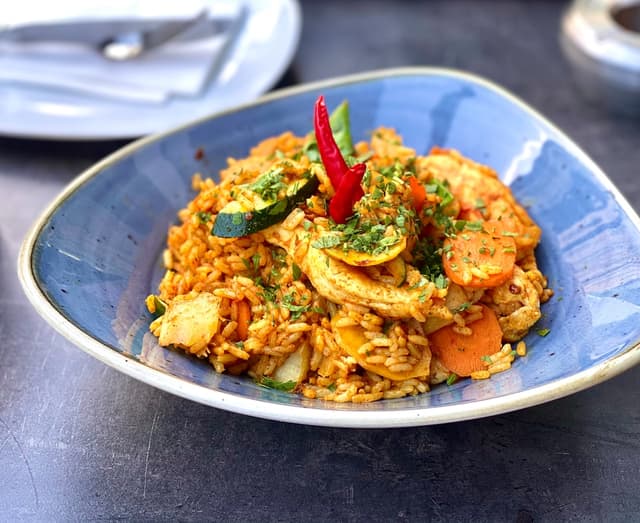
Diet Ratings
Jambalaya is built on a rice base (45-50g net carbs per cup cooked). Even with meat and vegetables, the rice dominates the carb profile, making it fundamentally incompatible with ketosis.
Traditional jambalaya contains meat (sausage, ham, or chicken) and often seafood (shrimp). While the vegetable and rice base is plant-based, the dish is defined by animal proteins.
Jambalaya is traditionally made with white rice (grain) as primary ingredient. Rice is excluded from paleo diet. Meat and vegetable components are compliant, but rice base disqualifies the dish.
Jambalaya contains vegetables, rice, and can include seafood or poultry, which align with Mediterranean principles. However, traditional versions often use processed meats (sausage), high sodium, and heavy oils. Seafood-based versions with whole grains are more compatible.
iSome Mediterranean diet practitioners accept jambalaya when made with seafood, brown rice, and minimal processed meat, viewing it as a valid regional adaptation with sufficient vegetable content.
Jambalaya is rice-based (grain) with vegetables (peppers, onions, celery), spices, and tomatoes. Multiple plant-derived components make this completely incompatible with carnivore diet.
Jambalaya is traditionally made with rice (grains) and often contains sausage with added sugars or soy. Rice is a primary ingredient and explicitly excluded.
Jambalaya is a Creole dish built on the holy trinity of onion, celery, and bell pepper, plus garlic. Onion and garlic are high-FODMAP at any serving size. The dish is inherently high-FODMAP.
Traditional jambalaya is made with sausage, ham, or other processed meats, and contains high sodium from broth, seasonings, and cured meats. Often exceeds 1000mg sodium per serving. Processed meat consumption should be minimized on DASH.
Rice-based dish with refined carbohydrate as primary component. Sausage and meat add protein but are overwhelmed by rice volume. High-glycemic carb load violates Zone principles. Typically high in sodium and inflammatory oils.
Spice blend (cayenne, paprika, thyme) provides antioxidants. Vegetables (bell peppers, onions, celery) add fiber and polyphenols. However, often contains sausage/red meat with saturated fat, refined white rice, and high sodium. Anti-inflammatory potential depends on meat type and vegetable-to-grain ratio.
iJambalaya prepared with lean protein (shrimp, chicken), brown rice, and vegetable-forward composition approaches approval. Traditional Creole spice profiles are genuinely anti-inflammatory; refined carbohydrate base and processed meat are limiting factors.
Jambalaya is typically high in fat (from sausage, oil, and cooking method), refined carbohydrates (white rice), and sodium. It's often spicy, which can worsen GLP-1 reflux and nausea. The dish is calorie-dense with moderate protein relative to fat content. The combination of fat, spice, and heavy texture makes it poorly suited for GLP-1 patients.
Controversy Index
Score range: 1–5/10. Higher controversy = more disagreement between diets.