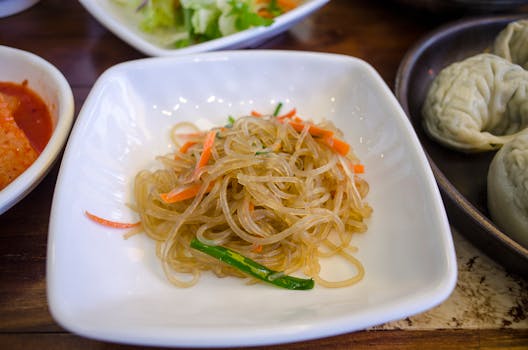
Japchae (Korean glass noodles)
Rated by 11 diets
How the diets react
Diet Ratings
Japchae is made with sweet potato starch noodles, which are high in carbs. A typical serving contains 25-35g net carbs, far exceeding keto limits.
Glass noodles (sweet potato starch) and vegetables are plant-based, but traditional recipes include beef, sesame oil preparation may vary, and soy sauce source varies. Many versions contain meat.
Some vegans accept vegetable-only japchae as fully vegan if prepared with plant-based ingredients, while others note the dish's traditional meat content makes it inherently non-vegan.
Glass noodles are made from sweet potato starch or mung bean starch (legume). While sweet potato is debated in paleo, mung bean is a legume violation. The noodle processing also contradicts paleo philosophy.
Glass noodles are refined starch with minimal nutritional density compared to Mediterranean whole grains. However, typically prepared with abundant vegetables, sesame oil, and soy sauce. Vegetable content and minimal processing of individual ingredients partially align with principles.
Some interpretations emphasize the vegetable-forward preparation and minimal processing of whole ingredients as acceptable; however, refined noodle base and sesame oil (not olive oil) represent departures from Mediterranean standards.
Japchae is made from sweet potato starch noodles (plant-derived) mixed with vegetables and sometimes meat. The noodle base is plant-derived and explicitly excluded from carnivore diet.
Glass noodles (dangmyeon) are made from sweet potato starch or mung bean starch. While sweet potato starch might seem compliant, glass noodles are a processed noodle product that violates the spirit of Whole30's prohibition on pasta and noodles.
Glass noodles (sweet potato starch) are low-FODMAP. However, traditional japchae includes soy sauce, sesame oil, and often garlic and onion. Vegetables used (mushrooms, spinach) vary. FODMAP status depends on specific recipe and garlic/onion content.
Monash rates sweet potato starch noodles as low-FODMAP; however, traditional recipes include garlic and soy sauce (which may contain wheat/fructans). A modified recipe without garlic and onion would be approvable.
Contains vegetables (spinach, carrots, mushrooms) and lean protein (beef or tofu). However, sweet soy sauce base adds sodium and added sugars. Sesame oil adds fat. Typically 600-800mg sodium per serving.
Updated clinical interpretation suggests vegetable-rich versions with reduced soy sauce and lean protein are acceptable; traditional high-sodium versions should be modified.
Glass noodles (sweet potato starch) have moderate-to-high glycemic impact. Dish typically includes vegetables (positive) and sesame oil (good monounsaturated fat). Protein content variable depending on meat inclusion. Macro balance depends on noodle-to-vegetable ratio and protein addition. Portion control critical.
Some Zone practitioners accept japchae if vegetable content is maximized and noodle portion minimized. Dr. Sears would prefer vegetable-based dishes over starch-based noodles.
Glass noodles are refined carbohydrates with minimal fiber. However, typically includes anti-inflammatory vegetables (spinach, mushrooms, carrots, peppers), sesame oil (omega-6 but flavorful), and garlic. Soy sauce adds umami without excessive sodium if used moderately. Stir-fry preparation is acceptable.
Some strict anti-inflammatory approaches avoid refined noodles entirely. Others view the vegetable and sesame content favorably. Sodium content in soy sauce may concern some authorities.
Glass noodles (sweet potato starch) are low protein and moderate carbs. Typically prepared with sesame oil and soy sauce (fat and sodium). Vegetables add fiber and nutrients. Protein source (beef, tofu) varies. Chewy texture may be difficult for some GLP-1 patients with reduced appetite. Works better with added lean protein and vegetable emphasis, but base preparation is not ideal.
Some RDs accept japchae as a side dish if paired with high-protein main and made with minimal oil. Others view the low protein-to-carb ratio and typical fat content as problematic for GLP-1 patients.
Controversy Index
Score range: 1–6/10. Higher controversy = more disagreement between diets.