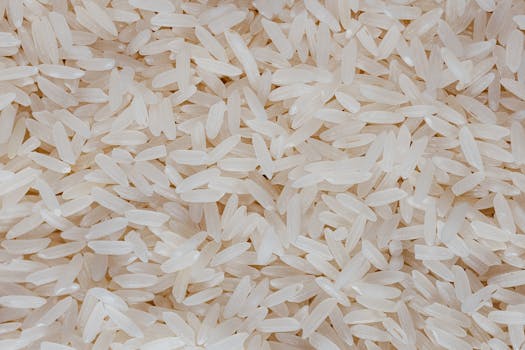
The diets react (see scores below)
Diet Ratings
Jasmine rice contains approximately 45g net carbs per cooked cup. High glycemic index grain with no fiber offset; fundamentally incompatible with ketosis.
Whole grain, entirely plant-based, no processing or additives. Exemplary vegan food.
Rice is a grain and excluded from strict paleo. However, some paleo authorities debate white rice as a 'safe starch' with lower anti-nutrient content than other grains.
Paul Jaminet's Perfect Health Diet (respected in paleo community) specifically includes white rice as a safe starch due to low anti-nutrient content and minimal processing. Mark Sisson and some modern paleo practitioners accept white rice in moderation, though Cordain's original paleo excludes all grains.
Jasmine rice is a refined grain with high glycemic index. Mediterranean diet emphasizes whole grains. While not prohibited, it should be limited and brown rice or other whole grains are strongly preferred.
Grain product is plant-derived with high carbohydrate content. Explicitly excluded from carnivore diet.
Rice is a grain and is explicitly excluded on Whole30 for the full 30 days.
Jasmine rice is a refined grain with no FODMAPs. Monash University rates all plain white rice varieties, including jasmine, as low-FODMAP at any serving size.
White jasmine rice is refined grain with high glycemic index and minimal fiber. DASH guidelines emphasize whole grains. Brown jasmine rice or other whole grain alternatives preferred for better blood pressure and metabolic control.
Jasmine rice is a high-glycemic white rice variety with one of the highest glycemic indices among rice types. One cooked cup (~165g) contains ~45g carbs with minimal fiber. Zone protocol explicitly avoids white rice and high-glycemic grains. Jasmine rice is incompatible with Zone principles.
Refined white rice with high glycemic index and glycemic load. Lacks fiber, B vitamins, and minerals present in whole grains. Promotes blood sugar dysregulation and inflammatory response.
Jasmine rice is refined white rice with high glycemic index (GI ~89). Minimal fiber (0.6g per cooked cup), minimal protein (2g per cup), high calorie density (205 cal per cooked cup), and 45g carbs per cup. Rapidly absorbed, causing blood sugar spikes without satiety. GLP-1 patients eating reduced portions cannot achieve nutritional adequacy with jasmine rice. No meaningful advantage over white rice. Avoid entirely; substitute with cauliflower rice, shirataki, or legume-based alternatives.
Nutritional profile
Six traits that cut across every diet.
Fiber & Plants
How much whole-plant food and fiber it delivers.
Healthy Fats
The quality of its fats (unsaturated, omega-3).
Whole / Unprocessed
How close it is to its natural, unprocessed form.
Gut Gentle
How easy it is on digestion (low FODMAP, few irritants).
Low Glycemic
How little it spikes your blood sugar.
Protein Density
How much protein it packs per calorie.
Controversy Index
Score range: 1–10/10. Higher controversy = more disagreement between diets.
Diet-Specific Tips for Jasmine rice
 Vegan — 10/10
- whole grain
- no additives
- no animal products
 Mediterranean — 4/10
- refined grain
- high glycemic index
- not traditional Mediterranean
- whole grains preferred
 Low-FODMAP — 9/10
- Refined grain
- No fructans
- No GOS
- No polyols
- Unlimited serving size
 DASH — 4/10
- Refined grain
- High glycemic index
- Low fiber content
- Whole grain alternative preferred