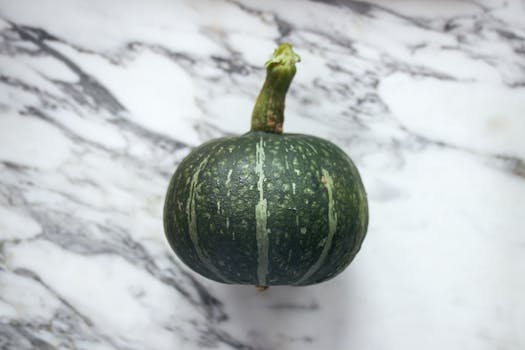
The diets react (see scores below)
Diet Ratings
Kabocha squash contains approximately 11g net carbs per 100g. Even modest portions (3-4 oz) consume 8-10g of daily carb allowance, making it incompatible with strict keto macros and ketosis maintenance.
Whole plant food, unprocessed, no animal products or derivatives. Excellent whole-food vegan staple.
Winter squash with excellent nutrient profile, minimal anti-nutrients, unprocessed. Higher in carbohydrates than some squashes but still paleo-compliant and nutrient-dense.
Nutrient-dense winter squash with high beta-carotene and fiber. Whole, unprocessed food suitable for roasting with olive oil. Aligns with Mediterranean vegetable consumption patterns.
Squash is a plant food and excluded on carnivore diet. Despite nutrient density, it remains plant-derived and incompatible with carnivore principles.
Whole, unprocessed winter squash with no excluded ingredients. Fully compliant.
Kabocha squash has not been formally tested by Monash University. Winter squashes generally contain moderate fructans; portion control is essential.
Monash University lacks specific kabocha testing. Some practitioners approve small portions (75g) based on carbohydrate profile, while others recommend strict avoidance due to fructan accumulation in winter squashes.
Nutrient-dense winter squash with high potassium, magnesium, fiber, and vitamin A. Very low sodium. Supports DASH principles for cardiovascular health.
Higher glycemic impact than delicata (~11g net carbs per 100g). Sweet flavor indicates higher sugar content. Usable but requires strict portioning. Zone protocol prefers non-starchy vegetables; winter squashes are secondary choices.
Dr. Sears' later writings acknowledge kabocha as acceptable in moderation, but earlier Zone materials discourage it due to glycemic load. Context-dependent based on individual insulin sensitivity.
Excellent source of beta-carotene, vitamin C, potassium, and manganese. Rich in anti-inflammatory compounds and antioxidants. Low glycemic index despite natural sweetness. Fiber content supports healthy digestion and microbiome.
Higher carbohydrate density (17g per 100g) with minimal protein (1.1g per 100g). Contains fiber (3.3g per 100g) and is nutrient-dense with vitamins A and C, but the carb load is significant for GLP-1 patients with reduced appetite. Better used sparingly as a flavoring or small side rather than a main vegetable.
Nutritional profile
Six traits that cut across every diet.
Fiber & Plants
How much whole-plant food and fiber it delivers.
Healthy Fats
The quality of its fats (unsaturated, omega-3).
Whole / Unprocessed
How close it is to its natural, unprocessed form.
Gut Gentle
How easy it is on digestion (low FODMAP, few irritants).
Low Glycemic
How little it spikes your blood sugar.
Protein Density
How much protein it packs per calorie.
Controversy Index
Score range: 1–9/10. Higher controversy = more disagreement between diets.
Diet-Specific Tips for Kabocha squash
 Vegan — 9/10
- Whole plant food
- Unprocessed
- No animal products
- Nutrient-dense
 Paleo — 9/10
- Winter squash variety
- Nutrient-dense
- Low anti-nutrients
- Unprocessed
 Mediterranean — 8/10
- whole plant food
- high antioxidants
- good fiber source
- traditional Mediterranean preparation
 Whole30 — 9/10
- Whole vegetable
- No excluded ingredients
- Nutrient-dense
 Low-FODMAP — 5/10
- Winter squash category
- Moderate fructan potential
- No Monash validation
 DASH — 9/10
- very low sodium
- high potassium content
- excellent magnesium source
- high fiber
- rich in antioxidants
 Zone — 4/10
- Higher net carbs than delicata
- Sweet taste indicates sugar content
- Requires small portions
- Winter squash category
 Anti-Inflammatory — 8/10
- Very high in beta-carotene
- Rich in vitamin C and potassium
- Low glycemic index
- Anti-inflammatory polyphenols
- High fiber content
 GLP-1 Friendly — 5/10
- High carbohydrate content
- Very low protein
- Good fiber and micronutrient density
- Portion-critical for GLP-1 diet