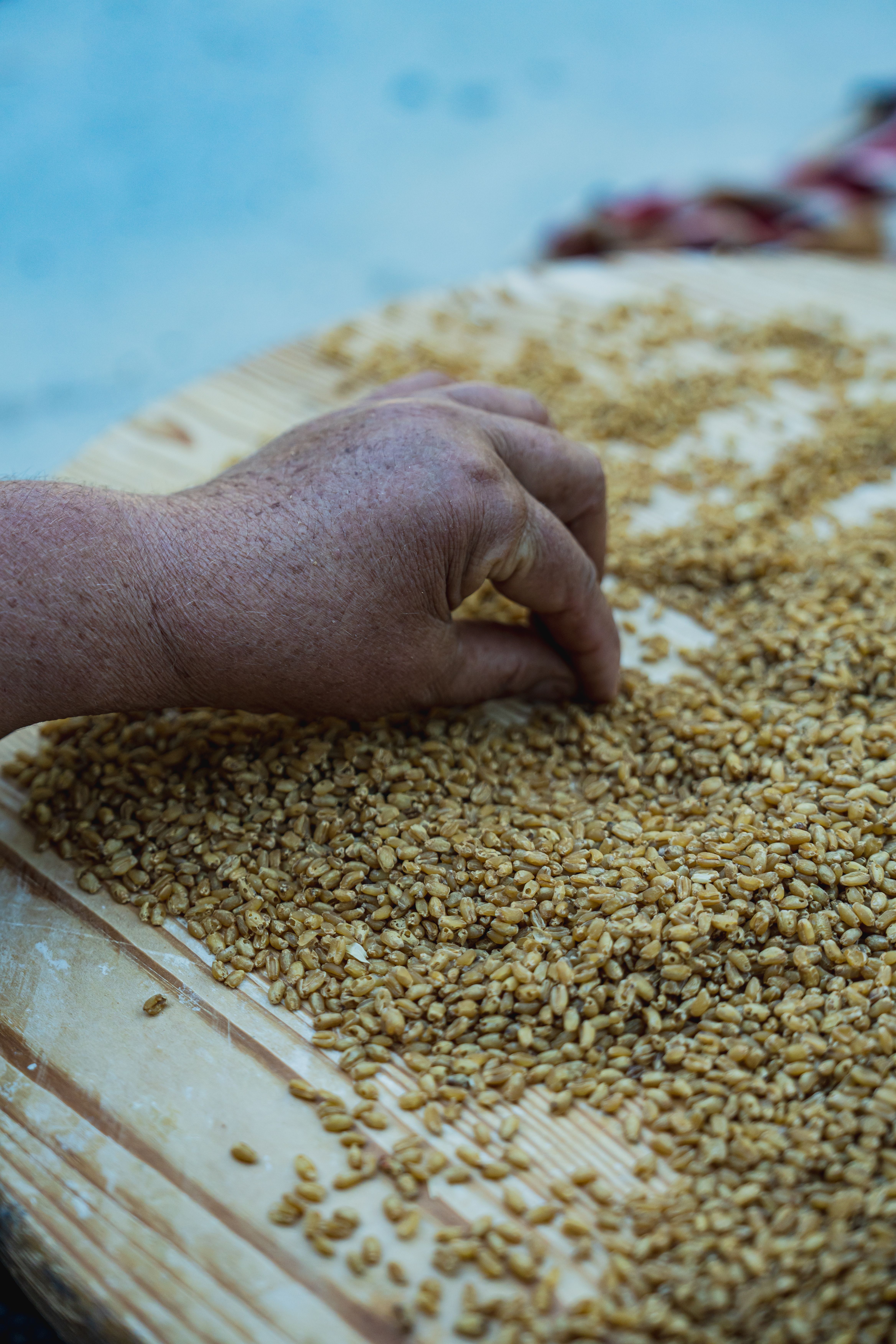
The diets react (see scores below)
Diet Ratings
Kamut is an ancient grain variety containing approximately 34g net carbs per cooked cup. Despite being marketed as a heritage grain, it remains a grain with high carbohydrate content incompatible with ketosis.
Kamut is an ancient grain variety (Triticum turgidum). Completely plant-based whole grain with excellent nutritional profile. No animal products or derivatives.
Kamut is an ancient grain variety (Triticum turgidum) and is explicitly excluded from paleo. Despite being marketed as 'ancient' or 'heritage,' it remains a grain with gluten and anti-nutrients.
Kamut (Khorasan wheat) is an ancient whole grain with excellent nutritional profile, higher protein and minerals than modern wheat. Fits Mediterranean whole grain emphasis and is minimally processed.
Ancient grain variety (Triticum turgidum). Grain-based carbohydrate source. Plant-derived and explicitly excluded from carnivore diet.
Kamut is an ancient grain (a variety of wheat). All grains, including ancient grains, are explicitly excluded during Whole30.
Kamut (Khorasan wheat) is a wheat variety containing significant fructans. Despite marketing as 'ancient grain,' it is not low-FODMAP and should be avoided during elimination phase.
Ancient whole grain with higher protein and mineral content than common wheat. Good fiber, low sodium, supports DASH whole grain emphasis.
Kamut (Khorasan wheat) is a whole grain with moderate glycemic index (~68). One cup cooked (~170g) contains ~35g carbs (3.9 carb blocks). While less refined than modern wheat, it remains a grain requiring careful portioning. Zone limits grains to 0-1 serving/day; one serving = ~9g carbs (1 carb block), making kamut difficult to portion appropriately.
Kamut (Khorasan wheat) is an ancient whole grain with higher protein, fiber, and micronutrient content than modern wheat. Contains polyphenols and selenium. Lower gluten content than common wheat may reduce inflammatory response in sensitive individuals.
Kamut (Khorasan wheat) is an ancient grain with slightly higher protein (9g per cooked cup) and fiber (7g per cooked cup) than modern wheat, plus a lower glycemic index. However, it is still calorie-dense (190 cal per cooked cup) and low in protein relative to GLP-1 priorities. It works better as a side grain paired with high-protein mains rather than as a primary food. Portion control is critical.
Nutritional profile
Six traits that cut across every diet.
Fiber & Plants
How much whole-plant food and fiber it delivers.
Healthy Fats
The quality of its fats (unsaturated, omega-3).
Whole / Unprocessed
How close it is to its natural, unprocessed form.
Gut Gentle
How easy it is on digestion (low FODMAP, few irritants).
Low Glycemic
How little it spikes your blood sugar.
Protein Density
How much protein it packs per calorie.
Controversy Index
Score range: 1–9/10. Higher controversy = more disagreement between diets.
Diet-Specific Tips for Kamut
 Vegan — 9/10
- Ancient grain, fully plant-based
- Whole grain source
- High in protein and minerals
- Minimal processing
 Mediterranean — 8/10
- ancient whole grain
- high protein
- mineral-rich
- minimally processed
- traditional Mediterranean grain
 DASH — 8/10
- whole grain
- high protein
- rich in magnesium and zinc
- good fiber content
- low sodium
 Zone — 4/10
- Whole grain (better than refined wheat)
- Moderate glycemic index (~68)
- High carb density
- One cup cooked = ~3.9 carb blocks
- Difficult to portion for Zone meals
 Anti-Inflammatory — 7/10
- ancient grain
- whole grain
- higher protein
- polyphenols
- selenium
- lower gluten
 GLP-1 Friendly — 5/10
- moderate fiber
- slightly elevated protein for a grain
- calorie-dense relative to satiety
- lower glycemic index than wheat