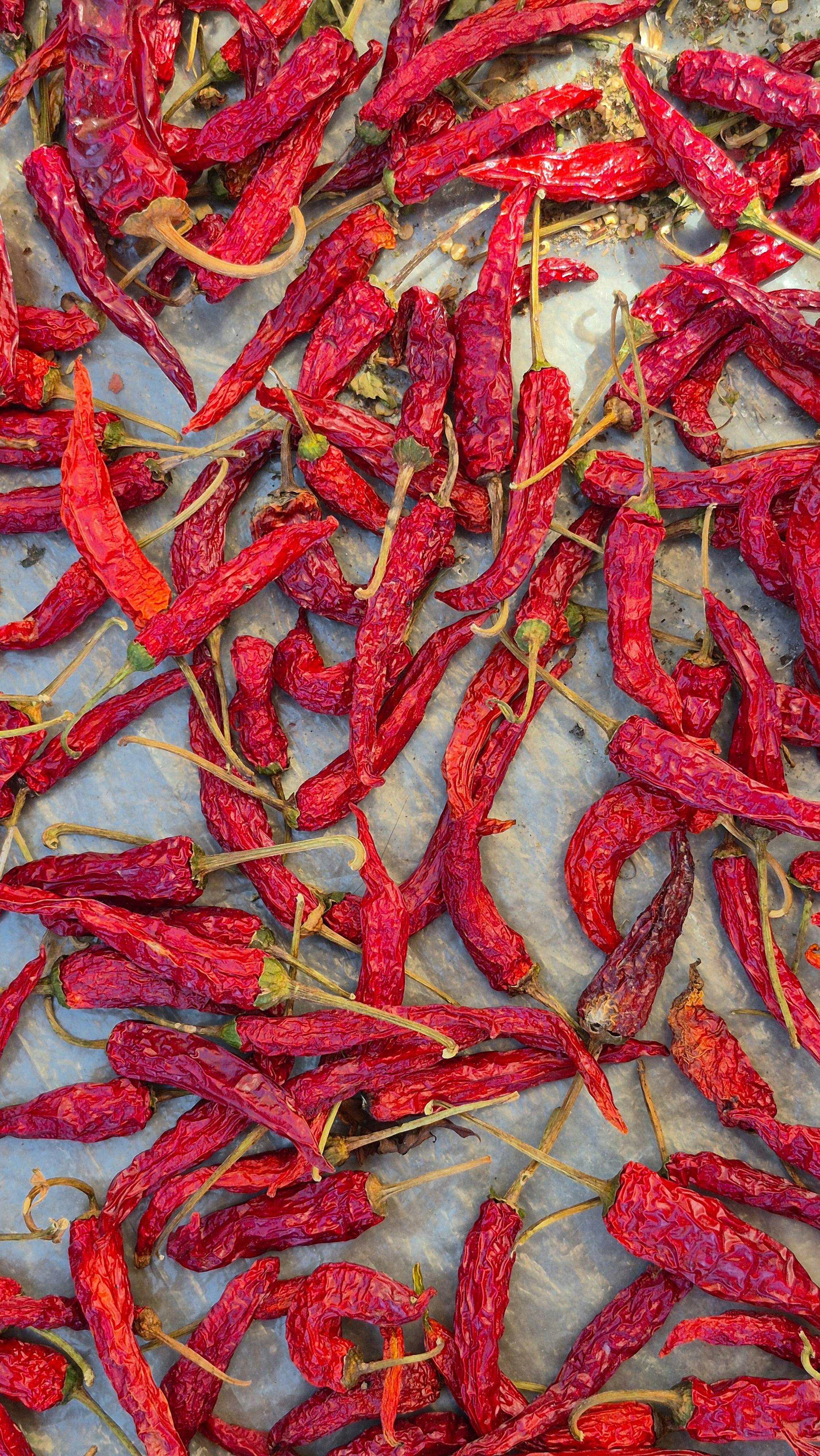
Kashmiri chili
Rated by 11 diets
The diets react (see scores below)
Diet Ratings
Kashmiri chili powder is a spice with negligible carbs (less than 1g per teaspoon) and no sugar. Pure spice with no fillers. Adds flavor without impacting ketosis.
Kashmiri chili is a dried chili pepper variety used as a spice. No animal ingredients, purely plant-based.
Dried chili pepper spice with no additives. Spices and herbs are paleo-approved; Kashmiri chili is unprocessed and nutrient-dense.
Spice/seasoning with minimal calories and no added sugars or fats. Chili peppers are plant-based, nutrient-dense, and align with Mediterranean emphasis on herbs and spices for flavor without processed ingredients.
Kashmiri chili is a plant-derived spice made from dried peppers. All spices are excluded from strict carnivore diet as they are plant products with concentrated plant compounds.
Kashmiri chili is a dried spice with no excluded ingredients. It is a pure, unprocessed seasoning allowed on the Whole30 program.
Kashmiri chili powder is a dried spice with negligible FODMAP content. Spices are generally low-FODMAP due to minimal fermentable carbohydrate content and small serving sizes. No fructans, GOS, lactose, excess fructose, or polyols present.
Kashmiri chili powder is a spice with negligible sodium, calories, and fat. Rich in vitamin C and antioxidants. Supports DASH goal of using herbs and spices instead of salt for flavoring. No portion restrictions.
Kashmiri chili powder is a spice with negligible macronutrients and high polyphenol content. It adds flavor and anti-inflammatory compounds without impacting Zone macros. Sears emphasizes polyphenol-rich foods for anti-inflammatory benefits. This is an ideal Zone seasoning with no portion restrictions for typical culinary use.
Dried chili pepper rich in capsaicin and carotenoids (especially lycopene and beta-carotene). Capsaicin has potent anti-inflammatory and analgesic properties. Lower heat level than other chilies but maintains antioxidant profile. Supports anti-inflammatory cooking principles.
Kashmiri chili is a mild spice (2-8 SHU) with minimal heat compared to other chilis. It adds flavor and color without triggering reflux or nausea in most GLP-1 patients. However, individual tolerance to spices varies; some patients experience worsened reflux even with mild spices on an empty stomach. Use in moderation and monitor tolerance.
Nutritional profile
Six traits that cut across every diet.
Fiber & Plants
How much whole-plant food and fiber it delivers.
Healthy Fats
The quality of its fats (unsaturated, omega-3).
Whole / Unprocessed
How close it is to its natural, unprocessed form.
Gut Gentle
How easy it is on digestion (low FODMAP, few irritants).
Low Glycemic
How little it spikes your blood sugar.
Protein Density
How much protein it packs per calorie.
Controversy Index
Score range: 1–9/10. Higher controversy = more disagreement between diets.
Diet-Specific Tips for Kashmiri chili
 Keto — 9/10
- Negligible net carbs
- Pure spice
- No added sugars
- Flavor-enhancing
 Vegan — 9/10
- Dried plant spice
- No animal-derived ingredients
- Whole food form
 Paleo — 9/10
- Unprocessed spice
- No additives
- Herb/spice category
 Mediterranean — 8/10
- Plant-based
- Minimal processing
- No added sugars
- Nutrient-dense spice
 Whole30 — 9/10
- Pure dried spice
- No additives or excluded ingredients
- Whole30-compliant seasoning
 Low-FODMAP — 9/10
- Dried spice with minimal FODMAP content
- Used in small quantities
- No added high-FODMAP ingredients
 DASH — 8/10
- Minimal sodium
- Rich in antioxidants
- Vitamin C content
- Supports salt-free seasoning
- No caloric impact
 Zone — 9/10
- Negligible macros
- High polyphenol content
- Anti-inflammatory
- No glycemic impact
- Enhances Zone meals
 Anti-Inflammatory — 8/10
- capsaicin
- carotenoids
- antioxidants
- anti-inflammatory alkaloid
- polyphenols
 GLP-1 Friendly — 5/10
- mild heat level
- minimal calories
- individual tolerance variation
- potential reflux trigger