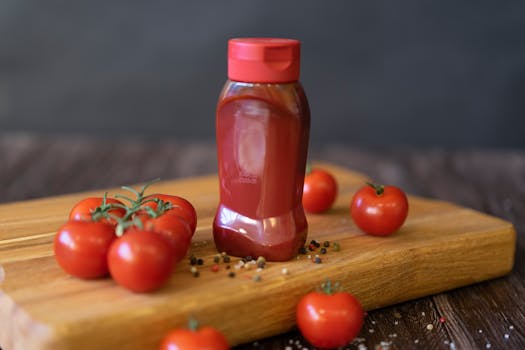
The diets react (see scores below)
Diet Ratings
Standard ketchup contains 3-4g net carbs per tablespoon due to added sugars and tomato concentrate. Incompatible with strict keto macros.
Standard ketchup is plant-based, made from tomatoes, vinegar, and spices. Most major brands contain no animal products or derivatives.
Commercial ketchup contains refined sugar, high-fructose corn syrup, and often seed oils. Even 'natural' versions contain added sugars incompatible with paleo principles. Tomatoes are paleo, but ketchup processing and sweetening violate core rules.
Commercial ketchup is high in added sugars (typically 4g per tablespoon) and refined ingredients, directly contradicting Mediterranean diet principles that minimize processed foods and added sugars.
Plant-derived condiment made from tomatoes (fruit). Contains added sugar and plant compounds. Violates carnivore exclusion of all plant foods, fruits, and added sugars.
Standard ketchup contains added sugar, which is explicitly excluded from Whole30. Even 'no sugar added' versions often contain sugar alcohols or artificial sweeteners.
Ketchup contains added sugars and tomato concentrate. While tomato is low-FODMAP, the high sugar content and potential for excess fructose makes portion control important. Monash suggests limiting to 1-2 tablespoons per serving.
Monash University rates ketchup as low-FODMAP at 1 tablespoon (17g), but clinical practitioners often recommend caution due to sugar load and individual fructose sensitivity.
Contains added sugars (4g per tablespoon) and moderate sodium (160-190mg per tablespoon). Tomato base provides lycopene, but sugar content limits approval. Use in moderation.
High-glycemic condiment with added sugars (4g per tablespoon). Violates low-glycemic carb principle. Minimal nutritional value. Dr. Sears explicitly discourages high-glycemic processed foods.
High in added sugars and high-fructose corn syrup in most commercial brands. Added sugars are pro-inflammatory and explicitly avoided in anti-inflammatory diet guidelines.
Moderate sugar content (4g per tbsp) but acceptable in small condiment amounts. No fat or protein. Easy to digest. Does not typically trigger GI distress. Main concern is added sugar in context of reduced calorie intake — every calorie should count. Use sparingly as flavoring, not as a sauce base.
Nutritional profile
Six traits that cut across every diet.
Fiber & Plants
How much whole-plant food and fiber it delivers.
Healthy Fats
The quality of its fats (unsaturated, omega-3).
Whole / Unprocessed
How close it is to its natural, unprocessed form.
Gut Gentle
How easy it is on digestion (low FODMAP, few irritants).
Low Glycemic
How little it spikes your blood sugar.
Protein Density
How much protein it packs per calorie.
Controversy Index
Score range: 2–8/10. Higher controversy = more disagreement between diets.
Diet-Specific Tips for Ketchup
 Vegan — 8/10
- Plant-based ingredients
- No animal derivatives
- Check for added sugars
 Low-FODMAP — 5/10
- High sugar content
- Potential excess fructose
- Tomato base is low-FODMAP
- Serving size critical
 DASH — 5/10
- added sugar content
- moderate sodium
- lycopene from tomatoes
- portion-dependent acceptability