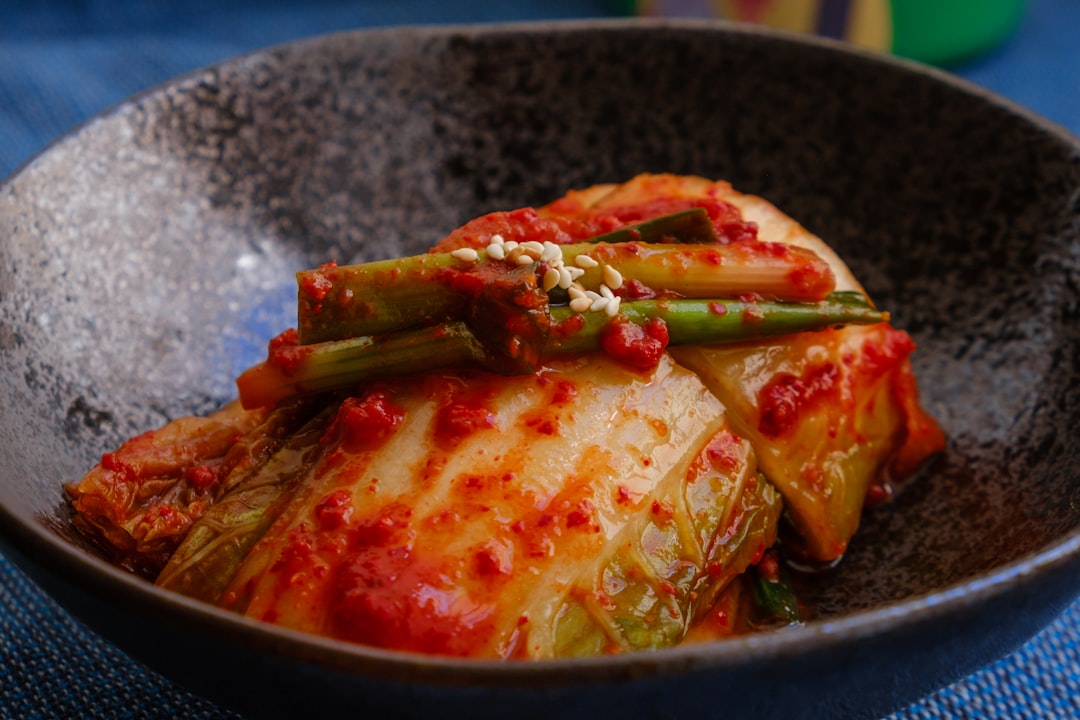
The diets react (see scores below)
Diet Ratings
Kimchi is fermented vegetables with minimal net carbs (1-2g per 100g serving), high in probiotics, and naturally low-carb. Fermentation reduces carb content and adds digestive benefits. Excellent keto condiment.
Fermented vegetable dish made from cabbage and spices. Whole-food based with beneficial probiotics. Fully plant-based. Excellent nutritional profile and aligns with whole-food vegan principles.
Fermented vegetable dish made from cabbage and spices, which are paleo-approved. Fermentation is a traditional preservation method available to hunter-gatherers. However, many commercial kimchi contains added sugar, fish sauce with additives, and sometimes grains. Homemade versions with just vegetables, salt, and spices are more paleo-compatible.
Strict paleo practitioners may avoid added salt entirely, which is a primary ingredient in kimchi fermentation. Additionally, some paleo authorities question whether fermented foods with added ingredients align with whole-food principles.
Fermented vegetable with probiotic benefits aligns with Mediterranean appreciation for fermented foods. However, Korean origin and high sodium content are considerations. Can be incorporated as condiment but not a core staple.
Mediterranean diet increasingly recognizes fermented foods from various cultures as beneficial; kimchi's probiotic and vegetable content make it compatible with modern Mediterranean principles despite non-Mediterranean origin.
Fermented vegetable product made primarily from cabbage and other vegetables with spices. Plant-derived and violates carnivore exclusion of all plant foods despite fermentation.
Kimchi is a fermented vegetable product made from cabbage and spices. All ingredients are Whole30 compliant. Fermentation is a natural preservation method. No added sugar, grains, legumes, or dairy. Whole and minimally processed.
Kimchi is traditionally made with garlic and onion, both high-FODMAP. Even small portions contain significant fructans. Monash University confirms garlic and onion are high-FODMAP at any reasonable serving.
Kimchi is fermented and provides probiotics and vegetables, but is very high in sodium (400-900mg per 1/2 cup serving). The fermentation process and salt preservation conflict with DASH sodium limits.
Some cardiovascular researchers argue kimchi's probiotic and anti-inflammatory benefits may offset sodium concerns in small portions, though NIH DASH guidelines strictly limit high-sodium fermented foods.
Fermented vegetable with minimal carbs (2-3g per serving), excellent polyphenol and probiotic content, anti-inflammatory. Low-glycemic. Adds flavor without macro disruption. Fits Zone vegetable servings. Supports gut health.
Fermented cabbage with powerful anti-inflammatory properties: probiotics, polyphenols, capsaicin (from chili), sulfur compounds from cruciferous vegetables, and allicin from garlic. Supports gut microbiome and systemic inflammation reduction. Exemplary anti-inflammatory food.
Kimchi is high in fiber and probiotics (supports digestion), very low calorie, and nutrient-dense. However, it is very spicy and fermented foods can trigger reflux or nausea in some GLP-1 patients. Works well as a small condiment but may worsen GI side effects in sensitive individuals.
Some GLP-1 RDs actively recommend fermented foods like kimchi for gut health and constipation prevention, while others caution that the spice level and fermentation can exacerbate nausea or reflux, especially early in treatment.
Nutritional profile
Six traits that cut across every diet.
Fiber & Plants
How much whole-plant food and fiber it delivers.
Healthy Fats
The quality of its fats (unsaturated, omega-3).
Whole / Unprocessed
How close it is to its natural, unprocessed form.
Gut Gentle
How easy it is on digestion (low FODMAP, few irritants).
Low Glycemic
How little it spikes your blood sugar.
Protein Density
How much protein it packs per calorie.
Controversy Index
Score range: 2–9/10. Higher controversy = more disagreement between diets.
Diet-Specific Tips for Kimchi
 Keto — 8/10
- 1-2g net carbs per 100g
- Fermented (probiotic benefit)
- Low sugar content
- Whole food base
 Vegan — 9/10
- Whole-food based
- Fermented (probiotics)
- Plant-based
- High in vitamins and minerals
- Traditional preparation
 Paleo — 6/10
- Fermented vegetables (traditional method)
- Often contains added salt
- Commercial versions may have additives
- Homemade versions more paleo-friendly
- Fish sauce quality varies
 Mediterranean — 6/10
- Fermented (positive)
- Vegetable-based (positive)
- High sodium
- Non-Mediterranean origin
- Probiotic benefits
 Whole30 — 8/10
- Fermented vegetables
- All compliant ingredients
- Whole food
- No additives or excluded ingredients
 DASH — 5/10
- Very high sodium (400-900mg per serving)
- Probiotic content
- Vegetable base
- Fermented benefits
 Zone — 8/10
- Low-glycemic vegetable
- Fermented (anti-inflammatory)
- Polyphenol-rich
- Probiotic content
- Minimal carbs
 Anti-Inflammatory — 9/10
- fermented (probiotics)
- cruciferous vegetables
- chili pepper (capsaicin)
- garlic (allicin)
- polyphenols
- supports gut health
 GLP-1 Friendly — 5/10
- High fiber
- Probiotic content
- Very spicy (reflux risk)
- Fermented (individual tolerance varies)
- Low calorie