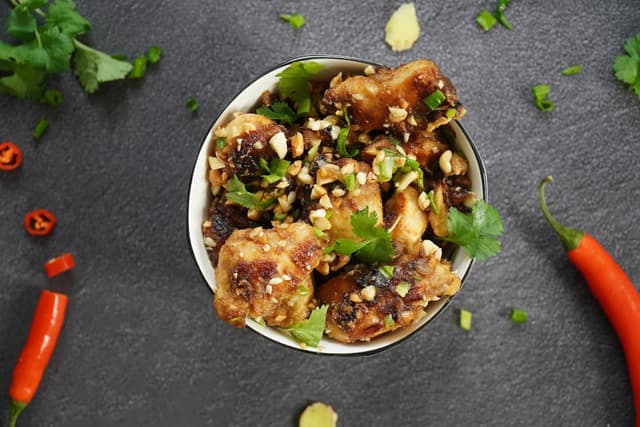
Diet Ratings
Sauce contains 8-12g net carbs from sugar and cornstarch. Peanuts add 4-6g carbs per serving. Chicken is excellent. If served without rice and with portion control on sauce, can fit into keto macros. Often served over rice which makes it incompatible.
iSome keto practitioners avoid Kung Pao chicken entirely due to sauce sugar content and difficulty controlling portions in restaurant settings.
Contains chicken (poultry), a direct animal product explicitly excluded from vegan diet.
Peanuts are legumes, excluded from paleo. Sauce contains soy (legume) and refined sugar. Chicken is approved but overwhelmed by excluded ingredients.
Chicken is acceptable, and peanuts provide plant-based protein and healthy fats. However, sauce contains added sugars and high sodium. Often prepared with refined rice. Vegetable content variable. Portion control essential.
iSome nutritionists appreciate the legume-based protein (peanuts) and vegetable components, viewing it as more Mediterranean-compatible than other Asian dishes if sugar and sodium are reduced.
Chicken is approved, but Kung Pao sauce contains sugar, soy sauce (plant-derived), vinegar, and cornstarch (grain). The dish includes peanuts (legume/seed), bell peppers (vegetable), and is typically served over rice (grain). Multiple plant-based components dominate.
Peanuts are legumes (excluded). Sauce contains soy sauce (legume), added sugar, and cornstarch (grain). Often served over rice (grain). Multiple excluded ingredients.
Sauce contains garlic, ginger (polyol), and soy sauce. Peanuts are low-FODMAP but sauce is high-FODMAP. Chili peppers are low-FODMAP. Overall FODMAP load from garlic and ginger makes this unsuitable for elimination phase.
Chicken is often deep-fried or heavily oiled. Sauce is high in sodium and added sugars. Peanuts add fat (though some unsaturated). Overall exceeds DASH sodium and added sugar limits.
Chicken is lean protein (positive). Peanuts provide monounsaturated fat (positive). However, sauce typically contains significant sugar and cornstarch thickener (high-glycemic). Served over white rice compounds glycemic load. Requires sauce reduction and brown rice substitution.
iDr. Sears would recommend requesting sugar-reduced sauce and brown rice; traditional preparation violates low-glycemic carb principle.
Lean chicken and peanuts provide protein and some antioxidants. Ginger and garlic offer anti-inflammatory spices. However, high-heat stir-frying creates AGEs, and sauce often contains added sugar and high-sodium soy. Peanut oil is high in omega-6. Restaurant versions typically high in sodium.
iSome practitioners view peanuts as pro-inflammatory legumes; however, mainstream guidance considers them acceptable. Homemade versions with minimal sugar and low-sodium soy shift toward approval.
High in fat (peanuts, oil-based sauce) and sodium. Spicy sauce may trigger reflux and nausea in GLP-1 patients. Often contains added sugar in sauce. While protein is present (20-25g), the fat content and digestive irritation make it unsuitable.
Controversy Index
Score range: 1–6/10. Higher controversy = more disagreement between diets.