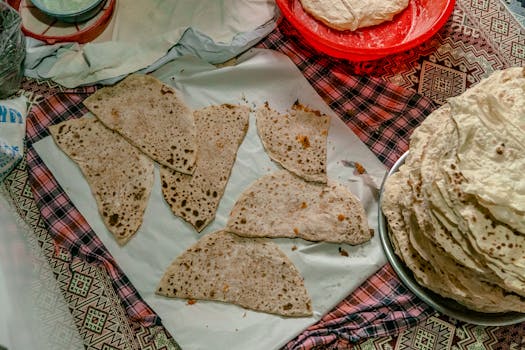
The diets react (see scores below)
Diet Ratings
Lavash bread contains approximately 14-18g net carbs per sheet depending on thickness. Thin flatbread format may tempt overconsumption; fundamentally incompatible with standard ketogenic carb limits.
Traditional lavash is made from flour, water, and salt—all plant-based. However, some commercial versions may contain milk, eggs, or other animal products. Label verification required.
Vegan lavash made without animal products is fully approvable (score 9), but many commercial versions contain dairy or eggs.
Wheat-based flatbread. Grains are explicitly excluded from paleo diet regardless of preparation method.
Lavash is traditionally made from refined white flour, though whole grain versions exist. Standard lavash is thin and refined, making it less ideal than whole grain Mediterranean breads. Quality and ingredients vary significantly.
Some Mediterranean diet practitioners accept traditional lavash as part of Mediterranean cuisine heritage, particularly in Levantine and Armenian traditions. Whole grain lavash versions align better with modern Mediterranean principles.
Flatbread made from wheat flour. Plant-derived with high carbohydrate content. Explicitly excluded from carnivore protocol.
Lavash is a flatbread made from wheat flour, which is a grain (explicitly excluded). Bread and bread-like products are prohibited under the 'no recreating baked goods' rule.
Lavash is typically made from wheat flour, which is high in fructans. Monash University rates wheat-based breads as high-FODMAP. Some lavash may contain garlic or onion, further increasing FODMAP content.
Lavash varies significantly by type and brand. Whole wheat lavash can be acceptable, but many commercial versions are refined flour with moderate sodium (150-300mg per sheet). Nutritional profile inconsistent; whole grain varieties preferred.
Lavash is a thin flatbread that varies significantly by preparation. Traditional lavash made with white flour has moderate-to-high glycemic impact; whole wheat versions are better. One piece (~28g) contains ~15-20g carbs depending on type. Zone protocol limits grains; lavash requires careful portioning and ingredient verification. Whole grain versions are preferable.
Some Zone practitioners view thin lavash more favorably than thick breads due to smaller portion sizes, but Dr. Sears' materials emphasize avoiding grain-based carbs in favor of vegetables. The distinction between white and whole grain lavash is significant.
Thin flatbread typically made from refined wheat flour. Moderate glycemic impact due to thin structure and portion size. Better than naan but inferior to whole-grain alternatives. Acceptable occasionally with anti-inflammatory toppings.
Some traditional lavash uses whole wheat flour, which would improve rating. Quality varies significantly by producer and recipe.
Lavash is thin, unleavened bread with moderate calories (100-120 per sheet) and low fiber (1-2g per sheet). Protein is minimal (3-4g per sheet). Often made with refined flour, causing rapid carb absorption. However, thinness allows portion control — one sheet is a reasonable serving. Can function as a wrap for high-protein fillings (chicken, hummus, vegetables), making it contextually useful. Standalone, it's suboptimal; as a vehicle for protein, it's acceptable.
Nutritional profile
Six traits that cut across every diet.
Fiber & Plants
How much whole-plant food and fiber it delivers.
Healthy Fats
The quality of its fats (unsaturated, omega-3).
Whole / Unprocessed
How close it is to its natural, unprocessed form.
Gut Gentle
How easy it is on digestion (low FODMAP, few irritants).
Low Glycemic
How little it spikes your blood sugar.
Protein Density
How much protein it packs per calorie.
Controversy Index
Score range: 1–6/10. Higher controversy = more disagreement between diets.
Diet-Specific Tips for Lavash bread
 Vegan — 6/10
- often contains dairy or eggs
- label verification required
- vegan versions available
 Mediterranean — 4/10
- often refined grain
- traditional in some Mediterranean regions
- variable quality
- whole grain versions preferred
 DASH — 5/10
- Variable sodium by brand
- Often refined flour
- Whole grain varieties better
- Portion control important
 Zone — 5/10
- Glycemic impact varies by preparation
- White flour versions are problematic
- Whole grain versions are better
- Thin format allows smaller portions
- Requires ingredient verification
 Anti-Inflammatory — 4/10
- Often refined flour
- Moderate glycemic index
- Thin structure reduces portion impact
- Better than thick breads
 GLP-1 Friendly — 5/10
- moderate calorie density
- low fiber
- low protein
- portion-flexible
- useful as wrap for protein
- refined carbs