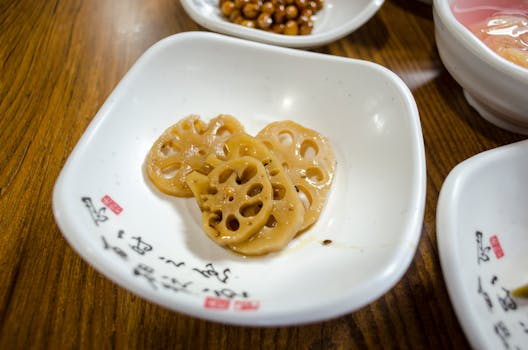
The diets react (see scores below)
Diet Ratings
Contains ~9g net carbs per 100g raw, higher starch content similar to potatoes. Regular consumption would significantly impact daily carb budget; incompatible with strict keto.
Whole plant tuber with good carbohydrate and fiber content. Fully vegan-compliant and minimally processed in traditional preparations.
Lotus root is a tuber available in nature and consumed by traditional populations. Moderate starch content but acceptable as a tuber similar to sweet potatoes. Unprocessed.
Starchy vegetable with moderate carbohydrate content and some fiber. While a whole plant food, it is not a traditional Mediterranean ingredient and has higher glycemic impact than typical Mediterranean vegetables.
Some Mediterranean diet practitioners accept lotus root as a vegetable option, particularly in modern global adaptations, though it lacks historical Mediterranean presence.
Plant-derived root vegetable. Explicitly excluded from carnivore diet. Contains plant compounds and significant carbohydrate content.
Whole vegetable root, no excluded ingredients. Fully compliant.
Lotus root contains significant fructans and inulin, making it high-FODMAP. Monash data limited, but traditional composition analysis indicates high fermentable carbohydrate content unsuitable for elimination phase.
Monash University has not formally tested lotus root; however, botanical analysis and practitioner experience indicate high fructan/inulin content. Some clinical sources suggest small portions may be tolerated, but elimination phase avoidance is recommended.
Low-sodium starchy vegetable with fiber, potassium, and vitamin C. Supports DASH vegetable intake. Whole food with minimal processing. Nutrient-dense carbohydrate source.
Lotus root contains moderate starch content (approximately 17g carbs per 100g raw). Higher glycemic load than leafy/cruciferous vegetables. Counts toward vegetable servings but requires portion control. Dr. Sears emphasizes colorful vegetables; lotus root is pale and starch-forward, making it less ideal than other options.
Some Zone practitioners accept lotus root as acceptable vegetable serving if portioned carefully (1/2 cup cooked ≈ 1 carb block). Context-dependent based on meal composition.
Traditional Asian vegetable rich in polyphenols, particularly gallic acid and tannic acid (potent antioxidants). Contains resistant starch when cooked and cooled, supporting beneficial gut bacteria. High fiber, low glycemic impact. Minimal processing in traditional use.
Moderate carbohydrate content (17g per 100g raw), moderate fiber (3.1g per 100g), low protein (1.6g per 100g). Nutrient-dense (vitamin C, potassium, polyphenols) but starchy nature means higher calorie density than leafy vegetables. Easily digestible when cooked. Acceptable as vegetable component but should not be primary carb source; pair with high-protein foods.
Some RDs view lotus root favorably for its prebiotic fiber and polyphenol content supporting gut health on GLP-1s. Others prioritize lower-carb vegetables given reduced calorie budgets and prefer reserving carb allowance for higher-fiber options.
Nutritional profile
Six traits that cut across every diet.
Fiber & Plants
How much whole-plant food and fiber it delivers.
Healthy Fats
The quality of its fats (unsaturated, omega-3).
Whole / Unprocessed
How close it is to its natural, unprocessed form.
Gut Gentle
How easy it is on digestion (low FODMAP, few irritants).
Low Glycemic
How little it spikes your blood sugar.
Protein Density
How much protein it packs per calorie.
Controversy Index
Score range: 1–10/10. Higher controversy = more disagreement between diets.
Diet-Specific Tips for Lotus root
 Vegan — 9/10
- Whole plant food
- Good fiber content
- Minimal processing
- Traditional staple
 Paleo — 8/10
- Tuber (similar to sweet potato)
- Moderate starch content
- Nutrient-dense
- Unprocessed
 Mediterranean — 6/10
- Whole plant food positive
- Higher starch content
- Non-traditional ingredient
- Moderate fiber
 Whole30 — 10/10
- Whole vegetable
- No excluded ingredients
 DASH — 8/10
- Low sodium
- Good potassium content
- Fiber-rich
- Vitamin C
- Whole food starch
 Zone — 5/10
- Moderate starch content
- Higher glycemic than preferred vegetables
- Requires portion control
- Less nutrient-dense than colorful alternatives
 Anti-Inflammatory — 7/10
- High polyphenol content (gallic acid, tannic acid)
- Resistant starch supports gut health
- High fiber, low glycemic index
- Traditional anti-inflammatory use in Asian medicine
 GLP-1 Friendly — 5/10
- moderate carbohydrate content
- moderate fiber
- low protein
- nutrient-dense (vitamin C, potassium)
- easily digestible when cooked
- starchy/higher calorie density