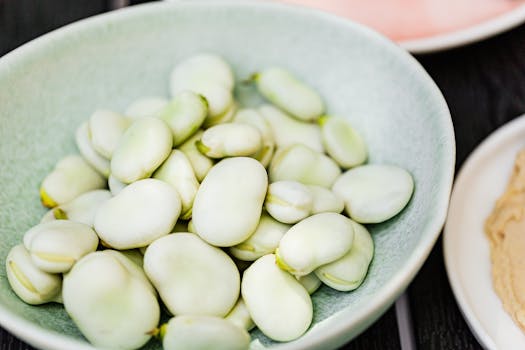
The diets react (see scores below)
Diet Ratings
Lupini beans are exceptionally low in net carbs (~2g per ounce) and high in protein and fiber. They are specifically marketed as keto-friendly. However, they remain niche and some practitioners question their processed nature.
Some keto purists avoid lupini beans due to their processed/fermented preparation and question whether they truly fit whole-food keto principles, preferring whole vegetables instead.
Whole plant-based legume. Highest protein content of all legumes. No animal products or derivatives.
Lupini beans are legumes, which are typically excluded from paleo. However, they are extremely low in carbohydrates and have been processed to remove alkaloids, making them lower in anti-nutrients than other legumes. Some paleo practitioners include them as a low-carb legume alternative.
Strict paleo authorities like Loren Cordain exclude all legumes without exception. However, some modern paleo practitioners and low-carb paleo advocates accept lupini beans due to their minimal carbohydrate content and reduced anti-nutrient profile after processing.
Lupini beans are traditional Mediterranean legumes, particularly in Southern Italy and Mediterranean regions. They are high in protein, fiber, and have been consumed for centuries in Mediterranean cuisine.
Legume; plant-derived protein and carbohydrates. Despite lower carb content than other legumes, still plant-based and excluded from carnivore diet.
Lupini beans are legumes, which are explicitly excluded from Whole30 for the entire 30-day period.
Lupini beans are uniquely low in GOS compared to other legumes. Monash University testing confirms low-FODMAP status at standard serving sizes (approximately 1/4 cup or 28g).
High in fiber and plant-based protein with low glycemic index. Rich in potassium. Less commonly studied in DASH literature but aligns with legume recommendations. Sodium content depends on preparation method.
NIH DASH guidelines emphasize common legumes (kidney, pinto, navy); lupini beans are less established in clinical hypertension trials but nutritionally compatible.
Exceptional Zone legume: ~12g protein, only ~6g net carbs per 1/2 cup (high fiber). Very low glycemic index. Increasingly recognized by Zone practitioners as superior to traditional beans. Minimal carb impact allows better macro balance.
Dr. Sears' original publications predate lupini bean popularity in Zone diet; modern practitioners strongly endorse them. Some older Zone resources may not mention them.
Legume with exceptional anti-inflammatory profile. Extremely high in fiber and polyphenols, very low glycemic index, high plant-based protein. Minimal carbohydrate impact. Excellent for metabolic health and gut microbiota support.
Exceptional protein (26g per cooked cup), very high fiber (12g per cup), very low fat (1g per cup), low carb, nutrient-dense. One of the highest-protein legumes available. Ideal for GLP-1 patients seeking maximum protein density.
Nutritional profile
Six traits that cut across every diet.
Fiber & Plants
How much whole-plant food and fiber it delivers.
Healthy Fats
The quality of its fats (unsaturated, omega-3).
Whole / Unprocessed
How close it is to its natural, unprocessed form.
Gut Gentle
How easy it is on digestion (low FODMAP, few irritants).
Low Glycemic
How little it spikes your blood sugar.
Protein Density
How much protein it packs per calorie.
Controversy Index
Score range: 1–9/10. Higher controversy = more disagreement between diets.
Diet-Specific Tips for Lupini beans
 Keto — 8/10
- 2g net carbs per ounce
- High protein
- High fiber
- Legume exception
- Processed/fermented
 Vegan — 9/10
- Whole food
- Highest legume protein
- High fiber
- Low carb
- Versatile
 Paleo — 5/10
- Legume classification
- Extremely low carbohydrate
- Processed to remove alkaloids
- Lower anti-nutrient content than other legumes
- Debated in modern paleo community
 Mediterranean — 9/10
- Traditional Mediterranean legume
- High in plant protein
- High in fiber
- Minimal processing required
 Low-FODMAP — 8/10
- Exceptionally low GOS content for a legume
- Monash-tested and approved
- Safe at standard serving sizes
 DASH — 8/10
- High fiber and protein
- Rich in potassium
- Low glycemic index
- Sodium varies by preparation
 Zone — 8/10
- very low net carbs
- high fiber content
- excellent glycemic profile
- good protein density
- emerging Zone favorite
 Anti-Inflammatory — 9/10
- Exceptionally high fiber
- Very high polyphenol content
- Very low glycemic index
- High plant-based protein
- Minimal carbohydrate impact
- Supports healthy microbiota
 GLP-1 Friendly — 9/10
- very high protein density
- high fiber
- very low fat
- low carb
- nutrient-dense