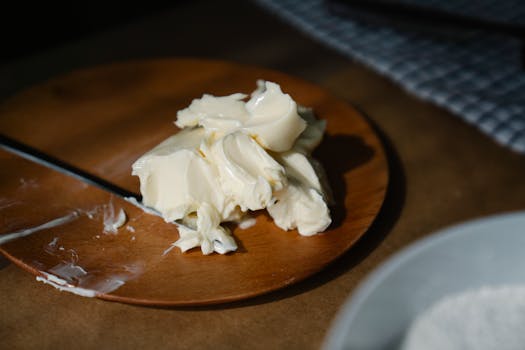
The diets react (see scores below)
Diet Ratings
Most margarines contain trans fats, seed oils, and additives incompatible with keto principles. Even low-carb versions are ultra-processed and lack nutritional value.
Most margarines are plant-based, but many contain whey, milk derivatives, or animal-derived vitamin D. Requires label verification.
Some vegans approve vegan-certified margarines without hesitation, viewing them as acceptable processed plant foods.
Margarine is a highly processed product made from seed oils and artificial ingredients. It contains trans fats, emulsifiers, and additives that violate paleo principles. It is a modern industrial food with no ancestral equivalent.
Ultra-processed product with trans fats or high omega-6 polyunsaturated fats. Directly contradicts Mediterranean principles favoring whole foods and olive oil.
Synthetic butter substitute made from vegetable oils and plant-based ingredients. Contains trans fats, emulsifiers, and artificial additives. Completely incompatible with carnivore diet principles.
Margarine is a highly processed product typically containing vegetable oils, water, and additives. It violates the whole food principle of Whole30.
Margarine is primarily fat but often contains milk solids, whey, or emulsifiers. Some brands may contain lactose or additives with FODMAP potential. Depends heavily on formulation.
Monash University rates many margarines as low-FODMAP if lactose-free, but clinical practitioners recommend checking ingredient labels for milk derivatives and emulsifiers that may trigger symptoms in sensitive individuals.
Depends on type. Soft/liquid margarines with minimal trans fat are acceptable; stick margarines may contain trans fats. NIH DASH guidelines prefer vegetable oils over margarine when possible.
NIH DASH guidelines recommend vegetable oils as first choice; some updated clinical interpretation accepts trans-fat-free margarine as acceptable alternative, though oils remain superior.
Margarine contains trans fats and is heavily processed. Dr. Sears explicitly eliminates trans fats from Zone Diet. Provides no nutritional advantage over natural fats.
Typically contains trans fats or high omega-6 seed oils, artificial additives. Strictly avoided in anti-inflammatory diet. Pro-inflammatory on multiple counts: trans fats, refined oils, artificial ingredients.
Highly processed, often contains trans fats or high saturated fat content depending on formulation. Zero protein or fiber. Provides empty calories and offers no nutritional advantage over butter or oils. Ultra-processed nature conflicts with GLP-1 dietary guidance favoring whole foods.
Nutritional profile
Six traits that cut across every diet.
Fiber & Plants
How much whole-plant food and fiber it delivers.
Healthy Fats
The quality of its fats (unsaturated, omega-3).
Whole / Unprocessed
How close it is to its natural, unprocessed form.
Gut Gentle
How easy it is on digestion (low FODMAP, few irritants).
Low Glycemic
How little it spikes your blood sugar.
Protein Density
How much protein it packs per calorie.
Controversy Index
Score range: 1–5/10. Higher controversy = more disagreement between diets.
Diet-Specific Tips for Margarine
 Vegan — 5/10
- Often contains dairy derivatives
- Highly processed
- Vegan versions exist but require certification check
 Low-FODMAP — 5/10
- Milk solids may contain lactose
- Emulsifiers and additives vary by brand
- Formulation-dependent
 DASH — 5/10
- Trans fat content varies by product
- Soft margarine preferable to stick
- Check label for trans fats
- Vegetable oil is preferred alternative