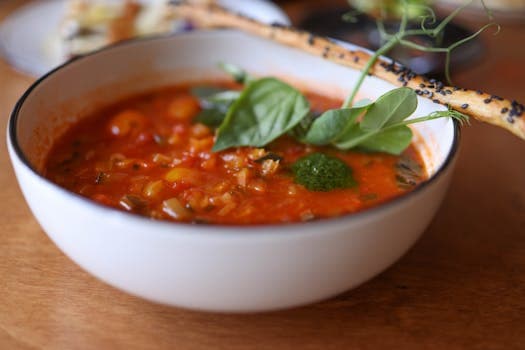
Diet Ratings
Traditional minestrone contains pasta, beans, and starchy vegetables (potatoes, carrots). A typical serving contains 15-25g net carbs, often exceeding daily keto limits in a single bowl.
Traditional minestrone is a vegetable-based soup with pasta and legumes. Fully plant-based when made without meat broth or animal products.
Contains pasta (grain), beans (legume), and often vegetable broth with added starches. Multiple paleo violations make this unsuitable.
Traditional Mediterranean vegetable soup with legumes, whole grains, and olive oil. Aligns perfectly with plant-based emphasis and minimal processing.
Contains vegetables (carrots, celery, zucchini, tomatoes), pasta, and legumes (beans). Multiple plant-based components violate carnivore diet principles.
Traditional minestrone contains pasta (grain) and often beans/legumes. Both are explicitly excluded from Whole30.
Minestrone typically contains multiple high-FODMAP ingredients including onion, garlic, celery, and legumes (beans). Even in small portions, the cumulative FODMAP load exceeds safe limits for elimination phase.
Minestrone is vegetable-based with whole grains and legumes, core DASH components. Low in sodium if prepared without added salt, rich in fiber, potassium, and magnesium. Excellent nutrient density.
Vegetable-based soup with legumes and pasta. Carbs are present but mixed with fiber and protein. Glycemic load depends heavily on pasta quantity and cooking method. Can be Zone-balanced if portion-controlled and paired with lean protein.
Minestrone is vegetable-rich with legumes, whole grains, and tomatoes. Provides fiber, antioxidants, and polyphenols. Anti-inflammatory when prepared with olive oil and minimal sodium.
Minestrone is vegetable-rich, providing high fiber (5-7g per cup) and micronutrients. It contains beans for plant-based protein (4-6g per cup) and is broth-based with low fat. High water content supports hydration. Easy to digest, nutrient-dense per calorie, and portion-friendly. One of the best soup options for GLP-1 patients.
Controversy Index
Score range: 2–8/10. Higher controversy = more disagreement between diets.