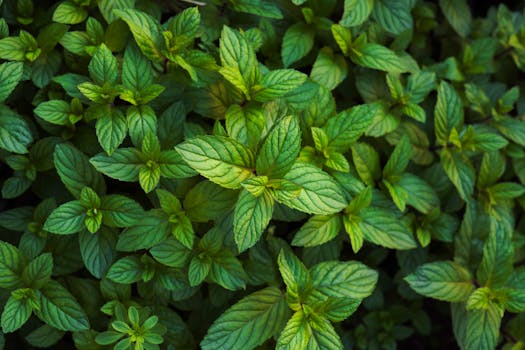
The diets react (see scores below)
Diet Ratings
Fresh mint has minimal net carbs (0.3g per tablespoon) and no sugar. Used as a garnish or flavoring in small quantities. Fully compatible with ketogenic diet.
Fresh herb, entirely plant-based. Whole food with no processing or additives.
Fresh mint is an unprocessed herb available to hunter-gatherers. No additives, grains, legumes, or seed oils. Nutrient-dense with digestive and anti-inflammatory benefits.
Fresh mint is a staple Mediterranean herb used extensively in Greek, Turkish, Lebanese, and Italian cuisines. It is whole, unprocessed, nutrient-rich, and central to Mediterranean cooking and beverages.
Fresh herb derived from mint plant. All plant foods, including herbs, are excluded from carnivore diet.
Fresh mint is a whole herb with no excluded ingredients. It is explicitly allowed as part of the herbs and spices category.
Fresh mint is low-FODMAP at typical culinary serving sizes. Monash University has tested mint and confirmed low-FODMAP status for standard portions (handful of leaves or 1-2 tablespoons chopped).
Fresh mint is a core DASH food: zero sodium, zero added sugars, zero fat, and rich in antioxidants. Enhances flavor of dishes and beverages without salt or sugar. Excellent for supporting DASH compliance.
Herb with negligible macronutrients and polyphenol content. Supports digestion and provides anti-inflammatory benefits. Ideal for flavoring Zone meals without affecting macro balance.
Fresh mint contains menthol and polyphenols with anti-inflammatory properties. Low calorie, no added sugars. Supports digestive health and provides antioxidants. Excellent culinary herb aligned with anti-inflammatory guidelines.
Fresh mint is ~95% water with negligible calories, fat, and sugar. Aids digestion, reduces nausea, and adds flavor to water, tea, and lean proteins. Cooling sensation supports hydration awareness (critical on GLP-1s). No portion restrictions or side effect risk.
Controversy Index
Score range: 1–10/10. Higher controversy = more disagreement between diets.
Diet-Specific Tips for Mint (fresh)
 Keto — 8/10
- Minimal net carbs
- No added sugars
- Used in small portions
- Flavor and garnish contribution
 Vegan — 10/10
- plant-based
- whole food
- unprocessed
 Paleo — 10/10
- Unprocessed fresh herb
- Ancestral availability
- No additives
- Digestive benefits
 Mediterranean — 10/10
- Traditional Mediterranean herb
- Whole, unprocessed plant
- Nutrient-dense
- Core ingredient in Mediterranean cuisine
 Whole30 — 10/10
- Fresh herb
- Whole ingredient
- No processing or additives
 Low-FODMAP — 8/10
- Low fermentable carbohydrate content
- Used in small quantities
- Monash-tested
 DASH — 10/10
- Zero sodium
- Zero added sugars
- Antioxidant-rich
- Flavor enhancement
 Zone — 9/10
- Negligible macronutrient impact
- Polyphenol-rich
- Digestive support
- Anti-inflammatory
 Anti-Inflammatory — 8/10
- menthol provides anti-inflammatory effects
- polyphenol content
- supports digestive function
- no inflammatory compounds
 GLP-1 Friendly — 9/10
- High water content
- Aids digestion and reduces nausea
- Supports hydration
- Zero calories, fat, sugar