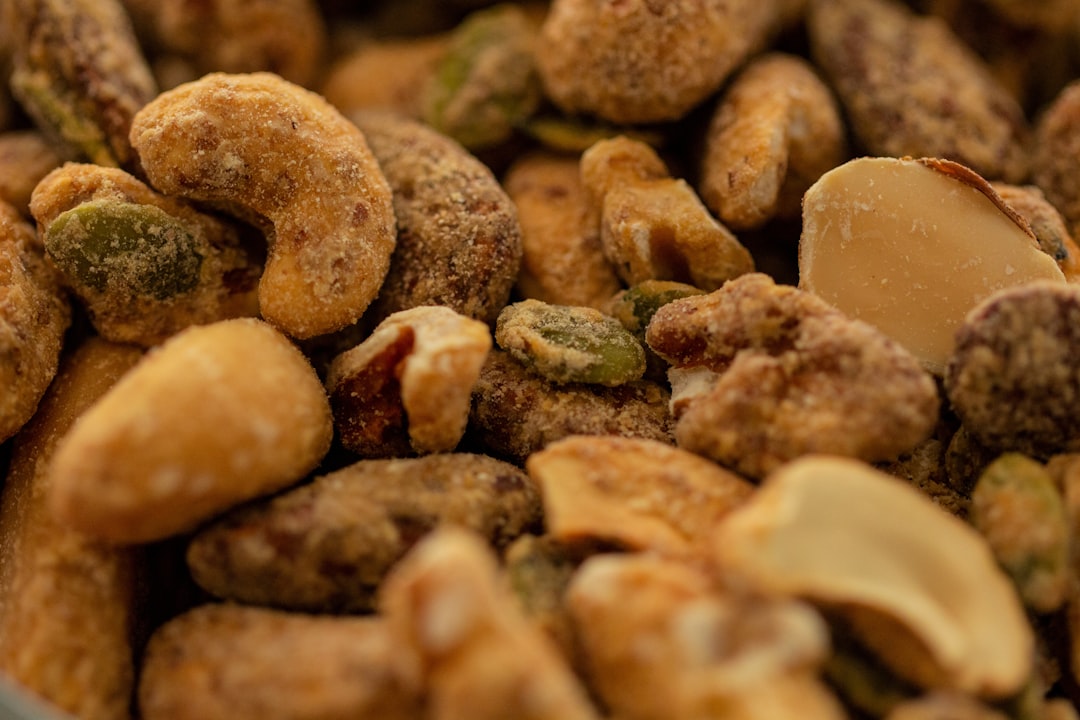
Mixed nuts (salted)
Rated by 11 diets
The diets react (see scores below)
Diet Ratings
Most mixed nuts are low in net carbs (2-6g per ounce) and high in healthy fats. Salting does not affect keto compatibility. Excellent macronutrient profile for ketosis.
Whole plant food with no animal products or derivatives. Salting does not compromise vegan status. Nutrient-dense and minimally processed.
Nuts are paleo-approved, but added salt contradicts paleo principles which emphasize whole foods without additives. The salt content may also promote inflammation and electrolyte imbalance.
Some paleo practitioners, including Mark Sisson, accept moderate salt intake from whole food sources and view salted nuts as acceptable in moderation, especially for those with adequate mineral balance.
Nuts are a cornerstone of the Mediterranean diet, rich in healthy fats, protein, and fiber. Salted varieties are acceptable; the salt content is minimal compared to processed foods. Eaten daily in moderation.
Nuts are plant-derived seeds and explicitly excluded from carnivore diet. High in polyunsaturated fats and plant compounds that contradict carnivore principles.
Nuts are whole, unprocessed foods explicitly allowed on Whole30. Salt is a permitted seasoning. No excluded ingredients present.
Most nuts are low in FODMAPs at standard serving sizes. Salted varieties contain no added fermentable carbohydrates. Monash University confirms nuts as low-FODMAP foods.
Nuts are DASH-approved for their healthy fats, magnesium, and potassium, but salted varieties add significant sodium. Unsalted nuts score higher. Portion control essential due to caloric density.
Mixed nuts contain monounsaturated fats (approve) but often include omega-6-heavy varieties (cashews, peanuts). Portion control critical: 1 oz ≈ 14g fat (1.5 fat blocks). Salt content acceptable. Macronutrient ratio requires pairing with lean protein and low-glycemic carbs.
Nuts are rich in omega-3 fatty acids, polyphenols, fiber, and minerals. Excellent anti-inflammatory profile. Salt content is minimal concern for most individuals when consumed in moderation.
Nuts provide protein and healthy unsaturated fats, but are calorie-dense and high in fat per serving. Easy to overeat due to small portion size masking high calorie intake. Portion control is critical on GLP-1s where appetite is suppressed but calorie density remains unchanged.
Some GLP-1 RDs recommend nuts as a convenient protein-fat snack that supports satiety, while others argue the fat content and calorie density make them suboptimal given the reduced appetite — patients should prioritize leaner protein sources instead.
Nutritional profile
Six traits that cut across every diet.
Fiber & Plants
How much whole-plant food and fiber it delivers.
Healthy Fats
The quality of its fats (unsaturated, omega-3).
Whole / Unprocessed
How close it is to its natural, unprocessed form.
Gut Gentle
How easy it is on digestion (low FODMAP, few irritants).
Low Glycemic
How little it spikes your blood sugar.
Protein Density
How much protein it packs per calorie.
Controversy Index
Score range: 2–9/10. Higher controversy = more disagreement between diets.
Diet-Specific Tips for Mixed nuts (salted)
 Keto — 8/10
- Low net carbs (2-6g per ounce)
- High fat content
- Portable, convenient
- Watch portion sizes to avoid excess calories
 Vegan — 9/10
- Whole food
- Plant-based
- No additives of concern
 Paleo — 6/10
- nuts are paleo-friendly
- added salt is a processed additive
- portion control recommended
 Mediterranean — 8/10
- High in monounsaturated fats
- Excellent protein source
- Minimal processing
- Salt content acceptable in moderation
 Whole30 — 9/10
- Whole food
- Natural fat source
- Permitted seasoning (salt)
 Low-FODMAP — 8/10
- Naturally low in fermentable carbohydrates
- No added sugars or fructans
- Standard serving 23g (small handful) is safe
 DASH — 5/10
- High sodium from salt coating
- Rich in unsaturated fats and magnesium
- Calorie-dense requiring portion control
- Potassium content beneficial
 Zone — 6/10
- High fat density requires precise portioning
- Mixed varieties may include higher omega-6 nuts
- Sodium acceptable for Zone
- Pairs well as fat block in balanced meals
 Anti-Inflammatory — 8/10
- omega-3 fatty acids
- polyphenols
- fiber
- minerals
- antioxidants
 GLP-1 Friendly — 5/10
- High fat (unsaturated, but still 14-16g per ounce)
- Moderate protein (4-6g per ounce)
- Low fiber relative to calories
- Portion-sensitive — easy to exceed serving size
- Nutrient-dense but calorie-dense