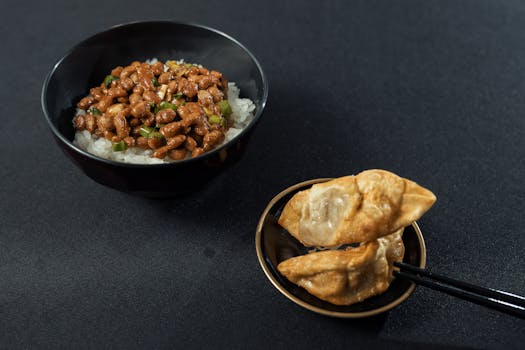
The diets react (see scores below)
Diet Ratings
Natto (fermented soybeans) contains 2-3g net carbs per 50g serving with high protein. Whole food with potential probiotic benefits. However, soy remains debated in keto community regarding insulin response and phytoestrogens.
Some keto practitioners embrace natto for its probiotic content and low net carbs. Others avoid all soy products citing potential insulin response and concerns about phytoestrogens, preferring non-soy fermented foods.
Natto is fermented soybeans with no animal products or derivatives. It is a whole plant food that is fully vegan-compliant. Minimal processing through fermentation.
Natto is fermented soybeans. Soy is a legume explicitly excluded from paleo diet due to high anti-nutrient content (phytic acid, lectins, trypsin inhibitors), regardless of fermentation or processing.
Natto is a fermented soybean product with high nutritional value including probiotics and vitamin K2. While fermented foods align with Mediterranean principles, natto is not traditional to Mediterranean cuisine and is primarily Japanese. Its strong flavor and texture may limit integration into Mediterranean meals.
Some Mediterranean diet experts increasingly recognize fermented foods from various cultures as beneficial, particularly for gut health. Natto's probiotic content and minimal processing align with Mediterranean principles, though it remains non-traditional. Others argue Mediterranean diet should emphasize traditional fermented foods like yogurt and olives.
Natto is fermented soybeans, a plant legume product. Despite fermentation, it remains plant-derived and violates core carnivore principles. No carnivore authority accepts legumes in any form.
Natto is fermented soybeans. Soy and legumes (including soybeans) are explicitly excluded during the 30-day Whole30 elimination period.
Natto is fermented soybeans with minimal Monash University testing. Soybeans contain GOS (galacto-oligosaccharides), which are high-FODMAP. Fermentation may reduce GOS content, but the extent is unclear. Individual tolerance is highly variable.
Monash University has not specifically tested natto. Clinical FODMAP practitioners are divided: some suggest fermentation significantly reduces GOS content, making small portions potentially tolerable; others recommend strict avoidance due to soy's GOS content. Elimination phase requires caution.
Fermented soybeans with high sodium (380mg per 50g serving). Rich in protein, vitamin K2, and probiotics. Nutritionally beneficial but sodium content requires moderation, especially for low-sodium DASH variant.
NIH DASH guidelines emphasize sodium restriction; updated clinical interpretation recognizes natto's probiotic and nutrient density as beneficial if sodium intake is monitored across other foods.
Fermented soybeans: ~17g protein, ~5g fat, ~5g carbs per 100g. Excellent protein density and low-glycemic carbs. However, fat is polyunsaturated-dominant (~3g omega-6), not monounsaturated. Fermentation provides probiotics and K2, aligning with anti-inflammatory goals. Usable as a protein source but requires monounsaturated fat pairing.
Some Zone practitioners prioritize natto's probiotic and K2 content as anti-inflammatory benefits that offset omega-6 concerns. Dr. Sears' later writings acknowledged fermented foods' value, though he didn't specifically endorse natto.
Fermented soy product with exceptional anti-inflammatory profile. Rich in vitamin K2, probiotics, and nattokinase. Contains isoflavones and polyphenols from soy. Whole soy foods are emphasized in anti-inflammatory diet. Supports cardiovascular and bone health.
Natto (fermented soybeans) is excellent for GLP-1 patients: very high protein (17g per 100g), good fiber (5.4g per 100g), low fat (5g per 100g, mostly unsaturated), nutrient-dense (vitamin K2, probiotics), and easy to digest due to fermentation. Low caloric density (109 cal per 100g). Works well in small portions and supports gut health. Mild umami flavor is satisfying.
Nutritional profile
Six traits that cut across every diet.
Fiber & Plants
How much whole-plant food and fiber it delivers.
Healthy Fats
The quality of its fats (unsaturated, omega-3).
Whole / Unprocessed
How close it is to its natural, unprocessed form.
Gut Gentle
How easy it is on digestion (low FODMAP, few irritants).
Low Glycemic
How little it spikes your blood sugar.
Protein Density
How much protein it packs per calorie.
Controversy Index
Score range: 1–9/10. Higher controversy = more disagreement between diets.
Diet-Specific Tips for Natto
 Keto — 5/10
- 2-3g net carbs per 50g serving
- High protein
- Fermented whole food
- Soy-based (debated in keto)
 Vegan — 8/10
- Whole plant food
- Fermented soybeans
- No animal products
- Nutrient-dense
 Mediterranean — 5/10
- Fermented whole food
- Probiotic content
- Not Mediterranean origin
- High nutritional density
- Cultural integration challenges
 Low-FODMAP — 5/10
- Soybeans contain GOS (high-FODMAP)
- Fermentation may reduce GOS content
- Limited scientific data on FODMAP reduction
- Individual tolerance highly variable
 DASH — 6/10
- Moderate sodium
- Excellent protein
- Probiotic content
- Rich in vitamin K2
- Fermented food benefits
 Zone — 6/10
- High protein density
- Low-glycemic carbs
- Omega-6 polyunsaturated fat
- Probiotic and K2 content
- Requires monounsaturated fat pairing
 Anti-Inflammatory — 9/10
- Fermented soy benefits
- Vitamin K2 content
- Probiotic-rich
- Nattokinase enzyme
- Isoflavones and polyphenols
- Whole soy food
 GLP-1 Friendly — 8/10
- very high protein density
- good fiber content
- low fat (unsaturated)
- probiotics (fermented)
- nutrient-dense
- low caloric density
- easy to digest